
Michael Owen Bruce Biography Quotes 5 Report mistakes
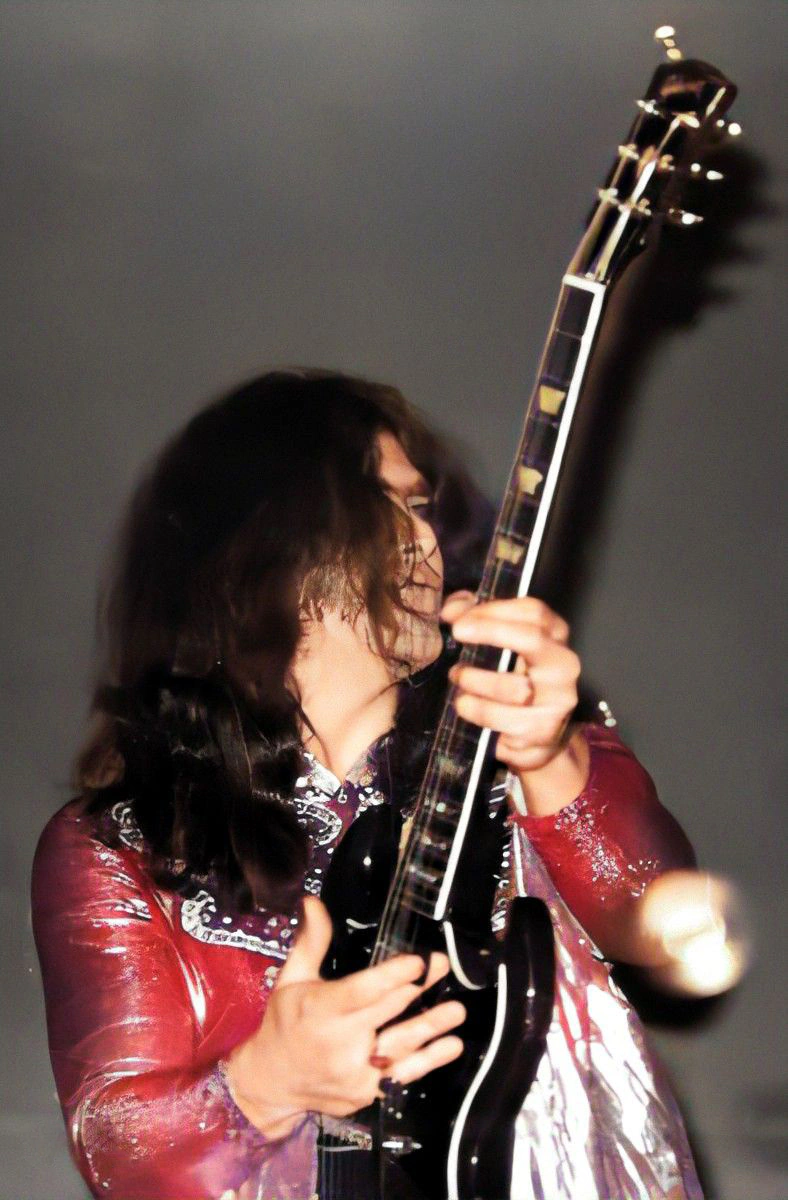
Attr: Hunter Desportes, CC BY 2.0
| 5 Quotes | |
| Occup. | Musician |
| From | USA |
| Born | March 16, 1948 USA |
| Age | 78 years |
| Cite | |
Citation Formats
APA Style (7th ed.)
Michael owen bruce biography, facts and quotes. (2026, February 11). FixQuotes. https://fixquotes.com/artists/michael-owen-bruce/
Chicago Style
"Michael Owen Bruce biography, facts and quotes." FixQuotes. February 11, 2026. https://fixquotes.com/artists/michael-owen-bruce/.
MLA Style (9th ed.)
"Michael Owen Bruce biography, facts and quotes." FixQuotes, 11 Feb. 2026, https://fixquotes.com/artists/michael-owen-bruce/. Accessed 28 Mar. 2026.
Early Life and Background
Michael Owen Bruce was born on March 16, 1948, in the United States, into the broad cohort that came of age as rock moved from teen entertainment to a total culture - fashion, attitude, money, and myth. He grew up with the radio as a second household voice: early rock and roll gave way to surf, soul, the British Invasion, and then the heavier American response. By the mid-1960s, guitars were no longer just instruments but passports, and local scenes everywhere rewarded the teenager who could learn fast, play loud, and look fearless.Bruce's early identity formed around the practical, workmanlike side of musicianship. He was not primarily a frontman personality in the classic sense; he was a builder inside the band - the player who made arrangements cohere, the one who understood how riffs, chord changes, and stage dynamics translated into a show. In an era when many young musicians learned in public - from school gyms to clubs to regional tours - he absorbed the discipline of repetition, the social skill of shared bills, and the hard truth that the music business was less a ladder than a sequence of gambles.
Education and Formative Influences
Bruce's education, like that of many rock musicians of his generation, was split between formal schooling and an informal conservatory of rehearsal rooms, cheap gear, and long nights watching other groups solve problems in real time. The late-1960s American rock economy taught young players to be fluent: rhythm and lead responsibilities could shift mid-song, and a musician had to understand not only notes but staging, pacing, and audience psychology. He was shaped by the rise of theatrical rock and by the counterculture's appetite for spectacle - a climate that rewarded bands able to turn volume and image into narrative.Career, Major Works, and Turning Points
Bruce is best known as a musician associated with the early rise of Alice Cooper's original band, a unit that helped define American shock rock by marrying hard-rock grooves to a confrontational stage persona. In that ecosystem, his contribution was grounded in the bandcraft that makes spectacle work: tight playing, memorable harmonic turns, and the ability to support a singer-character without dissolving into chaos. The group's ascent also exposed the fault lines common to fast fame - questions of credit, identity, management, and longevity. For Bruce, the key turning point was the transition from the first, communal band era to later versions of the Cooper enterprise, where continuity became a matter of branding as much as personnel, and where surviving the public story often required renegotiating one's private sense of authorship.Philosophy, Style, and Themes
Bruce's outlook reveals a musician who thinks in terms of risk, stamina, and the changing math of audiences. He frames reunion talk not as pure nostalgia but as an odds calculation shaped by image and expectation: “It's a gamble. A band like Kiss, a lot of those are our audience but we don't do as much make-up. Alice would have more to lose if we got back together”. That sentence carries a quiet realism - fame is not simply a shared memory but a market with penalties, where a legendary name can be weakened by the wrong context.His style also shows a craftsman's restlessness: writing is not a retreat from performance but another tool in the same kit, and versions multiply because audiences do. “I do like to write but I also like to get and out and play. I am losing track of all the Cooper versions that I do - I have one for Iceland, different one over here”. The psychology beneath it is pragmatic rather than romantic - he adapts, revises, and keeps moving. Yet there is fatigue, too, and the honesty of a working musician measuring time in tours and bodies in motion: “Towards the end it got really rough. I take my hat of to Alice, he's still doing it. This is probably more work than going on the road for 2-3 months. I wish I was 25 again!” Under the bravado of rock history, he describes endurance as the hidden price of the job.
Legacy and Influence
Michael Owen Bruce endures as a representative figure of the musicians who built theatrical American rock from the inside - players whose names can be eclipsed by a frontman brand yet whose musical decisions helped define an era's sound and stage language. His legacy sits in the template his generation proved workable: heavy rock that is arranged, not merely played; performance as character; and touring as both opportunity and attrition. In the long shadow of shock rock's mainstreaming, his remarks and career arc preserve the human dimension of the genre - the calculating professional, the adaptable writer-performer, and the veteran who knows that behind every legend is a calendar, a contract, and a body that has to do it all again tomorrow.Our collection contains 5 quotes written by Michael, under the main topics: Witty One-Liners - Music - Writing - Youth.
Source / external links