
Miles Davis Biography Quotes 13 Report mistakes
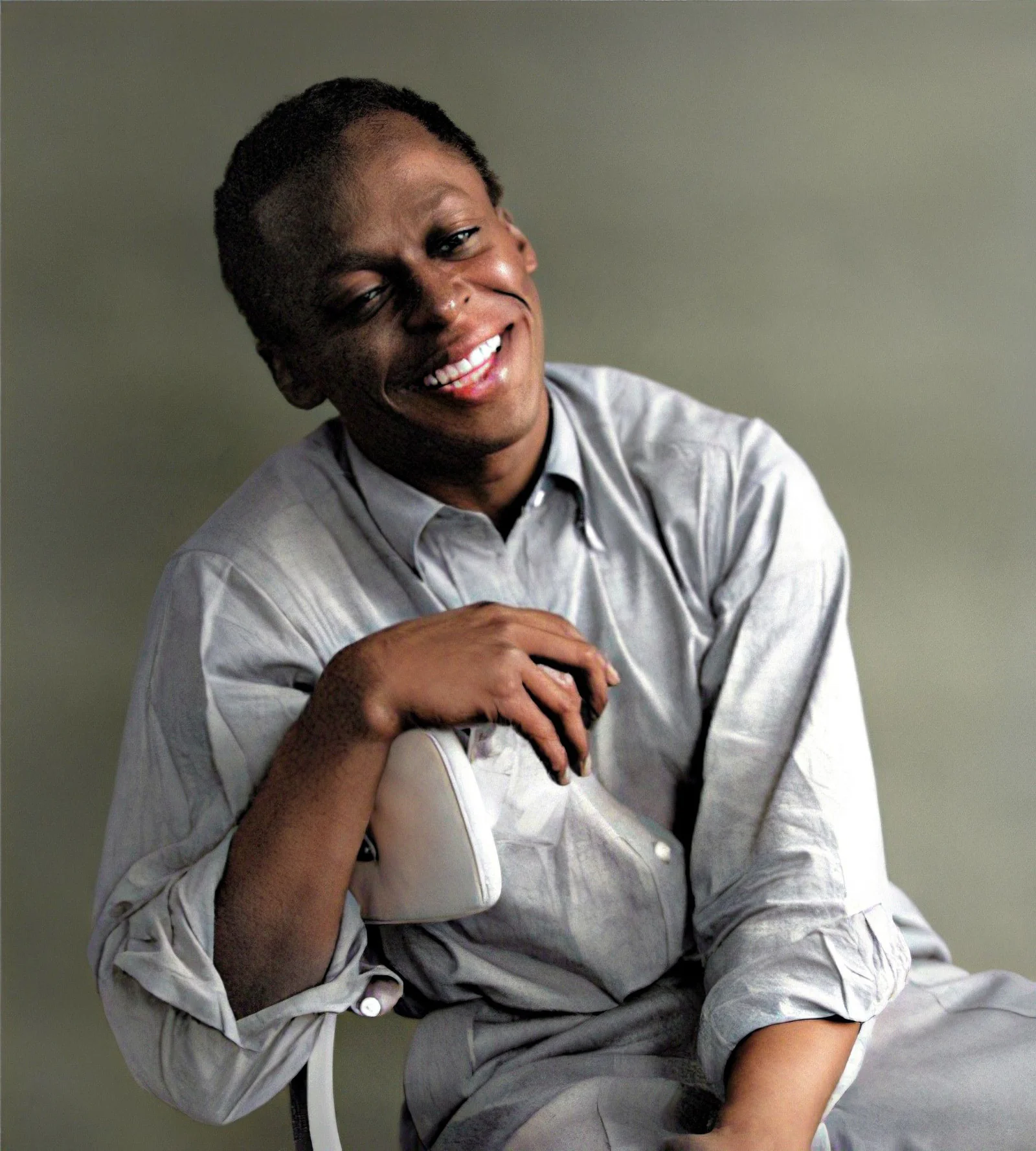
Attr: Malik Shabazz, CC BY-SA 2.0
| 13 Quotes | |
| Occup. | Musician |
| From | USA |
| Born | May 26, 1926 |
| Died | September 26, 1991 |
| Aged | 65 years |
| Cite | |
Citation Formats
APA Style (7th ed.)
Miles davis biography, facts and quotes. (2026, February 8). FixQuotes. https://fixquotes.com/artists/miles-davis/
Chicago Style
"Miles Davis biography, facts and quotes." FixQuotes. February 8, 2026. https://fixquotes.com/artists/miles-davis/.
MLA Style (9th ed.)
"Miles Davis biography, facts and quotes." FixQuotes, 8 Feb. 2026, https://fixquotes.com/artists/miles-davis/. Accessed 5 Mar. 2026.
Early Life and Background
Miles Dewey Davis III was born on May 26, 1926, in Alton, Illinois, and grew up mainly in East St. Louis, a river-and-rail crossroads shaped by segregation, industrial work, and the aftershocks of the Great Migration. His father, Miles Davis II, was a prosperous dentist and landowner, and the family home offered a kind of material safety that many Black musicians of his generation never had. That relative comfort did not insulate Davis from the daily humiliations of Jim Crow, but it did give him time, privacy, and the stubborn self-possession that would later read as coolness rather than caution.He received his first trumpet as a boy and learned quickly that sound could be a form of self-definition. Early discipline under local teachers, plus exposure to touring big bands and the region's blues and gospel currents, formed a temperament that valued clarity and attack over ornamental display. Even before he left home, Davis cultivated an instinct for economy - letting a note hang, letting silence accuse the room - as if withholding could be a kind of power in a world that demanded performance.
Education and Formative Influences
In 1944 he moved to New York City, nominally to study at the Juilliard School, but his real education happened at night on 52nd Street and in Harlem jam sessions where bebop was being invented in public. He sought out Charlie Parker and Dizzy Gillespie, absorbed harmony and time from the inside, and learned that virtuosity was only the entry fee, not the goal. Juilliard offered technique and repertoire; the bandstand offered identity, risk, and the lesson that a musician could change the culture by changing the language.Career, Major Works, and Turning Points
Davis joined Parker in 1945 and entered history as a young modernist with a burnished tone and a strategist's ear. By 1949-50 he led the Capitol sessions later gathered as Birth of the Cool, using Gil Evans, Gerry Mulligan, and others to pursue blended timbres and relaxed counterpoint that countered bebop's density. The mid-1950s brought a hard-won comeback after heroin addiction, capped by the 1955 Newport Jazz Festival and the signing with Columbia Records; albums such as 'Round About Midnight and Miles Ahead widened his audience. In 1959 Kind of Blue crystallized modal improvisation into an international vernacular, while the 1960s "second great quintet" with Wayne Shorter, Herbie Hancock, Ron Carter, and Tony Williams turned post-bop into a laboratory of elastic form (E.S.P., Miles Smiles). The late 1960s and 1970s marked the electric pivot - In a Silent Way, Bitches Brew, and dense live performances that fused rock volume, studio montage, and open-ended groove - followed by a 1975 withdrawal amid illness and exhaustion. He returned in 1981 with a tougher, street-facing palette, recorded into the era of MTV and hip-hop adjacency, and died on September 26, 1991, in Santa Monica, California, still insisting on forward motion.Philosophy, Style, and Themes
Davis built a personal aesthetics of subtraction: fewer notes, more intent. His mute work, his clipped phrasing, and his use of space made the trumpet sound like thought itself - provisional, testing, then suddenly final. He treated bands as engines for discovery, hiring musicians not to comply but to disturb him: Parker for velocity, Evans for color, Coltrane for intensity, Shorter for ambiguity, and later electric collaborators for texture and weight. The drama in his music often lies in what is almost said, as if the missing syllable is the point.Psychologically, Davis's art reads as a lifelong argument between control and surrender. “Don't play what's there, play what's not there”. is not only a compositional principle but a portrait of his inner life - a man who protected himself with reserve while demanding that the music reveal what ordinary speech concealed. His tolerance for uncertainty became method: “Do not fear mistakes. There are none”. , a creed that made rehearsals, takes, and concerts into one continuous experiment. And beneath the famous cool was a relentless hunger for renewal: “I'm always thinking about creating. My future starts when I wake up every morning... Every day I find something creative to do with my life”. That urgency, sharpened by racism, pain, and celebrity, pushed him to shed skins before they hardened into brand.
Legacy and Influence
Miles Davis permanently altered the grammar of modern music: he helped define bebop's early authority, authored cool jazz's ensemble sensibility, mainstreamed modal improvisation, expanded post-bop into interactive abstraction, and made jazz-rock fusion a global arena. His recordings became curricula for players and producers alike - lessons in tone, pacing, orchestration, and the courage to let a concept breathe. Beyond genre, he modeled artistic self-reinvention as an ethic, proving that influence is not a trophy but a pressure applied to the future.Our collection contains 13 quotes written by Miles, under the main topics: Witty One-Liners - Motivational - Music - Legacy & Remembrance - Learning from Mistakes.
Other people related to Miles: John Coltrane (Musician), Charlie Parker (Musician), Stanley Crouch (Critic), Gunther Schuller (Composer), Sonny Rollins (Musician), Jeanne Moreau (Actress), Bill Laswell (Musician), Billy Eckstine (Musician), Louis Malle (Director), Cassandra Wilson (Musician)
Source / external links