
Mitski Biography Quotes 15 Report mistakes
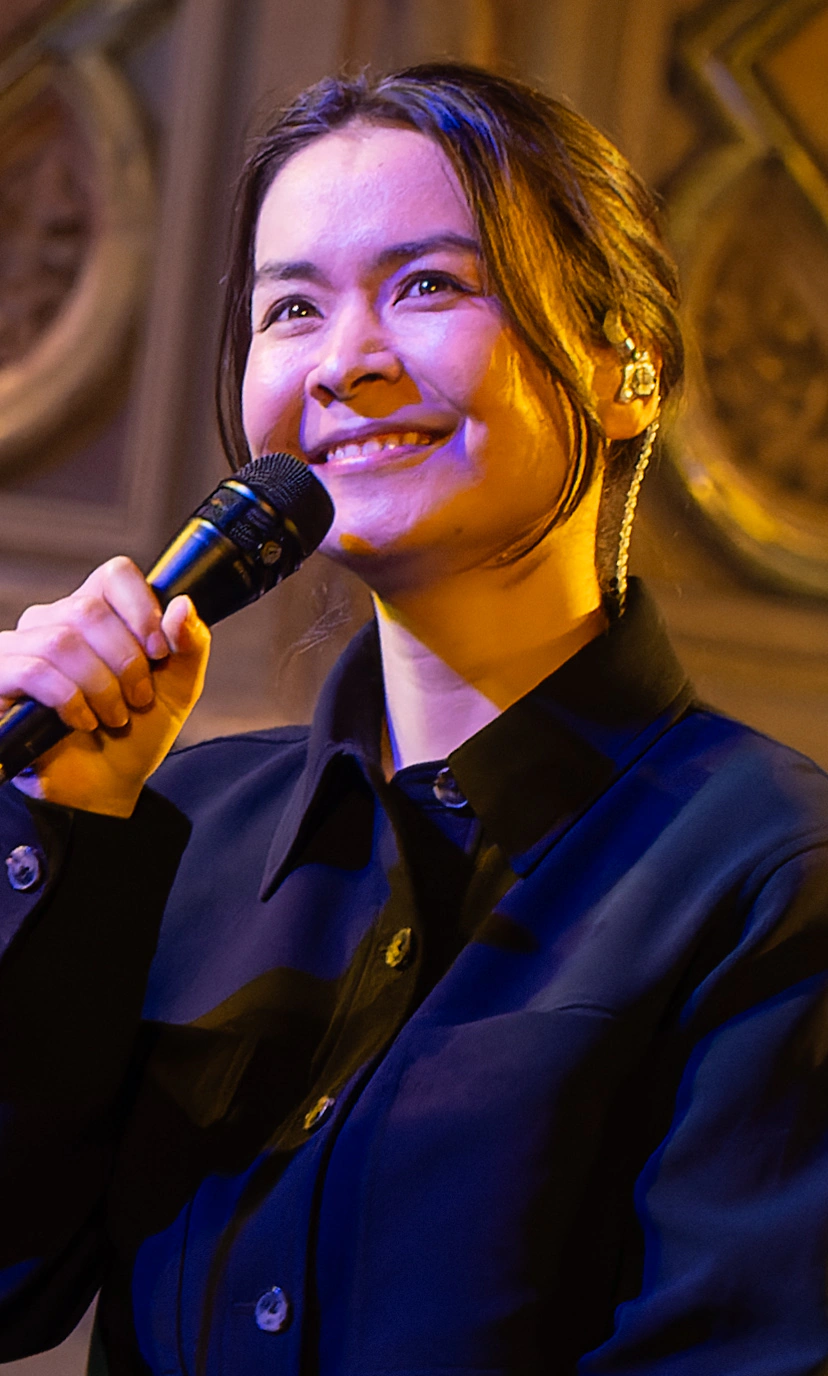
Attr: Raph_PH, CC BY 2.0
| 15 Quotes | |
| Born as | Mitsuki Laycock |
| Occup. | Musician |
| From | USA |
| Born | September 27, 1990 Mie Prefecture, Japan |
| Age | 35 years |
| Cite | |
Citation Formats
APA Style (7th ed.)
Mitski biography, facts and quotes. (2026, February 11). FixQuotes. https://fixquotes.com/artists/mitski/
Chicago Style
"Mitski biography, facts and quotes." FixQuotes. February 11, 2026. https://fixquotes.com/artists/mitski/.
MLA Style (9th ed.)
"Mitski biography, facts and quotes." FixQuotes, 11 Feb. 2026, https://fixquotes.com/artists/mitski/. Accessed 28 Mar. 2026.
Early Life and Background
Mitski Miyawaki, who performs as Mitski, was born Mitsuki Laycock in Japan in 1990, the child of a Japanese mother and an American father whose U.S. State Department career moved the family across continents. Her earliest sense of self was shaped less by a single hometown than by repeated departures and arrivals - a life of temporary classrooms, borrowed languages, and the quiet work of becoming legible to new places. That pattern formed an inward attention that later became her artistic signature: songs that feel like private thoughts, yet land as communal truth.The 1990s and 2000s she grew up inside were years when globalization promised frictionless mobility while daily life still demanded constant adaptation. For a mixed-race girl moving between cultures, visibility could be both isolating and instructive. Mitski has often conveyed the feeling of watching herself from the outside - learning how to perform normalcy, then later turning that scrutiny into craft. Long before she was widely known, she was building a vocabulary for longing, shame, tenderness, and the hunger to be understood without translation.
Education and Formative Influences
As a teenager she gravitated to music as a portable home, writing and recording early work while negotiating the social codes of each new environment. After returning to the United States, she studied at Purchase College, State University of New York, in the conservatory program, where composition discipline met a DIY indie scene. There she made two student releases, Lush (2012) and Retired from Sad, New Career in Business (2013), which already showed her bent for dramatic melodic arcs and emotional close-ups, as if each song were a short film that ended at the most revealing frame.Career, Major Works, and Turning Points
Her breakthrough arrived with Bury Me at Makeout Creek (2014), a guitar-forward record that pushed her writing into sharper, more volatile territory, followed by the taut, widely acclaimed Puberty 2 (2016). With Be the Cowboy (2018) she compressed feeling into spare, bright forms - pop structures that made the pain more audible, not less - and her audience expanded from indie devotees to a broader cultural public. The years around 2019-2020 brought both increased visibility and the pressures of touring and expectation; she stepped back, then returned with Laurel Hell (2022), a record that wrestled with control, performance, and the cost of productivity. In 2023 she reframed her sound again on The Land Is Inhospitable and So Are We, leaning into orchestral and folk textures while keeping the emotional blade intact, and she continued to balance acclaim with guarded privacy, treating distance not as mystique but as survival.Philosophy, Style, and Themes
Mitski writes like someone tracking the body language of the soul. Her narrators often speak from the moment desire becomes self-knowledge - sometimes ecstatic, sometimes humiliating, always precise. She treats sorrow not as an aesthetic but as data, a signal to be read: “I don’t think sadness is a bad thing. It’s information”. That stance clarifies her psychology as an artist - less interested in catharsis for its own sake than in diagnosis, in naming what hurts so it stops haunting the unnamed corners of a life.Just as crucial is her refusal to leave listeners alone with that information. Even when her characters are solitary, the songs are engineered for recognition, turning private confession into a shared instrument: “I want people to feel less alone. That’s the whole point”. Her craft is the bridge between specificity and universality, and she says it plainly: “Even when I’m writing something very specific, I’m trying to reach something universal”. The result is a body of work where restraint heightens impact - plain phrases that suddenly tilt into the sublime, theatrical arrangements that illuminate rather than distract, and recurring themes of ambition, erotic longing, disassociation, caretaking, self-erasure, and the complicated ache of wanting to be wanted.
Legacy and Influence
By the mid-2020s Mitski had become one of the defining singer-songwriters of her generation, influential not through maximalism but through exactness - an example of how to make pop-scale feeling from literary compression. Her work has shaped younger indie and alternative artists seeking permission to be blunt, tender, and formally adventurous at once, and it has also broadened conversations about identity, performance, and mental health without turning art into autobiography-as-content. If her era has been marked by overstimulation and constant self-display, her enduring contribution is the opposite: songs that honor complexity, protect the person behind them, and still reach the crowd like a hand in the dark.Our collection contains 15 quotes written by Mitski, under the main topics: Art - Music - Writing - Resilience - Honesty & Integrity.
Source / external links