
Muddy Waters Biography Quotes 22 Report mistakes
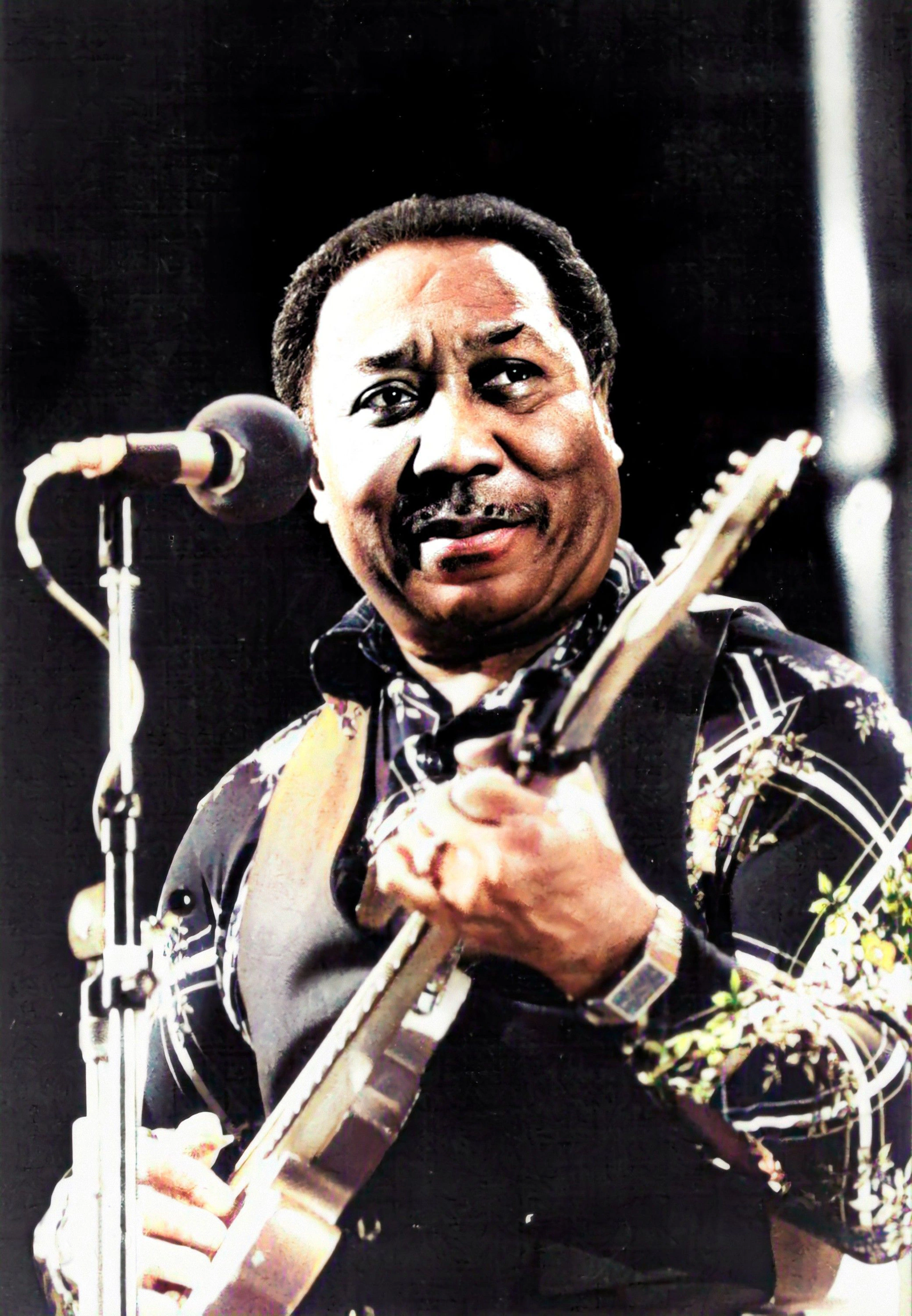
Attr: Lionel Decoster, CC BY-SA 4.0
| 22 Quotes | |
| Born as | McKinley Morganfield |
| Occup. | Musician |
| From | USA |
| Born | April 4, 1915 Rolling Fork, Mississippi, USA |
| Died | April 30, 1983 Westmont, Illinois, USA |
| Cause | Heart attack |
| Aged | 68 years |
| Cite | |
Citation Formats
APA Style (7th ed.)
Muddy waters biography, facts and quotes. (2026, February 18). FixQuotes. https://fixquotes.com/artists/muddy-waters/
Chicago Style
"Muddy Waters biography, facts and quotes." FixQuotes. February 18, 2026. https://fixquotes.com/artists/muddy-waters/.
MLA Style (9th ed.)
"Muddy Waters biography, facts and quotes." FixQuotes, 18 Feb. 2026, https://fixquotes.com/artists/muddy-waters/. Accessed 5 Mar. 2026.
Early Life and Background
McKinley Morganfield, later famous as Muddy Waters, was born on April 4, 1915, in Issaquena County, Mississippi, and raised in the Delta around Stovall Plantation near Clarksdale. His mother died when he was young, and he grew up largely under the care of his grandmother, in a landscape of cotton fields, levees, and segregated labor that pressed hard on Black family life. The nickname "Muddy" followed him from childhood, tied to the river-bottom world that shaped both his gait and his sound.The Delta offered few formal routes upward, but it offered music as an alternate authority - work songs, church cadences, jukes on weekend nights, and the blunt economies of Saturday dances. Waters absorbed the codes of endurance and discretion that plantation life demanded, learning when to speak and when to hold back, a social education as consequential as any classroom. That early mix of necessity and improvisation later became a defining tension in his art: a man who could sound dangerously free while remaining painfully aware of consequences.
Education and Formative Influences
His schooling was brief, interrupted by field work, as he later recalled: “I went to school, but they didn't give you too much schooling because just as soon as you was big enough, you get to working in the fields. I guess I was a big boy for my age”. The Delta itself became his conservatory - especially the bottleneck slide tradition associated with Son House and Charley Patton - and he learned by watching, borrowing licks, and testing his voice against noisy rooms. In 1941 and 1942, Alan Lomax recorded him for the Library of Congress at Stovall, and hearing his own playback crystallized an ambition that the plantation could not contain.Career, Major Works, and Turning Points
Waters moved to Chicago in 1943, joining the Great Migration and stepping into an urban Black nightlife where amplified instruments could cut through packed clubs. After early sideman work and Aristocrat/Chess sessions, he scored defining hits that effectively drew the blueprint for postwar electric blues: "I Can't Be Satisfied" and "I Feel Like Going Home" (1948), then a run of Chess classics including "Hoochie Coochie Man" (1954), "Mannish Boy" (1955), "Trouble No More" (1955), "Got My Mojo Working" (1956-57), and "Rollin' Stone" (1950). With key collaborators like Little Walter, Jimmy Rogers, Otis Spann, Willie Dixon, and drummer Elgin Evans, his band forged a hard, riff-driven ensemble sound that translated Delta structures into city voltage; later decades brought international touring, the Newport and folk-blues circuits, and late-career revivals including the Grammy-winning Hard Again (1977). He died on April 30, 1983, in Westmont, Illinois, after years of illness, leaving behind a catalog that had already become the common language of blues-rock.Philosophy, Style, and Themes
Waters built his music on memory - not nostalgia, but recall as muscle. “I been in the blues all my life. I'm still delivering 'cause I got a long memory”. That "long memory" was psychological as much as musical: he sang like a man cataloging slights, bargains, and desires, and the intensity of his delivery often feels like a ledger finally read aloud. His best records turn private experience into public ritual, where a single repeated line can function like a warning, a boast, or a confession depending on how he leans into the beat.His themes - erotic power, migration, work, and the hunger for dignity - were shaped by Mississippi pressure and Chicago opportunity. “I was always singing the way I felt, and maybe I didn't exactly know it, but I just didn't like the way things were down there-in Mississippi”. That dissatisfaction became propulsion: the slide-inflected phrasing and stop-time drama of his singing made desire sound like a demand rather than a plea, while the band answered him with riffs that felt communal, even militant. Yet he also carried the Delta ethic of guardedness into his persona, projecting authority while protecting vulnerability, as if intimacy had to be earned one chorus at a time.
Legacy and Influence
Muddy Waters stands as a principal architect of modern blues and a direct ancestor of rock: the Rolling Stones took their name from his "Rollin' Stone", British and American guitarists studied his phrasing as scripture, and his Chess sides taught generations how to marry tradition to technology without losing threat or soul. More than a stylist, he was a cultural translator - turning the Delta's rural codes into an electrified urban language that could travel the world - and his music remains a durable map of 20th-century Black movement from plantation constraint to city self-making.Our collection contains 22 quotes written by Muddy, under the main topics: Music - Learning - Privacy & Cybersecurity - Grandparents - Christmas.
Other people related to Muddy: Keith Richards (Musician), Van Morrison (Musician), Chuck Berry (Musician), Johnny Winter (Musician), Eric Clapton (Musician), Chris Barber (Musician), Brian Jones (Musician), Paul Butterfield (Musician), Robert Cray (Musician), Richard Manuel (Musician)
Source / external links