
Oscar Hammerstein II Biography Quotes 12 Report mistakes
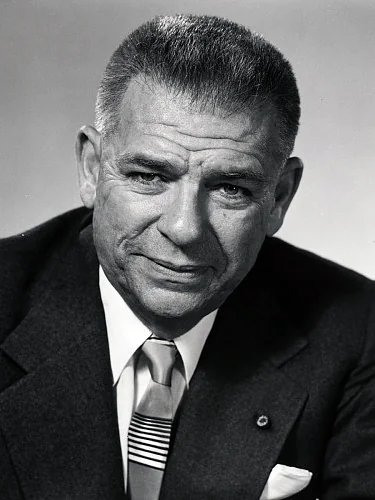
| 12 Quotes | |
| Occup. | Musician |
| From | USA |
| Born | July 12, 1895 New York City, U.S. |
| Died | August 23, 1960 Doylestown, Pennsylvania, U.S. |
| Cause | stomach cancer |
| Aged | 65 years |
| Cite | |
Citation Formats
APA Style (7th ed.)
Oscar hammerstein ii biography, facts and quotes. (2026, February 11). FixQuotes. https://fixquotes.com/artists/oscar-hammerstein-ii/
Chicago Style
"Oscar Hammerstein II biography, facts and quotes." FixQuotes. February 11, 2026. https://fixquotes.com/artists/oscar-hammerstein-ii/.
MLA Style (9th ed.)
"Oscar Hammerstein II biography, facts and quotes." FixQuotes, 11 Feb. 2026, https://fixquotes.com/artists/oscar-hammerstein-ii/. Accessed 13 Feb. 2026.
Early Life and Background
Oscar Greeley Clendenning Hammerstein II was born on July 12, 1895, in New York City into an American theater dynasty that was both glamorous and exacting. His grandfather, Oscar Hammerstein I, had been a formidable impresario and builder of opera houses; his father, William Hammerstein, managed theaters and cultivated the family business. The household offered proximity to stagecraft but also a sense that art was labor - rehearsals, contracts, temperaments, and the nightly accounting of applause.That inheritance came with pressure and a countervailing impulse: Oscar II grew up alert to how performance could conceal private longing. The boy who absorbed theater etiquette also noticed the human cost behind the footlights, an awareness that later made his songs unusually compassionate toward the "secondary" characters of life. When his father died in 1914, the loss sharpened his independence and left him determined to earn his place in the profession on his own terms rather than as a name on a marquee.
Education and Formative Influences
Hammerstein entered Columbia University intending to study law, but campus life pulled him toward writing and production; he joined the Varsity Show and learned the mechanics of putting words in actors' mouths and in audiences' hearts. Columbia also supplied a practical network: he met the young composer Richard Rodgers, and their early collaborations - juvenile but ambitious - gave him a laboratory for the integrated musical play, where character and story drive song. He left Columbia before graduating, choosing apprenticeship in the commercial theater over credentialed security, and he learned craft in the trenches of operetta and revue, working with figures such as Otto Harbach and Jerome Kern.Career, Major Works, and Turning Points
Hammerstein's first major phase flowered in the 1920s with Kern and Harbach, culminating in Show Boat (1927), a landmark that confronted American racism and adult disappointment within a popular form; its lyrical seriousness signaled what musicals could attempt. After years of uneven projects and the Depression-era grind, the decisive turning point came in 1943 when he reunited with Rodgers: Oklahoma! opened as World War II reshaped national self-understanding, and their run of works - Carousel (1945), South Pacific (1949), The King and I (1951), and The Sound of Music (1959) - defined mid-century Broadway. In these, he refined the "book musical" ideal, treating songs as dramatic decisions rather than decorative pauses, and he earned multiple Tonys and Oscars while setting a new ethical and emotional bar for mainstream entertainment.Philosophy, Style, and Themes
Hammerstein wrote as a moral realist with a romantic's hunger for renewal. He believed musicals should carry ideas without becoming lectures, and he trusted plainspoken language to deliver complex feeling - a style that made his lines sound inevitable when sung. His characters often face a choice between comfort and growth, and he stages that choice as an interior argument: the lyric becomes a conscience. "You gotta have a dream. If you don't have a dream, how you gonna make a dream come true?" That credo reveals a psychology oriented toward agency - a belief that hope is not passive wishing but disciplined imagining, a stance shaped by the volatility of theater and the instability of his era.Yet his optimism was never naive; it was a counterweight to what he saw as learned cruelty and historical amnesia. In South Pacific, he distilled prejudice into a chillingly simple proposition: "You've got to be taught to hate and fear". The line is both diagnosis and warning, suggesting Hammerstein's conviction that the self can be trained away from empathy - and therefore can be trained back. Even at his most lyrical, he framed love as an ethic rather than a mood: "A bell's not a bell 'til you ring it, A song's not a song 'til you sing it, Love in your heart wasn't put there to stay, Love isn't love 'til you give it away!"
Our collection contains 12 quotes written by Oscar, under the main topics: Witty One-Liners - Motivational - Love - Hope - Equality.
Other people related to Oscar: Stephen Sondheim (Composer), Oscar Hammerstein (Writer), Edna Ferber (Novelist), James A. Michener (Novelist), Theodore Bikel (Actor), Agnes de Mille (Dancer), Bert Kalmar (American), Howard Lindsay (Producer), Dorothy Sarnoff (Musician)