
Peter Hammill Biography Quotes 10 Report mistakes
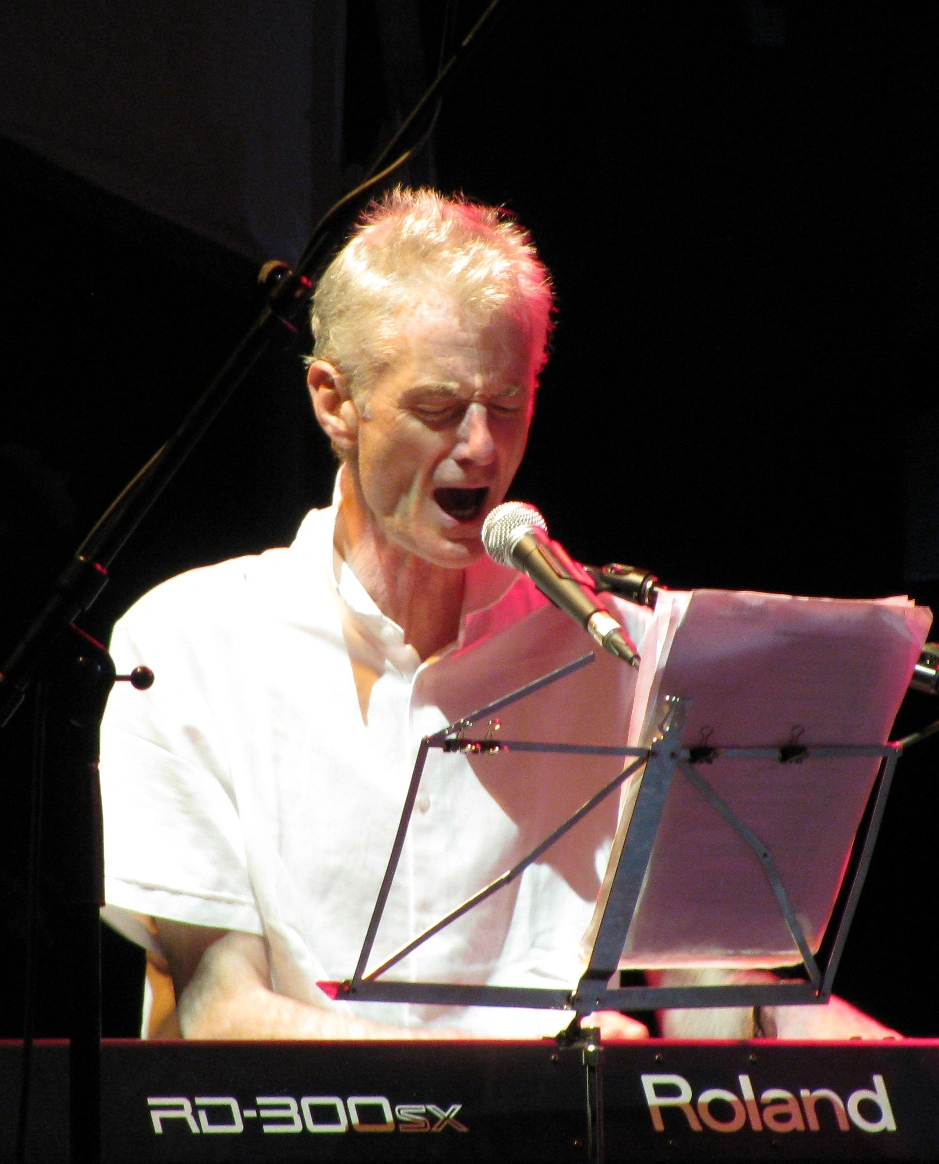
| 10 Quotes | |
| Occup. | Musician |
| From | England |
| Born | November 5, 1948 Ealing, London |
| Age | 77 years |
| Cite | |
Citation Formats
APA Style (7th ed.)
Peter hammill biography, facts and quotes. (2026, February 11). FixQuotes. https://fixquotes.com/artists/peter-hammill/
Chicago Style
"Peter Hammill biography, facts and quotes." FixQuotes. February 11, 2026. https://fixquotes.com/artists/peter-hammill/.
MLA Style (9th ed.)
"Peter Hammill biography, facts and quotes." FixQuotes, 11 Feb. 2026, https://fixquotes.com/artists/peter-hammill/. Accessed 6 Mar. 2026.
Early Life and Background
Peter Joseph Andrew Hammill was born on November 5, 1948, in Egham, Surrey, England, and grew up in the corridor of postwar London that was rapidly reshaping itself through new schools, new housing, and new youth culture. His earliest years were marked by a private intensity: a child drawn to language, sound, and argument, alert to how quickly moods could turn and how words could fail. That inner friction - between yearning for connection and suspicion of easy answers - would later become one of the signatures of his singing and writing.By the mid-1960s, as British pop split into chart craft and underground experiment, Hammill came of age in a country that still rationed respectability, yet quietly brimmed with dissent. The era offered him both permission and pressure: permission to be strange, pressure to be legible. He absorbed the changing soundscape - blues, psychedelia, and the first stirrings of progressive rock - but what he carried forward was less a style than a temperament: severe self-scrutiny, a fascination with systems, and a willingness to foreground discomfort rather than conceal it.
Education and Formative Influences
Hammill studied at the University of Manchester, where he met like-minded musicians and co-founded Van der Graaf Generator in 1967. Manchester in that period was a junction of literature, politics, and avant music; the campus atmosphere rewarded strong ideas and sharper articulation, and Hammill gravitated toward writers and thinkers who treated consciousness as a problem to be solved rather than a mood to be displayed. The band name itself signaled his attraction to scientific imagery and process, a conceptual frame that would recur as metaphor and method in his lyrics.Career, Major Works, and Turning Points
Van der Graaf Generator became one of the defining, if never comfortably commercial, voices of British progressive rock: tense, theatrical, and uncompromising, with Hammill at its center as principal songwriter and vocalist. Between 1969 and the mid-1970s, the group released landmark albums including The Least We Can Do Is Wave to Each Other (1970), H to He, Who Am the Only One (1970), Pawn Hearts (1971), and Godbluff (1975), balancing structural ambition with emotional extremity. In parallel, Hammill built a long solo career beginning with Fool's Mate (1971) and deepening into works such as Chameleon in the Shadow of the Night (1973), The Silent Corner and the Empty Stage (1974), and Over (1977), records that stripped away ensemble grandeur to expose raw voice, fractured intimacy, and moral unease. Van der Graaf Generator splintered and re-formed in phases, and Hammill continued to tour, record, and collaborate (notably with guitarist Gary Lucas later on), maintaining independence through publishing control and a steady, self-directed output that proved resilient as the music industry consolidated around safer bets.Philosophy, Style, and Themes
Hammill's art is driven by examination rather than confession for its own sake: the feeling is real, but it is subjected to pressure, turned over, argued with. He is drawn to the way grand structures hide inside ordinary moments, and he has described his aesthetic in terms that match his songs' oscillation between the panoramic and the microscopic: “Actually I think Art lies in both directions - the broad strokes, big picture but on the other hand the minute examination of the apparently mundane. Seeing the whole world in a grain of sand, that kind of thing”. That double vision helps explain how a Hammill lyric can pivot from cosmic dread to domestic detail without losing intensity - the personal becomes a laboratory, the everyday a stage for metaphysics.His frequent scientific metaphors are not decorative; they function as emotional technology, a way to speak precisely about instability, entropy, and failed communication. He has said, “Being used to scientific terminology and theory it was always natural for me to push this stuff into songs”. , and the result is a vocabulary that makes psychological weather feel measurable - not tamed, but named. Time, too, is a persistent antagonist: aging, regret, and the terrifying speed of change recur as motifs, a long argument with impermanence that never settles into nostalgia. Hammill's commitment to variety - abrupt shifts in dynamics, tone, and arrangement - mirrors his belief that a mind is not a single color, and that coherence can be earned through contrast rather than uniformity.
Legacy and Influence
Hammill endures as a model of the artist who refuses to simplify: a singer whose vulnerability is sharpened by intellect, and a songwriter whose ambition is emotional rather than merely technical. Van der Graaf Generator's influence threads through post-punk, art rock, and experimental scenes, while his solo catalog has become a touchstone for musicians drawn to psychological realism and vocal risk. Covered selectively and admired intensely, he occupies a rarer category than "cult hero" suggests: an independent conscience in British music, still read for the way his work insists that self-knowledge is not comfort but a discipline.Our collection contains 10 quotes written by Peter, under the main topics: Art - Music - Deep - Meaning of Life - Science.
Source / external links