
Peter Hammill Biography Quotes 10 Report mistakes
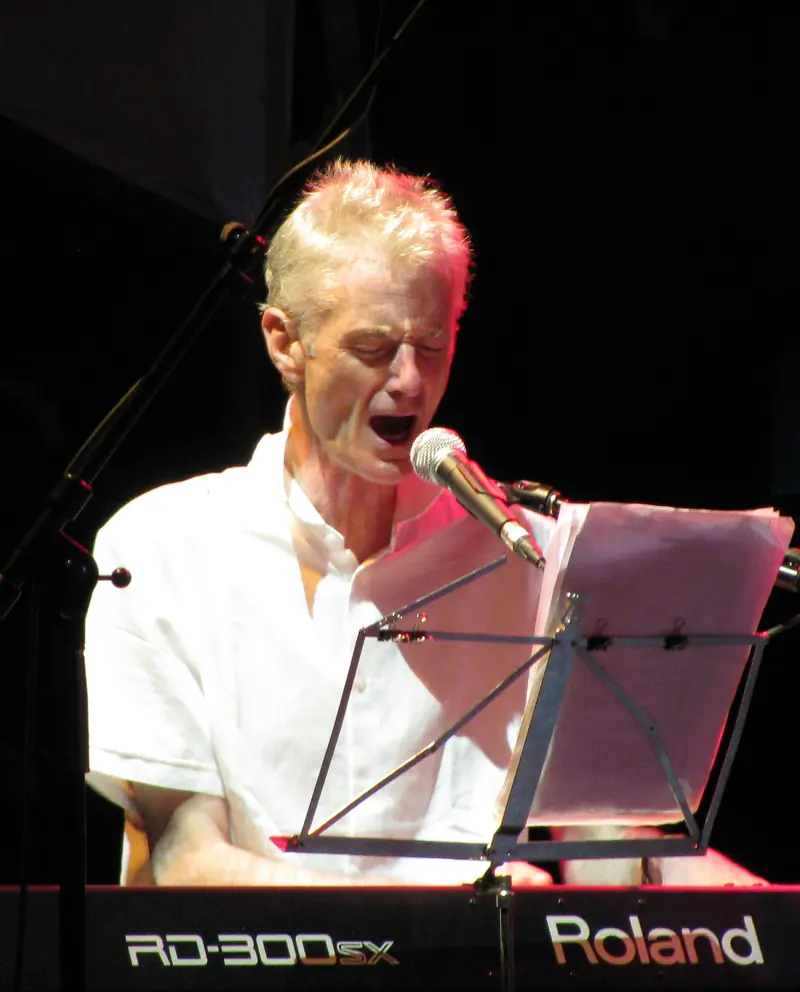
| 10 Quotes | |
| Occup. | Musician |
| From | England |
| Born | November 5, 1948 Ealing, London |
| Age | 77 years |
Peter Hammill was born in 1948 in London, England, and emerged in the late 1960s as one of the most distinctive English singer-songwriters of his generation. While studying at the University of Manchester, he met poet-percussionist Chris Judge Smith. The pair began writing and performing together, channeling literary interests and an experimental bent into a project that they named Van der Graaf Generator. Moving from Manchester to London, they encountered the new, adventurous climate of British underground music and the entrepreneurial support networks that would soon carry them to a wider audience.
Van der Graaf Generator: Formation and Classic Era
Van der Graaf Generator came into being formally in 1967-1968, taking shape around Hammill's voice, guitar, and piano. Early lineup shifts eventually settled into a powerful core with organist Hugh Banton, drummer Guy Evans, and reeds player David Jackson. The group found a champion in manager and label owner Tony Stratton-Smith, whose Charisma Records became home to several forward-looking acts. Under producer John Anthony, the band made a series of albums that fused extended song forms with poetic intensity. The Aerosol Grey Machine appeared in 1969, followed by The Least We Can Do Is Wave to Each Other and H to He, Who Am the Only One in 1970. Pawn Hearts in 1971 pushed the ensemble's contrasts to extremes: spacious, organ-driven atmospheres offset by fierce, angular passages, with Hammill's voice and lyrics at the center.
Van der Graaf Generator's first phase was marked by rapid evolution and frequent touring, but also by the pressures that fractured many ambitious bands of the time. A hiatus in the early 1970s paused their momentum even as the records gathered a dedicated following, especially across Europe.
Solo Artist in the 1970s
Parallel to the band, Hammill started a solo career that quickly became as significant as his group work. Fool's Mate (1971) introduced a more intimate palette, but it was the run of albums that followed that cemented his reputation: Chameleon in the Shadow of the Night (1973), The Silent Corner and the Empty Stage (1974), and In Camera (1974) deepened his blend of confession, drama, and formal experimentation. Nadir's Big Chance (1975), rough-edged and direct, would later be cited by figures in punk for its rawness and attack. Over (1977) captured personal upheaval in spare, cutting songs, while The Future Now (1978) and pH7 (1979) showed him absorbing new textures without surrendering lyrical density.
Collaborations in this period broadened his sound world. Robert Fripp, in particular, intersected with Hammill's work; the two appeared on each other's projects, aligning Fripp's guitar architectures with Hammill's dramatic songwriting in ways that reached beyond progressive rock's usual boundaries.
Return and Reinvention with Van der Graaf Generator
By 1975 Hammill reconvened Van der Graaf Generator with Banton, Evans, and Jackson, inaugurating a second classic phase. Godbluff (1975) and Still Life (1976) were concise and severe, proof that the band could be both disciplined and volatile. World Record (1976) retained their intensity, while The Quiet Zone/The Pleasure Dome (1977) reflected further lineup shifts, including the arrival of bassist Nic Potter and, for a time, violinist Graham Smith. After 1978 the band again dissolved, but its catalog continued to grow in stature, with listeners hearing in it a singular alignment of poetry, organ power, saxophone crosswinds, and rhythmic invention.
The K Group and 1980s Explorations
In the early 1980s Hammill reoriented his live and studio work around a tight, electric ensemble often referred to as the K Group, featuring guitarist John Ellis and bassist Nic Potter, with drumming that reflected his long-running bond with Guy Evans. Enter K (1982) and Patience (1983) turned his acute songwriting toward sharper, leaner frameworks that suited the era's tougher sound. Sitting Targets (1981) and Skin (1986) likewise demonstrated how his vocabulary could accommodate punchy hooks without losing psychological precision.
Composer, Producer, and Independent Operator
Hammill's independence grew steadily. He embraced home and small-studio recording, honing an approach in which he served as writer, performer, arranger, and producer. He issued updates and commentary under the Sofa Sound banner and later consolidated his output on his Fie! label, a vehicle that allowed him to release work on his own terms. He also ventured into long-form projects, most notably The Fall of the House of Usher, an opera developed with Chris Judge Smith that reimagined Edgar Allan Poe's tale through layered voices, electronics, and chamber textures.
1990s to Early 2000s: Continuity and Experiment
The 1990s affirmed his restlessness. Albums such as Out of Water (1990), Roaring Forties (1994), and Everyone You Hold (1997) demonstrated a command of craft that could move from stark confessionals to multi-part suites. None of the Above (2000) and Clutch (2002) showed a continued willingness to strip songs back to their core or to rebuild them with unusual instrumentation. Throughout, he remained a vivid live performer, often alternating between full-band tours and solo evenings at piano and guitar.
In the early 2000s he suffered a serious heart attack, an event that he confronted with candor in subsequent work. Singularity (2006) distilled those reflections into songs that were both resilient and unflinching, an extension of a career-long habit of writing openly about risk, choice, and time.
Reformation and Later Collaborations
In 2005 Van der Graaf Generator returned with Peter Hammill, Hugh Banton, and Guy Evans at its center. Present (2005) reintroduced the band in both composed and improvisatory modes. Subsequent albums, including Trisector (2008), A Grounding in Numbers (2011), and Do Not Disturb (2016), proved that the partnership remained fertile and forward-looking. The absence of David Jackson in later years reshaped the ensemble's sound, pushing the organ-and-drums core into new configurations, but the essential dynamic of tension and release persisted.
Hammill continued pursuing parallel solo paths. He issued albums that played to his strengths as a lyricist and arranger and also engaged in pointed collaborations, notably with guitarist Gary Lucas on Other World (2014). He followed concept-driven projects with intimate sets like From the Trees (2017) and explored interpretation with In Translation (2021), a record of songs in multiple languages, all filtered through his sensibility.
Artistry and Influence
Hammill's voice spans whispers and serrated cries, often within a single song, and his lyrics draw on science, metaphysics, literature, and close observation of relationships. Piano and guitar anchor his compositions, but arrangements often pivot on organ swells, sudden dynamic shifts, and structural asymmetry. As a bandleader he cultivated strong partnerships, especially with Hugh Banton's commanding organ lines, David Jackson's split-channel saxophones, and Guy Evans's precise but explosive drumming. As a solo artist he cultivated a producer's ear, tracking the grain of his voice and the resonance of quiet rooms as carefully as any overt hook.
His influence radiated beyond progressive rock. The raw vocals and direct guitar on Nadir's Big Chance drew admiration from musicians associated with punk and post-punk, and his combination of inward lyricism and dramatic staging had echoes in later experimental, art-rock, and singer-songwriter circles. Figures such as Robert Fripp, John Ellis, Nic Potter, Chris Judge Smith, David Jackson, Hugh Banton, Guy Evans, Tony Stratton-Smith, producer John Anthony, and collaborator Gary Lucas map an arc of associations that frame his work but never confine it.
Legacy
Across decades, Peter Hammill has remained prolific and exacting, maintaining a catalog that prizes risk over repetition. With Van der Graaf Generator he helped define a branch of British music that married avant-garde ambition to rock urgency. As a solo artist he fashioned an unusually candid diary in song, encompassing ornate suites, hard-edged anthems, and bare confessionals. Operating independently through his Fie! label and chronicling his process via Sofa Sound, he set a template for self-directed careers. That combination of independence, collaboration, and persistence has kept him a singular figure: an artist whose body of work forms a continuous conversation with himself, his peers, and listeners drawn to music that accepts no easy consolations.
Our collection contains 10 quotes who is written by Peter, under the main topics: Music - Meaning of Life - Deep - Art - Science.
Source / external links