
Peter Steele Biography Quotes 31 Report mistakes
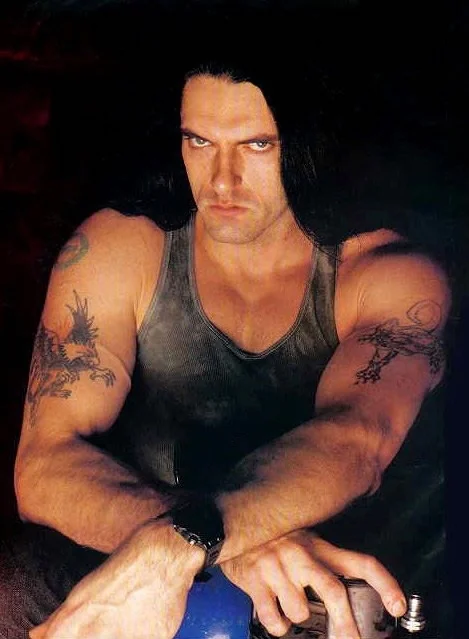
| 31 Quotes | |
| Born as | Peter Thomas Ratajczyk |
| Known as | Pete Steele and Lord Petrus Steele |
| Occup. | Musician |
| From | USA |
| Born | January 4, 1962 Brooklyn, New York, U.S. |
| Died | April 14, 2010 |
| Aged | 48 years |
| Cite | |
Citation Formats
APA Style (7th ed.)
Peter steele biography, facts and quotes. (2026, February 2). FixQuotes. https://fixquotes.com/artists/peter-steele/
Chicago Style
"Peter Steele biography, facts and quotes." FixQuotes. February 2, 2026. https://fixquotes.com/artists/peter-steele/.
MLA Style (9th ed.)
"Peter Steele biography, facts and quotes." FixQuotes, 2 Feb. 2026, https://fixquotes.com/artists/peter-steele/. Accessed 12 Feb. 2026.
Early Life and Background
Peter Thomas Ratajczyk was born on January 4, 1962, in Brooklyn, New York, and grew up in the working-class neighborhoods of Red Hook and Bensonhurst, a terrain of dockyards, Catholic parishes, and the blunt camaraderie of South Brooklyn. Tall to the point of being physically arresting, he carried the look of a neighborhood kid stretched into a gothic giant, but his sensibility was more inward than his size suggested. Friends and later bandmates described a personality that could swing from deadpan humor to brooding withdrawal, a temperament shaped by family closeness, local tragedy, and the emotional weather of a borough where toughness was a daily language.His stage name, Peter Steele, was not a mask so much as a distillation: a harder, simpler banner under which to channel grief, desire, and self-mockery into song. Behind the persona was a man prone to depression and self-critique, drawn to both devotion and sabotage, and increasingly wary of the costs of visibility. The late-1970s and early-1980s New York he came of age in was loud and brutal - fiscal crisis aftershocks, street crime, a punk and hardcore explosion - and Steele absorbed that atmosphere as both fuel and warning, turning personal darkness into a kind of public architecture.
Education and Formative Influences
Steele attended Edward R. Murrow High School in Brooklyn and was immersed early in the competing musics of his era: the aggression and speed of New York hardcore, the grand melancholy of goth and post-punk, and the heavy riff tradition that ran from Black Sabbath to later doom and thrash. He also worked a series of ordinary jobs, including time with the New York City Department of Parks and Recreation, an experience that sharpened his ear for the absurd and the tragic in everyday life - a sensibility that would later become central to his songwriting, where romantic catastrophe and punchline often arrived in the same breath.Career, Major Works, and Turning Points
Steele first made his mark in the Brooklyn hardcore band Fallout and then as bassist and co-vocalist in Carnivore, whose mid-1980s records (including Carnivore and Retaliation) fused crossover aggression with apocalyptic satire. In 1989 he formed Type O Negative with Josh Silver, Kenny Hickey, and Sal Abruscato, a band that transformed local scene credibility into a distinct, slow-burning mainstream presence: the bleakly funny breakthrough Slow, Deep and Hard (1991) and its notorious "origin myth" of pain; the more melodic, romantic Bloody Kisses (1993), which went platinum; and October Rust (1996), which broadened the palette into gothic psychedelia. Later albums like World Coming Down (1999) pushed closer to confession, while Life Is Killing Me (2003) and Dead Again (2007) balanced sardonic bite with a late-career return to doom-weight solemnity. Steele died on April 14, 2010, in New York, at 48, after years marked by health struggles and the long aftereffects of addiction and exhaustion.Philosophy, Style, and Themes
Steele wrote like a man translating uncomfortable truths into melody to keep them survivable. His humor was not decoration but a defense mechanism, a way to keep sincerity from feeling like exposure; he admitted as much when he said, "As far as humor goes, I've always been a very insecure person and I've always wanted to be liked". That tension - between the desire to be seen and the dread of being judged - helps explain the band's peculiar emotional temperature: simultaneously seductive and self-lacerating, romantic and derisive, tender and hostile to tenderness. Even when Type O Negative presented a unified visual identity, the songs themselves were often arguments with the self, where the narrator mocks his own longing even as he pleads.Musically, Steele fused doom metal's slow gravity with the snap of hardcore, the theatricality of goth, and an arranger's instinct for hooks and choral harmony. His bass and baritone voice created an undertow that made even jokes sound like laments. He framed songwriting as a substitute for self-destruction - "Instead of slashing my wrists, I just write a bunch of really crummy songs". - a line that lands as both punchline and diagnosis, revealing how art became his harm-reduction strategy. Yet the persona could not entirely quarantine the pain it stylized; songs about addiction, mortality, and failed devotion carried the sense of a man watching himself from a distance, narrating his own collapse with cruel clarity, then rescuing it with a chorus.
Legacy and Influence
Peter Steele left a body of work that helped define American gothic metal while remaining unmistakably Brooklyn in its bluntness, gallows humor, and refusal to sentimentalize despair. Type O Negative's green-tinted imagery and slow, romantic heaviness became a template for later bands across metal and dark alternative music, but Steele's more durable influence lies in tone: the permission to be vulnerable without abandoning irony, and to make beauty from self-contradiction. In the years since his death, his songs have continued to function as intimate companions for listeners negotiating grief, addiction, and love's humiliations - proof that his bleak jokes and velvet hooks were not escapism, but a hard-won way of staying alive.Our collection contains 31 quotes written by Peter, under the main topics: Witty One-Liners - Funny - Wisdom - Dark Humor - Music.
Source / external links