
Phil Ochs Biography Quotes 12 Report mistakes
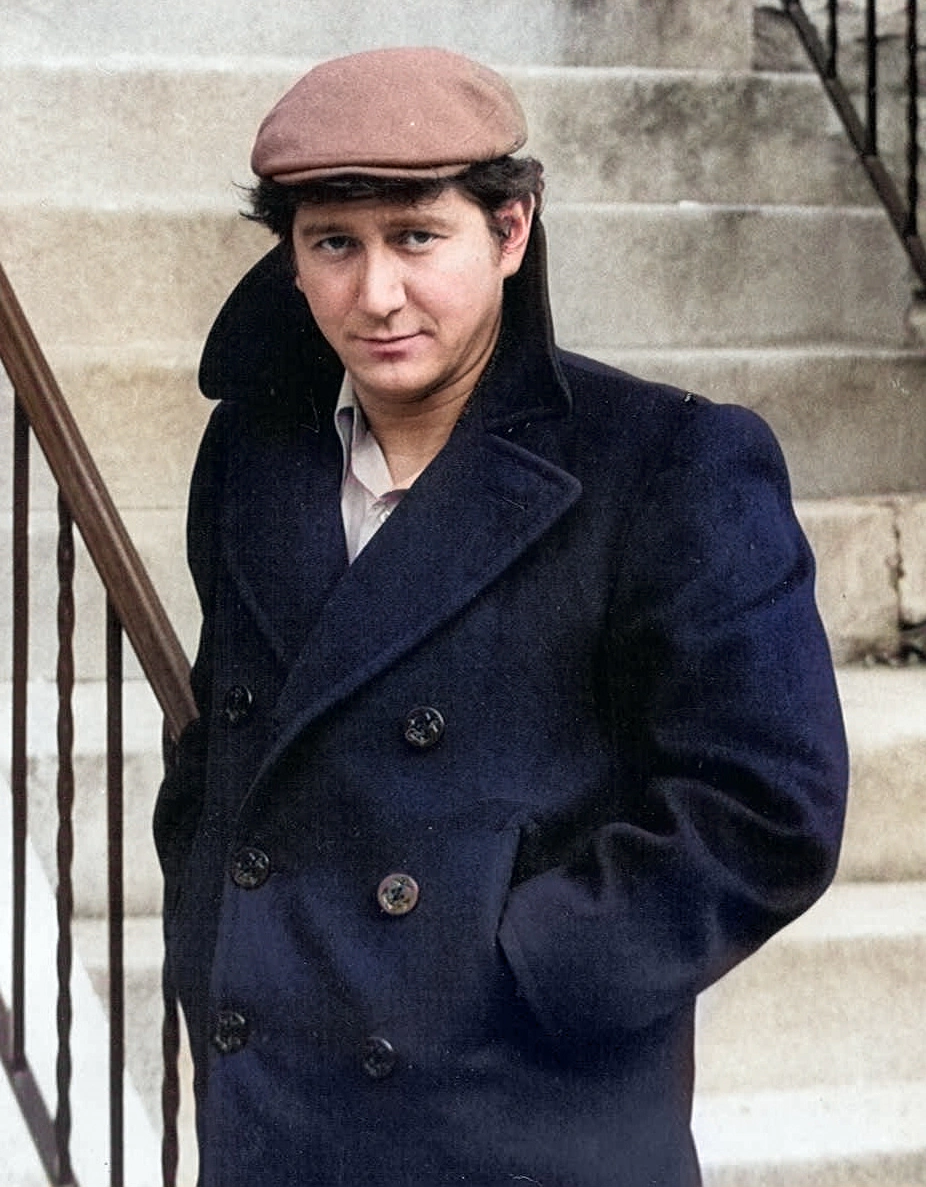
Attr: By Chip.berlet
| 12 Quotes | |
| Born as | Philip David Ochs |
| Occup. | Musician |
| From | USA |
| Spouse | Alice Skinner (1962) |
| Born | December 19, 1940 El Paso, Texas, USA |
| Died | April 9, 1976 Far Rockaway, New York City, USA |
| Cause | Suicide |
| Aged | 35 years |
| Cite | |
Citation Formats
APA Style (7th ed.)
Phil ochs biography, facts and quotes. (2026, February 11). FixQuotes. https://fixquotes.com/artists/phil-ochs/
Chicago Style
"Phil Ochs biography, facts and quotes." FixQuotes. February 11, 2026. https://fixquotes.com/artists/phil-ochs/.
MLA Style (9th ed.)
"Phil Ochs biography, facts and quotes." FixQuotes, 11 Feb. 2026, https://fixquotes.com/artists/phil-ochs/. Accessed 27 Mar. 2026.
Early Life and Background
Philip David Ochs was born on December 19, 1940, in El Paso, Texas, into a Jewish family marked by mobility and unease. His father, Jacob Ochs, was a physician whose own wartime service and later struggles with mood and alcohol cast a long, often unspoken shadow; his mother, Gertrude, pushed culture and education as a kind of ballast. The family moved repeatedly, a pattern that gave Ochs the outsider's habit of scanning rooms for power and pretense, then turning that scan into language.He grew up largely in Ohio, with formative years in Columbus. In the postwar boom, America sold confidence and conformity in equal measure, and Ochs absorbed both the promise and the claustrophobia. He learned early that public respectability could coexist with private fracture, and that a bright, quick mind could be both instrument and torment. By adolescence he was drawn to performance and argument - not as separate skills, but as two forms of the same need to be heard.
Education and Formative Influences
Ochs entered Ohio State University in the late 1950s, circling journalism, politics, and music while the early civil rights movement and Cold War anxieties sharpened the country's moral vocabulary. He was influenced by Woody Guthrie's plainspoken radicalism and Pete Seeger's communal ideal, but also by the analytical discipline of newswriting - the idea that a fact, properly framed, could change a reader. In Columbus he fell into folk clubs and late-night debates, and by the early 1960s he left school for New York, convinced that songs could function as editorials with a human pulse.Career, Major Works, and Turning Points
Arriving in Greenwich Village in 1962, Ochs became one of the sharpest young writers in the folk revival, admired for speed, topicality, and a reporter's eye. Albums like All the News That's Fit to Sing (1964) and I Ain't Marching Anymore (1965) made him a frontline musical chronicler of civil rights, Vietnam, and American mythmaking; he sang at benefits, marches, and campuses, and his work traveled alongside the movement press. Pleasures of the Harbor (1967) and Rehearsals for Retirement (1969) widened his palette into orchestration and elegy, especially after the Democratic National Convention in Chicago in 1968 left him bitter about state violence and media complicity. His ambition to reach beyond the folk circuit produced the Elvis-themed showpiece "The War Is Over" and the glam-suited period of Greatest Hits (1970), an attempt to hijack pop spectacle for political ends. Then came the unraveling: a 1973 mugging in Africa damaged his voice and deepened paranoia; depression and alcoholism intensified; he developed the alter ego "John Train" as identity split into performance and self-contempt. By the mid-1970s he was increasingly isolated, and on April 9, 1976, he died by suicide in Far Rockaway, New York, at 35.Philosophy, Style, and Themes
Ochs treated songwriting as a civic duty, but not a simplistic one: his best work is the sound of someone trying to keep faith with reason while being emotionally overrun by history. He believed that the songwriter could be both witness and participant, turning reportage into moral pressure without pretending neutrality. “There is an urgent need for Americans to look deeply into themselves and their actions, and musical poetry is perhaps the most effective mirror available. Every newspaper headline is a potential song”. That sentence reveals his psychology - the compulsion to metabolize chaos into form - and also his trap: when headlines became unbearable, he felt personally defeated, as if the failure of politics were the failure of his craft.His style fused tight rhyme with conversational clarity, often using irony as a scalpel - "Love Me, I'm a Liberal" is less a jab than an x-ray of comfortable conscience. Yet beneath the satire was a romantic streak that kept returning to beauty as resistance, a belief that art could still dignify people crushed by systems. “In such ugly times, the only true protest is beauty”. That aesthetic turn, heard in the tenderness of "Changes" and the sorrow of "Crucifixion", was not escape but a bid for moral endurance. Still, he never promised victory; he promised effort. “Even though you can't expect to defeat the absurdity of the world, you must make that attempt. That's morality, that's religion. That's art. That's life”. The line fits his career as both manifesto and warning: he lived as if quitting were a kind of sin, even when his own mind urged surrender.
Legacy and Influence
Ochs did not become the mass-culture revolutionary he fantasized about, but he helped define what the modern protest song could be: literate, funny, journalistic, and devastatingly personal. His catalog became a reservoir for later generations - from punk and alternative scenes to contemporary folk activists - who borrowed his blend of melody and indictment without inheriting his era's illusions. Tribute concerts, posthumous releases, and the persistent afterlife of songs like "I Ain't Marching Anymore" keep him present whenever Americans argue about war, hypocrisy, and the uses of art. His enduring influence lies in the standard he set for integrity: a willingness to name what he saw, and to pay, in his own psyche, the full price of seeing it.Our collection contains 12 quotes written by Phil, under the main topics: Witty One-Liners - Ethics & Morality - Art - Dark Humor - Music.
Other people related to Phil: Dave Van Ronk (Musician)
Frequently Asked Questions
- Where is Phil Ochs buried: Beth Moses Cemetery, Long Island, New York
- Phil Ochs pronunciation: Fil Oks
- Phil Ochs best songs: "Changes", "There but for Fortune", "Draft Dodger Rag"
- Phil Ochs, daughter: Meegan Ochs
- Phil Ochs wife: Alice Skinner
- Phil Ochs cause of death: Suicide by hanging
- Phil Ochs most famous song: "I Ain't Marching Anymore"
- How old was Phil Ochs? He became 35 years old
Source / external links