
Quincy Jones Biography Quotes 16 Report mistakes
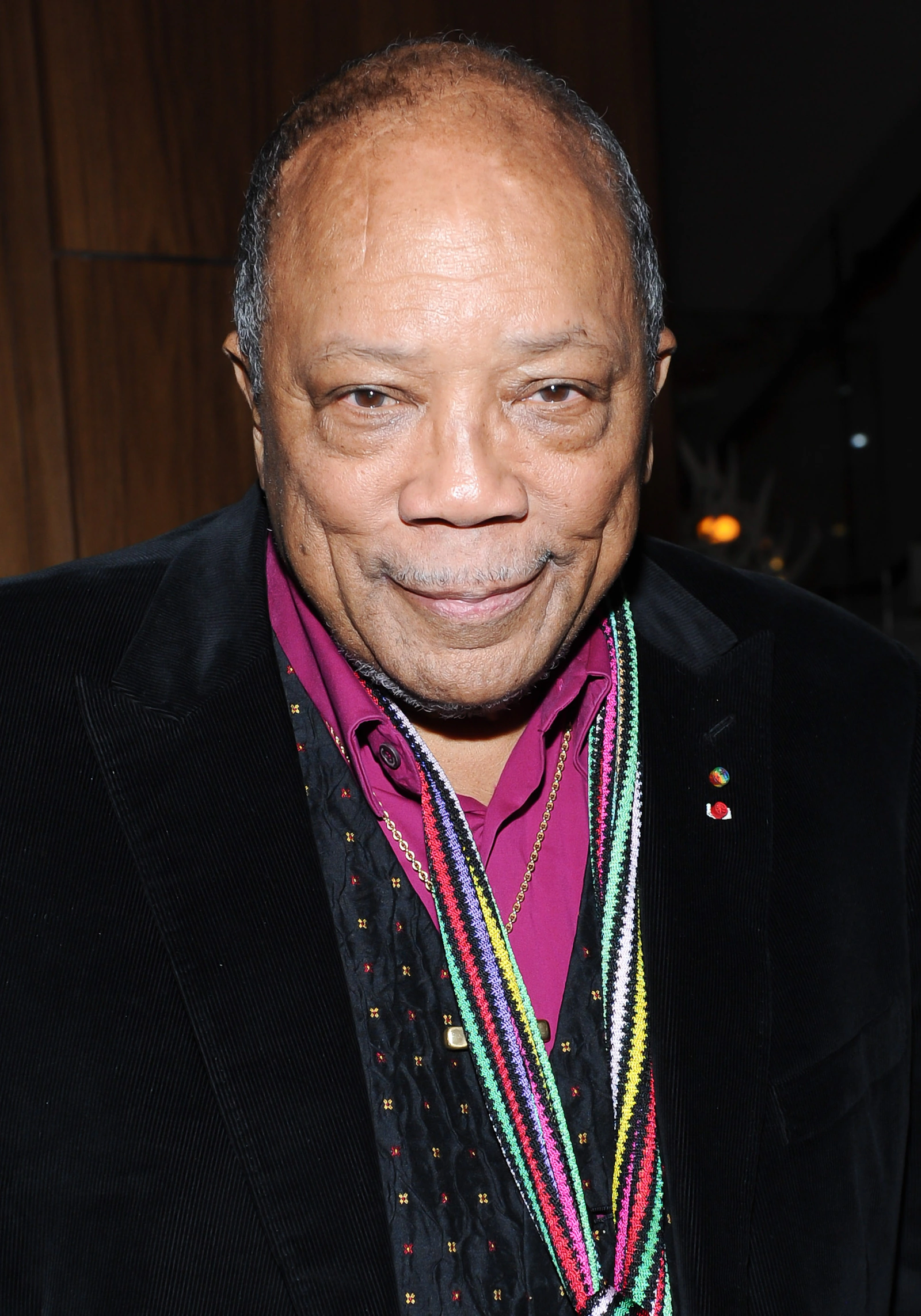
Attr: Canadian Film Centre, CC BY 2.0
| 16 Quotes | |
| Occup. | Musician |
| From | USA |
| Born | March 14, 1933 Chicago, Illinois |
| Age | 93 years |
| Cite | |
Citation Formats
APA Style (7th ed.)
Quincy jones biography, facts and quotes. (2026, February 14). FixQuotes. https://fixquotes.com/artists/quincy-jones/
Chicago Style
"Quincy Jones biography, facts and quotes." FixQuotes. February 14, 2026. https://fixquotes.com/artists/quincy-jones/.
MLA Style (9th ed.)
"Quincy Jones biography, facts and quotes." FixQuotes, 14 Feb. 2026, https://fixquotes.com/artists/quincy-jones/. Accessed 26 Mar. 2026.
Early Life and Background
Quincy Delight Jones Jr. was born on March 14, 1933, in Chicago, Illinois, into a Black working-class world shaped by the Great Depression and by the citys brutal segmentation of race, labor, and opportunity. His earliest memories carried both danger and music: cramped streets, hustling economies, and the omnipresent sound of bands passing through dance halls and theaters. The instability of the era pressed into family life; his mother, Sarah, struggled with severe mental illness, and the tenderness and confusion of that loss became a private engine in his later drive to build order, meaning, and beauty out of noise.
In the 1940s the Jones family moved west, first through Washington and then to Seattle, where Quincy grew up during wartime and postwar America - a period when big-band swing, bebop, and rhythm and blues competed for the nations ear. The move widened his horizon: he encountered instruments, rehearsals, and older musicians who treated music as both craft and escape. In neighborhoods where boredom could turn quickly into trouble, he learned early the value of being busy, of practicing, of staying in rooms where the rules were musical rather than violent.
Education and Formative Influences
Jones attended Garfield High School in Seattle, where school ensembles became his first disciplined laboratory, and he took private study in theory and arranging that quickly exceeded what most teenagers imagined possible. A crucial early friendship with the young Ray Charles sharpened his ambition and his ear, and gigs around the Northwest exposed him to professional standards without the immediate pressure-cooker of New York. He later studied at Berklee in Boston, but his real education was hybrid: formal training, relentless listening, and apprenticing himself to working bands until harmony, voicing, and rhythm felt like a second language.
Career, Major Works, and Turning Points
By his early twenties Jones was touring and arranging for major bandleaders, including Lionel Hampton, then entering the orbit of Dizzy Gillespie, where he absorbed bebops speed, wit, and harmonic daring. He became one of the first Black executives in high-level roles at a major label (Mercury Records), while also building a parallel career as a composer-arranger-bandleader whose albums such as The Quintessence and Walking in Space fused jazz sophistication with contemporary groove. In Hollywood he expanded into film and television scoring, including In the Heat of the Night and the landmark TV miniseries Roots, proving he could translate Black musical intelligence into mass-audience narrative sound. His most globally visible turning point came as producer and architect of pop perfection: the Michael Jackson albums Off the Wall, Thriller, and Bad, and the humanitarian recording "We Are the World" (as producer), which showed his rare ability to manage egos, budgets, and aesthetics while keeping the song - and the feeling - central. Across decades he also built media businesses (including Qwest and later ventures), mentored younger artists, and treated production as cultural statecraft: arranging not only notes but institutions.
Philosophy, Style, and Themes
Jones spoke about early poverty and street life without romanticizing it, describing childhood motion as survival training and warning that idleness invites bad choices. That background formed his lifelong obsession with momentum: rehearsals, sessions, deadlines, the next chart. He carried the memory of Chicago as both musical furnace and social trap, and he understood how environment can script a life before a child can argue back. His productivity was not merely ambition; it was a strategy for staying alive inside his own history.
Musically, his style is the sound of curiosity disciplined by technique - dense harmony made friendly, rhythmic complexity made danceable, virtuosity made emotionally legible. He treated listening as a moral practice, recalling a pre-television America where he studied every visiting band: “I was inspired by a lot of people when I was young. Every band that came through town, to the theater, or the dance hall. I was at every dance, every night club, listened to every band that came through, because in those days we didn't have MTV, we didn't have television”. He also insisted that theory was not an ivory-tower prison but a tool for freedom: “It's easy to get next to music theory, especially between your peers and music classes and so forth. You just pay attention. I had a good ear, so I realized that printed music was just about reminding you what to play”. Underneath the polish, his recurring theme was social harmony - the belief that shared skill can become shared dignity: “Imagine what a harmonious world it could be if every single person, both young and old shared a little of what he is good at doing”.
Legacy and Influence
Quincy Jones endures as a rare bridge figure: a jazz-trained arranger who conquered pop without diluting musicianship, a Black executive who expanded what power could look like in American entertainment, and a producer who made the recording studio itself a compositional instrument. His fingerprints are on modern production values - the marriage of rhythmic precision, cinematic orchestration, and vocal storytelling - and his career models a larger lesson: that taste can be taught, excellence can be organized, and collaboration can be engineered into something that feels like destiny.
Our collection contains 16 quotes written by Quincy, under the main topics: Witty One-Liners - Music - Equality - Peace - Father.
Other people related to Quincy: George Benson (Musician), Lionel Richie (Musician), Eddie Van Halen (Musician), Jerome Richardson (Musician), Lesley Gore (Musician), Freddie Hubbard (Musician), Donna Summer (Musician), Count Basie (Musician), Chaka Khan (Musician), Marsha Norman (Dramatist)
Source / external links