
Richie Sambora Biography Quotes 20 Report mistakes
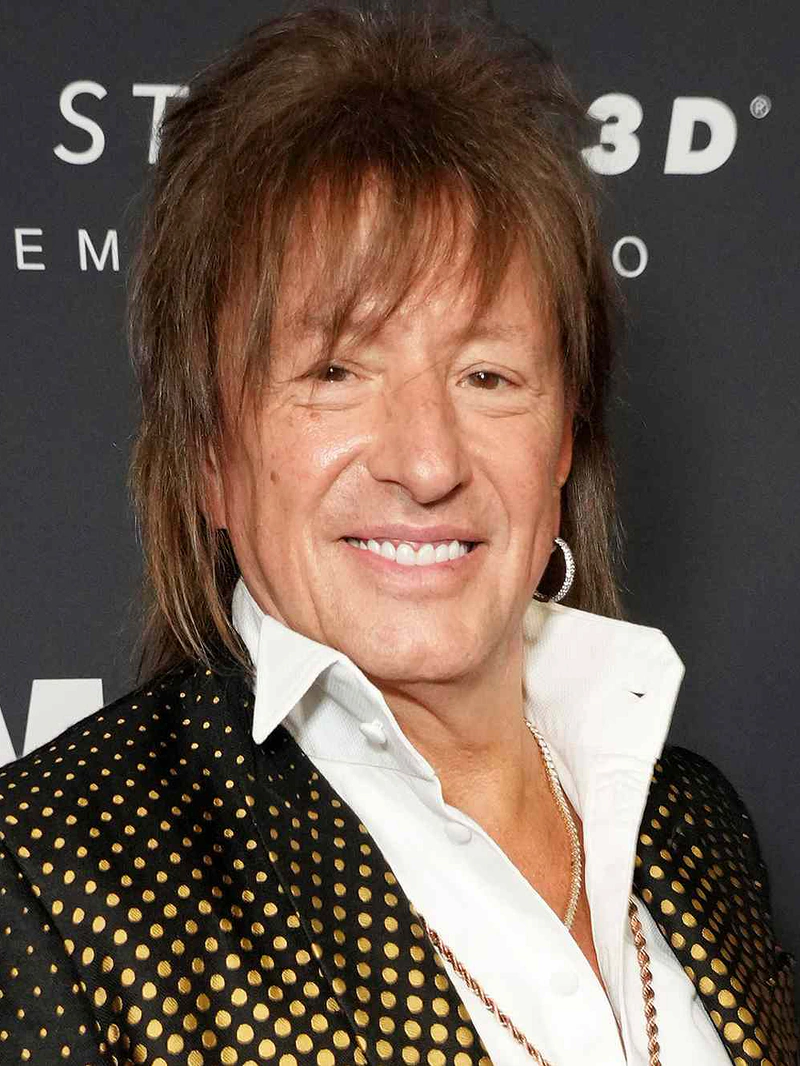
Attr: ew.com
| 20 Quotes | |
| Born as | Richard Stephen Sambora |
| Occup. | Musician |
| From | USA |
| Born | July 11, 1959 Perth Amboy, New Jersey, United States |
| Age | 66 years |
| Cite | |
Citation Formats
APA Style (7th ed.)
Richie sambora biography, facts and quotes. (2026, February 11). FixQuotes. https://fixquotes.com/artists/richie-sambora/
Chicago Style
"Richie Sambora biography, facts and quotes." FixQuotes. February 11, 2026. https://fixquotes.com/artists/richie-sambora/.
MLA Style (9th ed.)
"Richie Sambora biography, facts and quotes." FixQuotes, 11 Feb. 2026, https://fixquotes.com/artists/richie-sambora/. Accessed 12 Feb. 2026.
Early Life and Background
Richard Stephen Sambora was born on July 11, 1959, in Perth Amboy, New Jersey, a working waterfront city whose ethnic neighborhoods and bar bands sat in the shadow of New York radio and the myths of the Jersey Shore. He grew up in nearby Woodbridge Township, in the same corridor that produced a particular kind of arena-ready rock: melodic, street-level, and ambitious. The 1970s around him were split between hard rock muscle, singer-songwriter confession, and the last glow of classic R&B on local stations - a mix that helped shape his instinct to make guitars both tough and tuneful.Family life gave him an early sense of responsibility and a desire to prove himself. Friends and bandmates later recognized in him a combination of sensitivity and grit - the kind of person who could be both a reliable professional and a restless creative. That duality, the pull between home and the road, would become a recurring pressure point as his fame accelerated.
Education and Formative Influences
Sambora attended Woodbridge High School, coming of age as rock guitar became a public language of identity. He played in local groups and absorbed the craft of the era: blues phrasing, British hard rock attack, and the emerging idea that a guitarist could be a songwriter and arranger, not merely a soloist. By his late teens he was serious about musicianship - not only electric guitar but also acoustic textures and, later, instruments like mandolin - building the palette that would let him color stadium songs with folk shimmer, gospel warmth, and bite.Career, Major Works, and Turning Points
In 1983 he joined Bon Jovi, replacing the band s original guitarist as the group moved from New Jersey clubs toward a national deal; the partnership with Jon Bon Jovi became the axis of his career. Sambora s playing and co-writing helped define the band s peak: the slippery riffing and talkbox sheen of "Livin' on a Prayer" (1986), the emotional architecture of "Wanted Dead or Alive" (1986), and the hard-polished anthems across Slippery When Wet (1986) and New Jersey (1988). As the 1990s demanded reinvention, he stayed central through Keep the Faith (1992) and the more adult, reflective These Days (1995), while also stepping out with solo albums such as Stranger in This Town (1991) and Undiscovered Soul (1998). Personal upheavals and the grind of touring eventually collided with health and family priorities; after intermittent absences, he formally parted ways with Bon Jovi in 2013, a turning point that reframed him from band pillar to independent musician navigating legacy, recovery, and renewal.Philosophy, Style, and Themes
Sambora approached guitar as storytelling. He insisted on the solo as composition rather than athletic display: "I try to look at most of my solos as a musical piece within the song, not, say, showing off". Psychologically, that reveals a craftsman s superego - a need to serve the larger emotional arc - and it explains why his signature moments often sound sung, with wide vibrato and melody-first phrasing that echoes the vocal line. His tone blended arena-rock clarity with blues grammar, and his use of talkbox, slide, and acoustic layering signaled an arranger s mind, not just a lead guitarist s ego.The other major theme in his life is the cost of being public. Even at peak fame, he framed himself as accountable to private roles: "You know, no matter what I am or what I do for a living, I'm still, you know, the husband and the dad and the protector of the house, and I have to be conscientious about that". That sentence reads like self-interrogation - a man trying to keep an inner perimeter intact while the outer world keeps expanding. He also spoke with gratitude rather than entitlement: "I'm a lucky guy. I don't take for granted, for one minute, what I do". Taken together, these lines map a temperament that seeks balance: disciplined enough to prioritize the song, humble enough to honor the audience, and human enough to admit the strain of reconciling devotion to craft with devotion to home.
Legacy and Influence
Sambora endures as one of the defining architects of late-1980s and 1990s mainstream rock guitar: a player whose melodic intelligence made stadium music feel intimate and whose co-writing helped codify the modern rock anthem. His influence shows up in generations of radio-rock guitarists who learned that precision can still feel emotional, and that virtuosity can be measured by restraint. Beyond the riffs and the talkbox, his biography is a case study in how a guitarist becomes a cultural voice - and then has to renegotiate identity when the band, the industry, and the self all change.Our collection contains 20 quotes written by Richie, under the main topics: Witty One-Liners - Friendship - Dark Humor - Music - Gratitude.
Other people related to Richie: Denise Richards (Actress)