
Rick Wakeman Biography Quotes 19 Report mistakes
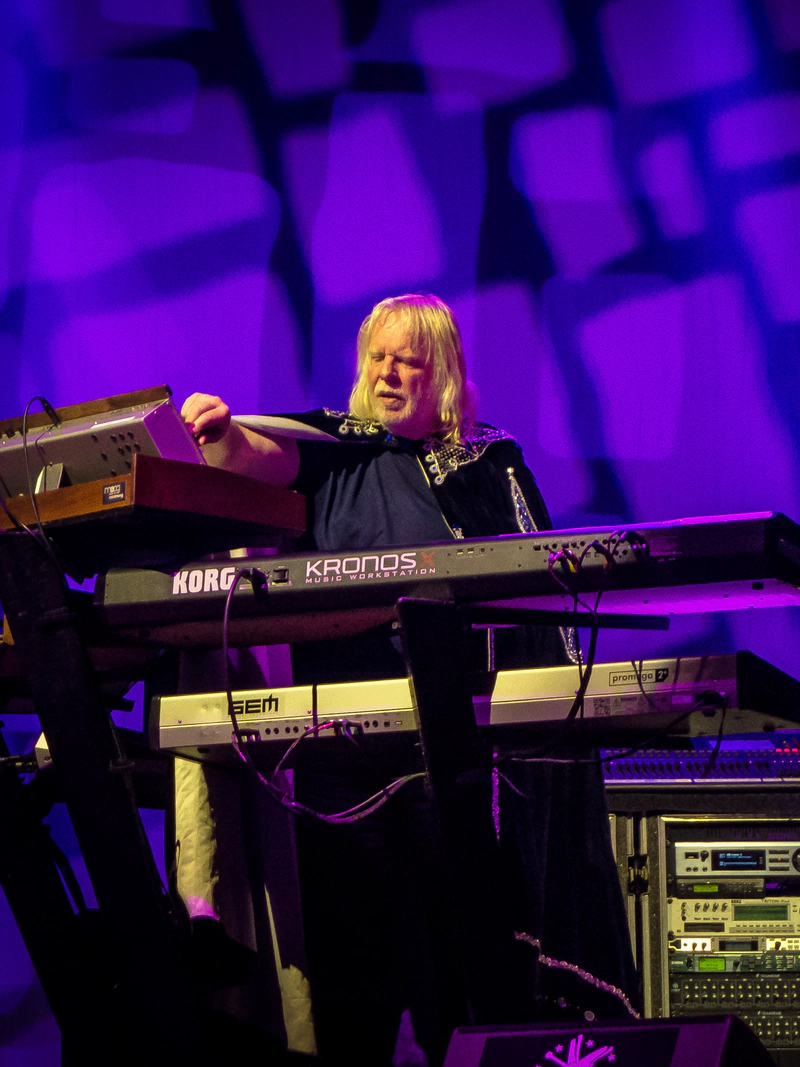
| 19 Quotes | |
| Born as | Richard Christopher Wakeman |
| Occup. | Musician |
| From | United Kingdom |
| Born | May 18, 1949 Perivale, Middlesex, England |
| Age | 76 years |
| Cite | |
Citation Formats
APA Style (7th ed.)
Rick wakeman biography, facts and quotes. (2026, February 28). FixQuotes. https://fixquotes.com/artists/rick-wakeman/
Chicago Style
"Rick Wakeman biography, facts and quotes." FixQuotes. February 28, 2026. https://fixquotes.com/artists/rick-wakeman/.
MLA Style (9th ed.)
"Rick Wakeman biography, facts and quotes." FixQuotes, 28 Feb. 2026, https://fixquotes.com/artists/rick-wakeman/. Accessed 31 Mar. 2026.
Early Life and Background
Richard Christopher Wakeman was born on May 18, 1949, in Perivale, West London, and grew up in a postwar Britain where radio, dance halls, and an expanding record industry offered working-class and lower-middle-class families new routes into culture. His home life was musically sympathetic but not gilded; what distinguished him early was sheer absorption. The piano was not a hobby so much as a private room he could enter at will, a place where discipline and daydreams became the same act.London in the 1950s and early 1960s was both local and cosmopolitan: church organs, pub singalongs, the BBC, and imported American rock and soul all coexisted. Wakeman learned to read the city by ear, drifting toward the keyboard as an instrument that could impersonate an orchestra, a rhythm section, or a choir. That chameleonic impulse - the desire to become many players at once - would later define his sound in progressive rock and in his grand, narrative solo albums.
Education and Formative Influences
He attended Drayton Manor Grammar School and later studied at the Royal College of Music in London, training that sharpened his technique and made counterpoint, harmony, and orchestration feel practical rather than academic. Yet the late-1960s British scene rewarded flexibility as much as pedigree, and Wakeman moved between worlds: classical rigor, pop craft, and the studio economy where keyboardists were hired for taste, speed, and the ability to elevate a track in minutes.Career, Major Works, and Turning Points
Wakeman became a first-call session player at the turn of the 1970s, appearing on major recordings (including David Bowie sessions, notably around the Hunky Dory era) and developing a signature blend of piano, Hammond organ, Mellotron, and newly emerging synthesizers. After a key stint with the Strawbs, he joined Yes in 1971, helping define the band on Fragile (1971) and Close to the Edge (1972) with virtuoso architecture and lyrical touch. His solo breakthrough, The Six Wives of Henry VIII (1973), translated rock keyboard spectacle into a coherent historical suite; it was followed by the ambitious Journey to the Centre of the Earth (1974), whose live, quasi-symphonic scale matched the era's appetite for concept and excess. Health strains and the grind of mega-touring fed periods of departure and return with Yes, but his reinventions continued: the late-1970s Yes reunion for Going for the One (1977), later work across various Yes lineups, and a long parallel life of solo touring, composing, and broadcasting that kept him visible even when fashions turned against prog.Philosophy, Style, and Themes
Wakeman's inner engine is restless workmanship: the feeling of being most himself when he is making sound. “I'm always writing or playing because that is my life”. That compulsion explains both his prolific output and his tendency toward large forms - suites, concept records, and live spectacles - where the keyboard becomes narrator as well as instrument. Even at his most ornate, the drama is typically melodic rather than abstract; he favors memorable motifs, bright harmonic turns, and a sense of story you can hum.Just as important is his pragmatism about experimentation. “I always say that it's about breaking the rules. But the secret of breaking rules in a way that works is understanding what the rules are in the first place”. The classical training provided the rules; rock provided permission to bend them, and the studio provided deadlines that forced decisions. His long bond with Yes is often described not as simple membership but as a recurring identity - a musical family with gravitational pull. “Even the two times that I left, I never really felt like I left the band. It's very bizarre. It's like there's sort of an umbilical cord that stretches between us spiritually”. In that tension - freedom versus belonging, virtuosity versus song - his best work finds its emotional charge.
Legacy and Influence
Wakeman endures as one of rock's defining keyboard voices: a musician who helped mainstream the synthesizer as a lead instrument without surrendering the piano's lyricism or the organ's physical heft. For later prog and metal keyboardists, he set a template for tonal clarity under technical pressure; for audiences, he embodied the 1970s idea that rock could think in chapters, not just singles. His influence is audible in the continuing appetite for concept-driven composition, in the prestige now granted to the once-maligned virtuoso, and in the way modern live acts treat keyboards as both color and command center - a legacy built on craft, curiosity, and the stubborn daily need to play.Our collection contains 19 quotes written by Rick, under the main topics: Wisdom - Dark Humor - Friendship - Music - Sarcastic.
Other people related to Rick: Geoff Downes (Musician), Trevor Rabin (Musician), Tony Levin (Musician)