
Rick Wright Biography Quotes 5 Report mistakes
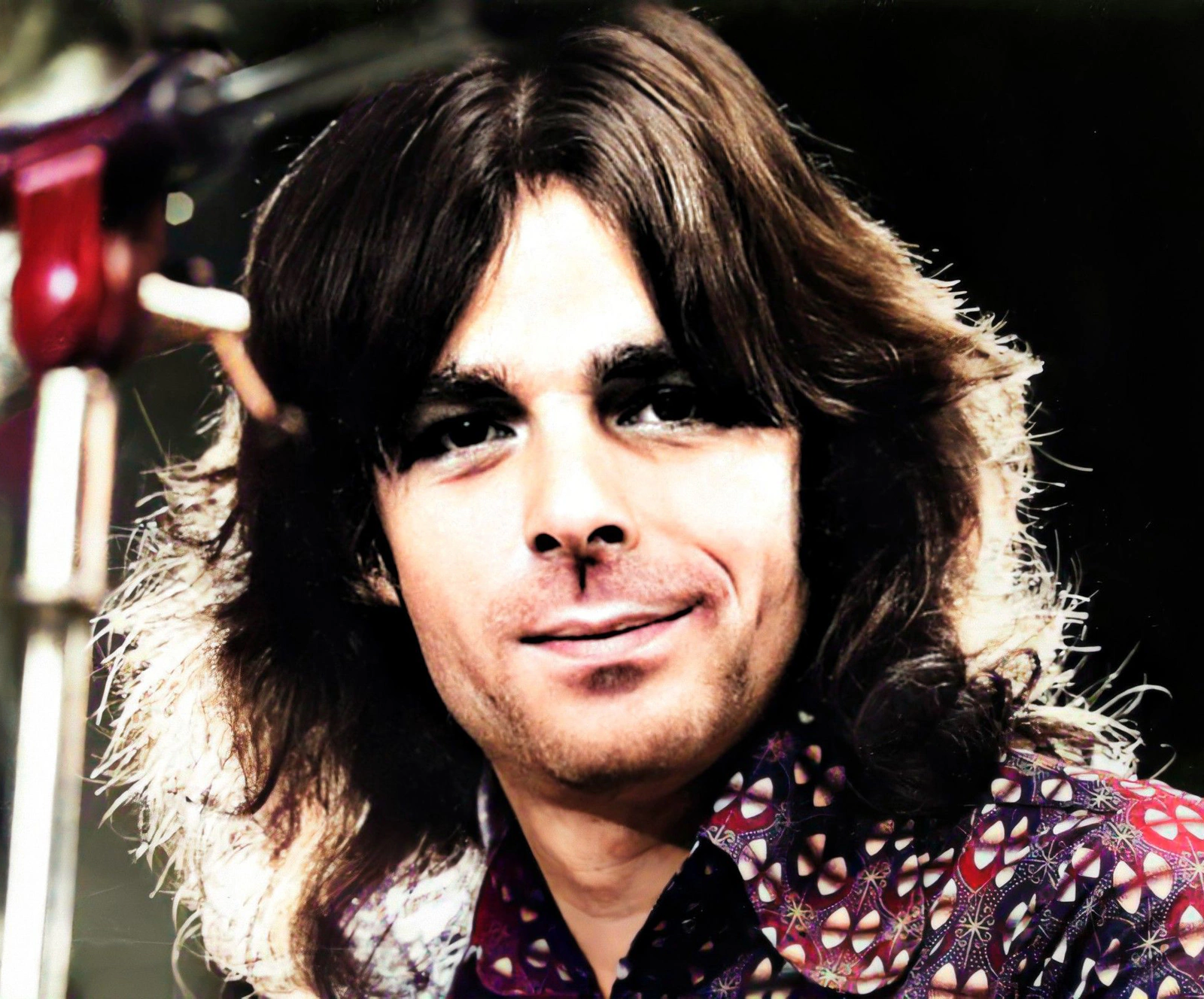
| 5 Quotes | |
| Born as | Richard William Wright |
| Occup. | Musician |
| From | United Kingdom |
| Born | July 28, 1943 Hampstead, London, United Kingdom |
| Died | September 15, 2008 London, United Kingdom |
| Cause | Cancer |
| Aged | 65 years |
| Cite | |
Citation Formats
APA Style (7th ed.)
Rick wright biography, facts and quotes. (2026, February 11). FixQuotes. https://fixquotes.com/artists/rick-wright/
Chicago Style
"Rick Wright biography, facts and quotes." FixQuotes. February 11, 2026. https://fixquotes.com/artists/rick-wright/.
MLA Style (9th ed.)
"Rick Wright biography, facts and quotes." FixQuotes, 11 Feb. 2026, https://fixquotes.com/artists/rick-wright/. Accessed 28 Mar. 2026.
Early Life and Background
Richard William Wright was born on July 28, 1943, in Hatch End, Middlesex, a suburban edge of postwar London where the austerity years were giving way to a new teenage consumer culture. He grew up in a Britain still organized by class and deference, yet increasingly electrified by jazz clubs, American records, and the first wave of rock-and-roll. That tension between restraint and release would sit at the center of his temperament: quiet, observant, and drawn to interior worlds.Family life was stable enough to allow curiosity, but not so grand that art felt inevitable. He was not a natural frontman; he gravitated toward the spaces behind the spotlight, where harmony and atmosphere could do the speaking. Even before Pink Floyd, he was the kind of musician who listened for mood as much as melody, and who understood that a single chord change, if voiced right, could feel like a weather system moving through a room.
Education and Formative Influences
Wright studied at Regent Street Polytechnic in London, initially pursuing architecture, a training that sharpened his sense of structure and spatial thinking. In the city he fell into the orbit of Roger Waters and Nick Mason, and later Syd Barrett, at a moment when British blues, modern jazz, and the psychedelic underground were cross-pollinating in basements and art schools. Hammond organ, Farfisa, and later grand piano became his palette; so did the harmonic lessons of jazz and the studio possibilities opened by tape, reverb, and emerging synthesizers.Career, Major Works, and Turning Points
As a founding member of Pink Floyd (formed in 1965), Wright became the band's harmonic anchor - the musician most responsible for its melancholic color, churchlike chord voicings, and drifting, oceanic textures. His writing and vocal presence shaped key works: the cathedral organ and wordless chants of "Careful with That Axe, Eugene" (live-era identity), the impressionistic longing of "Us and Them" and "The Great Gig in the Sky" on The Dark Side of the Moon (1973), and his credits on Wish You Were Here (1975), including the aching "Shine On You Crazy Diamond" suite and the jazzy unease of "Have a Cigar". Yet the band's internal power shifted as Waters consolidated conceptual control; during The Wall (1979) Wright was pushed out as a full member, a rare case of a founder reduced to hired status while still performing on the tour. He later returned for A Momentary Lapse of Reason (1987) and The Division Bell (1994), reasserting his touch in late-period Floyd, and in parallel released solo work such as Wet Dream (1978) and Broken China (1996), the latter a more explicit exploration of psychological fracture.Philosophy, Style, and Themes
Wright's art was less about declaring a thesis than building a habitat for feeling. He preferred music-first composition, letting harmony suggest narrative, and he was candid about his method: "We worked very hard to make the lyrics suit the music. I can't, like Elton John, for example, compose by lyrics". That posture explains the peculiar power of his best contributions - they sound like places you enter rather than songs you decode. His keyboard parts often avoided virtuoso display; instead they used timbre (Hammond swell, Leslie rotation, Rhodes shimmer, Minimoog drift) as emotional grammar, holding tension in suspended chords until release felt physical.His inner life was also marked by conflict avoidance colliding with a band built on strong wills. He spoke with unvarnished fatigue about the long interpersonal war: “We fought during 'The Wall, ' which was an album Waters wrote, based on his family story, we clashed long before that, during the period of the Dark Side and 'Wish You Were Here.' Actually, we never got along”. The remark reads not as gossip but as psychology - a reserved collaborator forced to survive in a high-stakes creative marriage, where silence could be mistaken for consent and patience could be interpreted as weakness. Even his critique of the industry carried the tone of someone disappointed rather than outraged: “The fact that people still know us is, in my opinion, a result of our music and of the big money that runs the music industry today”. The skepticism fits his musical ethos: authenticity was in the sound itself, not the mythology around it.
Legacy and Influence
Wright died on September 15, 2008, in London, leaving behind an imprint that is easiest to hear when it is absent: without his harmonic empathy, Pink Floyd's grandeur can harden into spectacle. With it, the band's most famous albums breathe - their slow-blooming chords, choral organ, and patient piano voicings giving rock an unusually adult emotional range. His influence runs through ambient and post-rock keyboard language, through producers who treat the studio as an instrument, and through any songwriter who learns that atmosphere is not decoration but meaning. In the end, Wright's biography is the story of a man who made quiet choices in loud times - and whose restraint proved enduringly radical.Our collection contains 5 quotes written by Rick, under the main topics: Music - Broken Friendship - Relationship.
Source / external links