
Robert Fripp Biography Quotes 22 Report mistakes
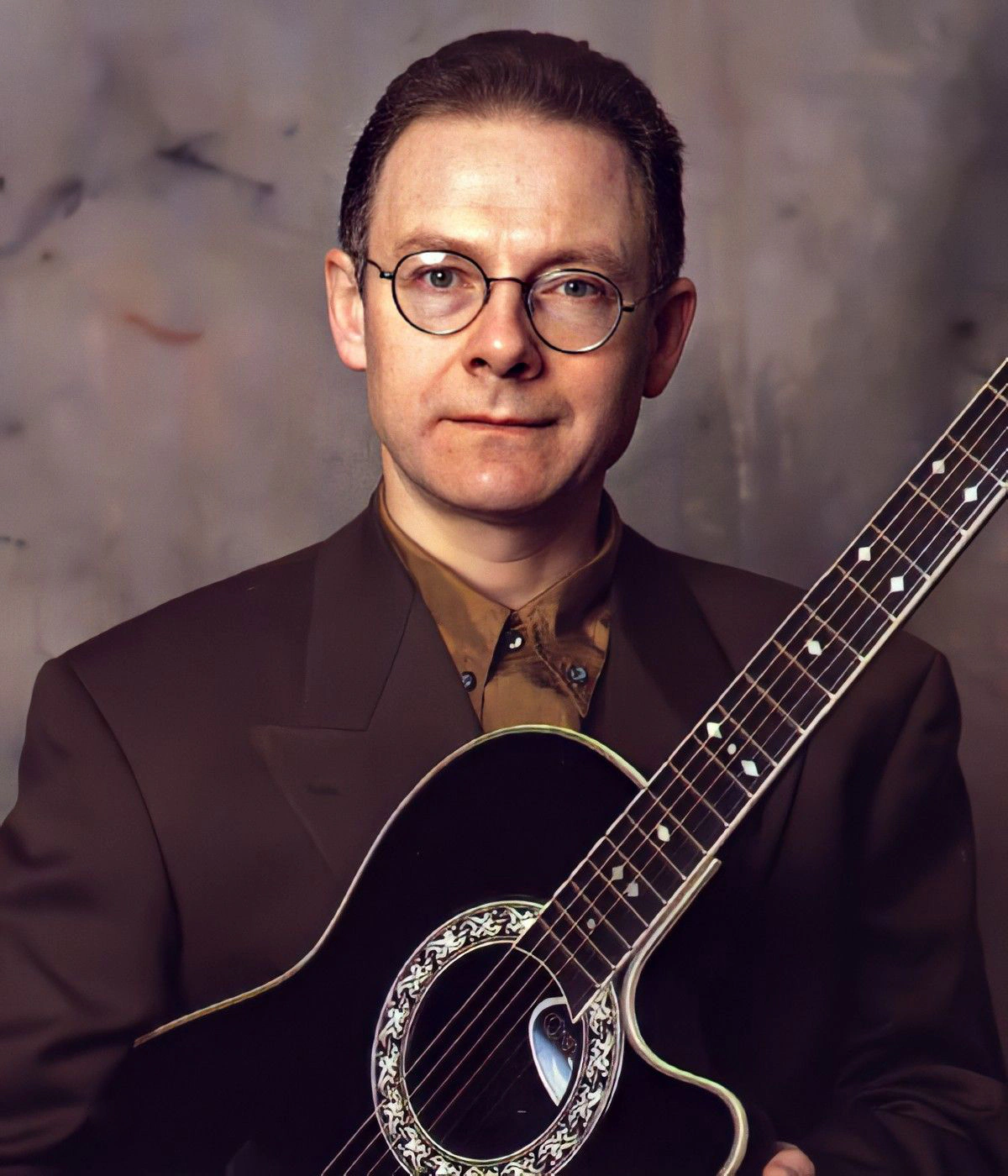
| 22 Quotes | |
| Occup. | Musician |
| From | United Kingdom |
| Born | April 11, 1945 Wimborne Minster, Dorset, England |
| Age | 80 years |
| Cite | |
Citation Formats
APA Style (7th ed.)
Robert fripp biography, facts and quotes. (2026, February 16). FixQuotes. https://fixquotes.com/artists/robert-fripp/
Chicago Style
"Robert Fripp biography, facts and quotes." FixQuotes. February 16, 2026. https://fixquotes.com/artists/robert-fripp/.
MLA Style (9th ed.)
"Robert Fripp biography, facts and quotes." FixQuotes, 16 Feb. 2026, https://fixquotes.com/artists/robert-fripp/. Accessed 24 Mar. 2026.
Early Life and Background
Robert Fripp was born on April 11, 1946, in Wimborne Minster, Dorset, England, and grew up in the postwar Britain that was both materially constrained and culturally restless. His family life was not the mythic bohemia later associated with progressive rock; it was provincial, practical, and shaped by the quiet pressure to be employable. That tension between the ordinary and the uncompromising would become a lifelong engine: Fripp repeatedly chose the difficult route, insisting that seriousness was not a pose but a discipline.A pivotal childhood moment came when he first saw a guitar. He later described it as a kind of recognition rather than a choice, and he pursued the instrument with an intensity that suggested vocation more than hobby. Early on, he confronted the gulf between desire and ability - a confrontation that hardened into his characteristic temperament: exacting with himself, skeptical of easy virtuosity, and alert to the difference between playing notes and serving music. The England he came from prized restraint; Fripp turned restraint into rigor.
Education and Formative Influences
Fripp studied at Bournemouth College of Technology and immersed himself in the crosscurrents of early 1960s Britain: skiffle and rock and roll, jazz, and the emerging seriousness of amplified music. He worked in the local music scene, absorbing professional habits from dance bands and session work while privately chasing deeper structures - Bach, modern classical ideas, and the logic of improvisation. In 1967 he co-founded Giles, Giles and Fripp with drummer Michael Giles and bassist Peter Giles; their album The Cheerful Insanity of Giles, Giles and Fripp (1968) failed commercially but trained him in studio craft and the paradox of pop: accessibility can be an enemy of truth.Career, Major Works, and Turning Points
In 1969 Fripp and the Giles brothers, with Greg Lake, Ian McDonald, and lyricist Peter Sinfield, formed King Crimson and released In the Court of the Crimson King, a landmark that welded symphonic ambition to rock force. Fripp became the constant amid collapse and renewal: the band fractured after its debut, then re-emerged in harder, more improvisational lineups (Larks' Tongues in Aspic, 1973; Starless and Bible Black, 1974; Red, 1974) before he dissolved it in 1974 at the height of its power. His next phase widened his public profile and private method: collaborations with Brian Eno (including No Pussyfooting, 1973), guitar work with David Bowie (notably "Heroes", 1977) and Peter Gabriel, and his own solo statement Exposure (1979). In the 1980s he reconvened King Crimson with Adrian Belew, Tony Levin, and Bill Bruford for a taut, interlocking sound (Discipline, 1981), later expanding the project into "Double Trio" and "ProjeKcts" experiments, and, in his later years, into ensemble formats that treated rock like chamber music with amplifiers.Philosophy, Style, and Themes
Fripp's inner life is best understood as a continuous attempt to align craft with conscience. His playing can sound severe because it is designed to be accountable: bright, clean attack; controlled sustain; and parts engineered like architecture rather than decoration. Even at his most lyrical, he distrusts sentimentality and treats emotion as something earned by structure. This is why he can sound both mechanical and deeply human - the humanity is in the choice to submit impulse to form, to make feeling precise rather than loud.His interviews and teaching circle back to perception, presence, and responsibility. “I'd say that what we hear is the quality of our listening”. In that line is his psychology: he is less interested in self-expression than in self-observation, less in performing a personality than in refining attention. He worries about what happens when technique becomes autopilot - “If a professional musician in a symphony orchestra is playing Beethoven... they can play it in their sleep. Does the genius remain present in the music or not?” The question is not rhetorical; it exposes his fear of dead repetition and explains his frequent reinventions of King Crimson. Even when he embraced complex meters and systems, he framed them as ways to keep music awake in the moment: “However, in modern conceptual frameworks there is a more sophisticated view. I would say that the act of music exists in several worlds simultaneously”. For Fripp, the "worlds" are the written and the improvised, the personal and the impersonal, the band as organism and the listener as co-creator - and his art is the ongoing attempt to hold them in the same frame without collapsing into comfort.
Legacy and Influence
Fripp helped define progressive rock not as decoration but as method: the idea that a rock band could think like composers, rehearse like ensembles, and still hit like a live wire. His influence runs through math rock, post-rock, ambient, and modern guitar orchestration - from the disciplined interlock of 1980s Crimson to the textural thinking of Eno-era studio culture. Yet his most enduring legacy may be ethical: a model of musicianship as practice, where innovation is not novelty but renewed attention, and where the real drama is not fame but the daily work of making music worthy of being heard.Our collection contains 22 quotes written by Robert, under the main topics: Witty One-Liners - Truth - Wisdom - Music - Leadership.
Other people related to Robert: Pat Mastelotto (Musician), Michael Giles (Musician), Jamie Muir (Musician), Boz Burrell (Musician), Daryl Hall (Musician)
Source / external links