
Robin Gibb Biography Quotes 26 Report mistakes
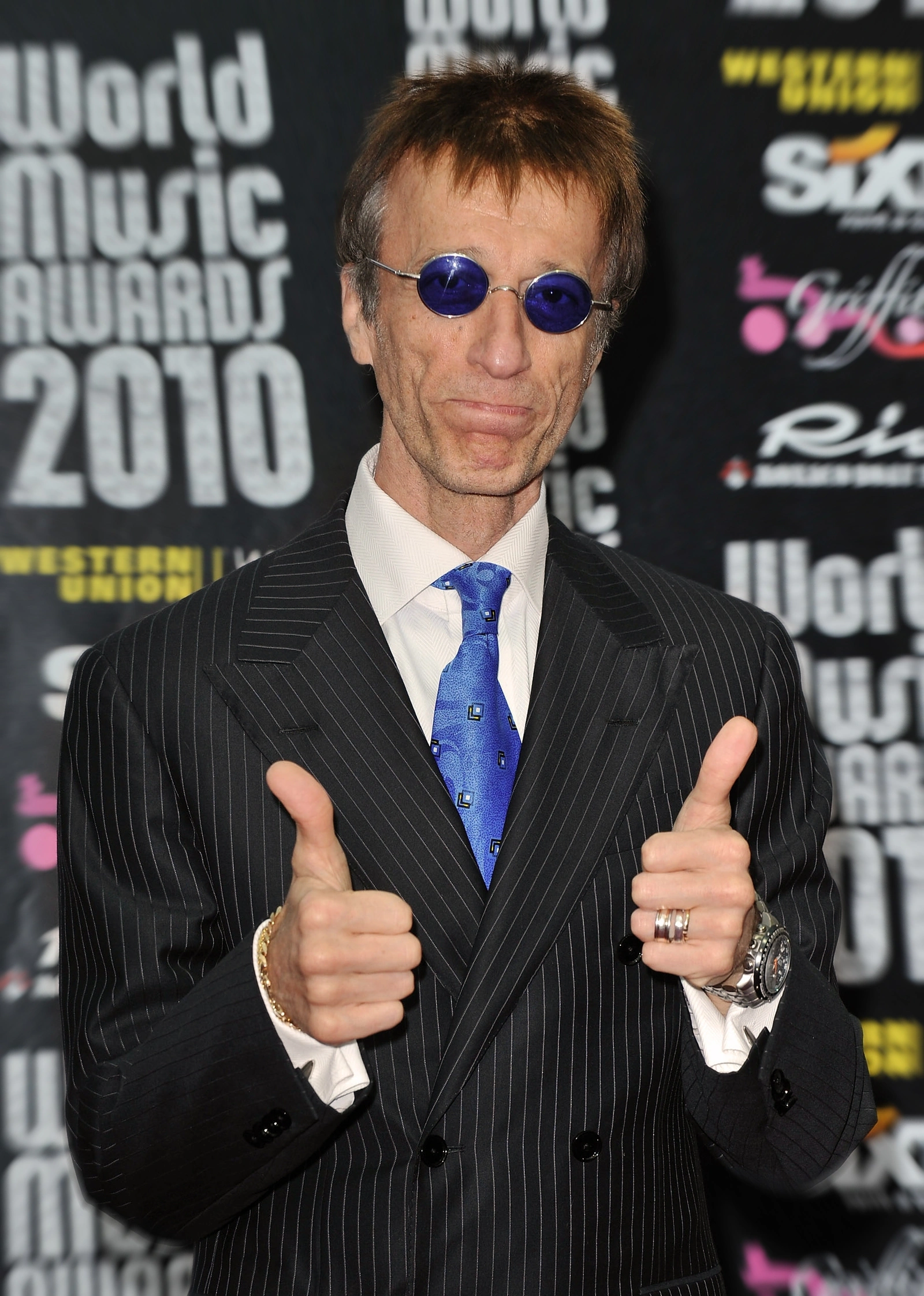
| 26 Quotes | |
| Born as | Robin Hugh Gibb |
| Occup. | Musician |
| From | England |
| Born | December 22, 1949 Douglas, Isle of Man |
| Age | 76 years |
| Cite | |
Citation Formats
APA Style (7th ed.)
Robin gibb biography, facts and quotes. (2026, February 11). FixQuotes. https://fixquotes.com/artists/robin-gibb/
Chicago Style
"Robin Gibb biography, facts and quotes." FixQuotes. February 11, 2026. https://fixquotes.com/artists/robin-gibb/.
MLA Style (9th ed.)
"Robin Gibb biography, facts and quotes." FixQuotes, 11 Feb. 2026, https://fixquotes.com/artists/robin-gibb/. Accessed 28 Mar. 2026.
Early Life and Background
Robin Hugh Gibb was born on December 22, 1949, on the Isle of Man, a Crown dependency closely tied to Britain, into a family already orbiting performance. The Gibbs soon moved back to England, and Robin grew up amid postwar austerity giving way to the brighter, transistor-radio world of the 1950s. His father, Hugh Gibb, worked as a bandleader and drummer, and the household treated harmony as a daily language rather than a special occasion.In 1958 the family emigrated to Redcliffe, Queensland, Australia, chasing opportunity and sunshine, and the three brothers - Barry (b. 1946), twins Robin and Maurice - began to turn childhood imitation into a working act. Their early fame in Australia was shaped by relentless radio, talent shows, and the discipline of playing to indifferent rooms, a crucible that sharpened Robin's gift for wounded, melodic drama. Even as a teen, he projected a solitary intensity, often seeming older than his years - a singer who sounded as if he had already lost something.
Education and Formative Influences
Gibb's education was fragmented by travel and work, and his real schooling came from records and rehearsal: American R&B and soul, British pop craft, and the theatrical storytelling of earlier crooners filtered through a family harmony unit. In Australia the brothers learned how to write quickly, record efficiently, and survive trends; by the mid-1960s they were composing their own material at a professional clip, developing the Bee Gees' signature tension between close-knit vocal blend and individual yearning.Career, Major Works, and Turning Points
Returning to the UK in 1967, the Bee Gees broke through with "New York Mining Disaster 1941", then "To Love Somebody", "Massachusetts", and the album Bee Gees' 1st, with Robin's tremulous lead vocal becoming a recognizable emotional instrument. A late-1960s split briefly made him a solo star with "Saved by the Bell" (1969), but the brothers reunited and expanded their palette through Trafalgar (1971) and a run of global singles including "How Can You Mend a Broken Heart" (1971). The great turning came in the mid-1970s when they rebuilt their sound in Miami with producer Arif Mardin, culminating in the falsetto-driven era and the Saturday Night Fever phenomenon ("Stayin' Alive", "Night Fever", and more), after which backlash forced another reinvention - writing and producing for others while returning in the late 1980s and 1990s with hits like "You Win Again" and acclaimed late work such as Still Waters (1997). Robin continued solo projects, including the reflective album Robin's Reign (2006), but the most consequential rupture was personal: Maurice's sudden death in 2003 ended the Bee Gees as a touring and recording unit, leaving Robin and Barry to navigate grief, memory, and identity in public.Philosophy, Style, and Themes
Gibb's art was built on an unusual combination: technical control and exposed nerves. His voice - reedy, vibrato-rich, sometimes almost unbearably intimate - carried a preoccupation with fragility, regret, and the ache of devotion. Yet he was never merely autobiographical; he treated pop as a craft tradition, a place where a three-minute song could hold operatic stakes. Work, not nightlife, was his refuge, and that temperament mattered: “I'm not a party person or someone who likes to sit and drink in clubs all night, and never really have been. I have a good time through work”. The line reads less like virtue-signaling than self-description - a man who managed emotion through making, arranging, refining.He also understood influence as a living current rather than a museum. The Bee Gees' most startling shifts were not random pivots but attentive listening to the world around them and to Black American innovation. “The Bee Gees were always heavily influenced by black music. As a songwriter, it's never been difficult to pick up on the changing styles of music out there, and soul has always been my favourite genre”. That candor illuminates his psychology: he chased feeling, not fashion, and he prized the communal pulse of soul even when singing lines of loneliness. After Maurice's death, the themes he had long dramatized became literal, and his sense of time darkened into accountability: “With Maurice suddenly going, I realised... I think I've matured. I don't take things lightly any more”. In later interviews and performances, his vulnerability read as steadier - less performative sadness, more measured witness.
Legacy and Influence
Robin Gibb died on May 20, 2012, in London after a long illness, leaving a catalog that helped define modern pop songwriting and studio vocal architecture. As a Bee Gee, he helped write and sing one of the most consequential bodies of work in 20th-century popular music - bridging 1960s baroque pop, 1970s R&B and disco, and later adult contemporary, while influencing everyone from boy-band harmonists to contemporary R&B vocal groups and EDM-era falsetto revivalists. His enduring presence is the particular emotional hue he brought to the group: a sound that could be glamorous and wounded at once, making private longing legible to millions, and proving that adaptability and authenticity can be the same skill when the compass is feeling.Our collection contains 26 quotes written by Robin, under the main topics: Justice - Music - Mortality - Live in the Moment - Legacy & Remembrance.
Other people related to Robin: Clive Anderson (Entertainer)
Source / external links