
Ronnie James Dio Biography Quotes 8 Report mistakes
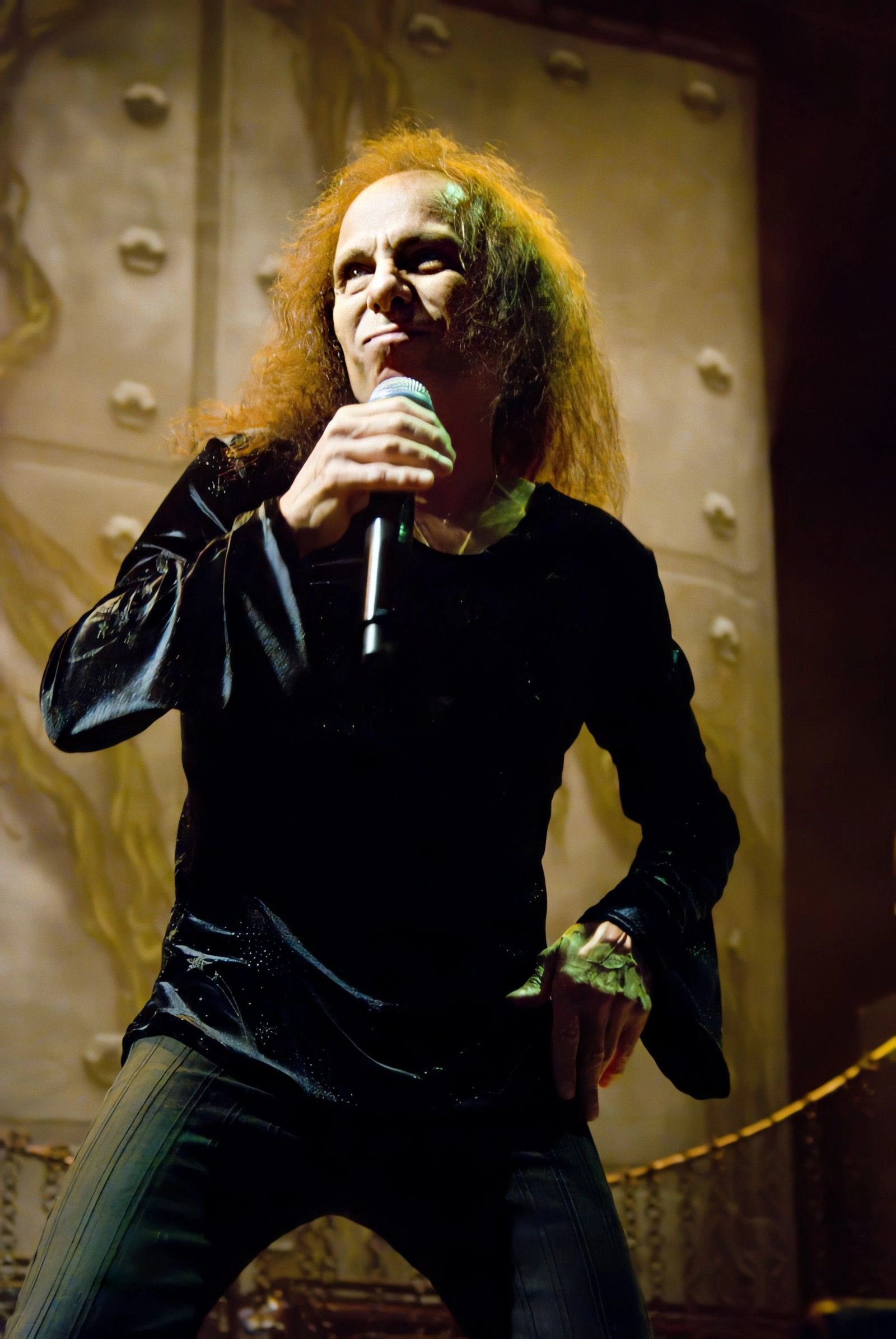
| 8 Quotes | |
| Born as | Ronald James Padavona |
| Occup. | Musician |
| From | USA |
| Spouse | Wendy Dio |
| Born | July 10, 1942 Portsmouth, New Hampshire, USA |
| Died | May 16, 2010 Houston, Texas, USA |
| Cause | Stomach Cancer |
| Aged | 67 years |
| Cite | |
Citation Formats
APA Style (7th ed.)
Ronnie james dio biography, facts and quotes. (2026, February 17). FixQuotes. https://fixquotes.com/artists/ronnie-james-dio/
Chicago Style
"Ronnie James Dio biography, facts and quotes." FixQuotes. February 17, 2026. https://fixquotes.com/artists/ronnie-james-dio/.
MLA Style (9th ed.)
"Ronnie James Dio biography, facts and quotes." FixQuotes, 17 Feb. 2026, https://fixquotes.com/artists/ronnie-james-dio/. Accessed 27 Mar. 2026.
Early Life and Background
Ronald James Padavona was born July 10, 1942, in Portsmouth, New Hampshire, to an Italian American family whose rhythms were shaped as much by postwar industry as by tight-knit kinship. He grew up in nearby Cortland, New York, in a household that, by his own account, was unusually steady for a future icon of heavy music: “My childhood was safe and sane. No abuse and no traumas. I was surrounded by a large and loving family who taught me the importance of hard work and a meaningful education”. That stability mattered. Dio would later build grand, storm-lit worlds in song, but the emotional engine was often discipline, not chaos.
As a boy he was small, intense, and ambitious, initially dreaming beyond the bandstand: “I always wanted to be a basketball player”. The gap between desire and reality became a lifelong motif - the determination to compensate, to outwork, to out-imagine. Friends remembered him as earnest and driven, already practicing and arranging while other kids were simply listening. The early lesson was that identity can be made, not merely inherited.
Education and Formative Influences
Dio attended local schools in Cortland and gravitated toward music early, first through brass. He played trumpet and absorbed the rigors of breath control, phrasing, and projection - training that quietly laid the technical foundation for one of rock's most commanding voices. In the 1950s and early 1960s he came of age as American popular music splintered into doo-wop, R&B, surf, and the first shockwaves of British rock; he learned to treat performance as craft and showmanship as a form of storytelling, not just volume.
Career, Major Works, and Turning Points
He began recording in the late 1950s with The Vegas Kings, soon renamed Ronnie and the Red Caps, and by the late 1960s fronted the heavier, blues-leaning Elf, which opened doors in the hard-rock circuit. A decisive turn came when Deep Purple's Ritchie Blackmore recruited him for Rainbow (1975), where Dio's mythic lyricism and melodic authority powered albums like Rising (1976) and Long Live Rock 'n' Roll (1978). In 1979 he replaced Ozzy Osbourne in Black Sabbath, helping reinvent the band with Heaven and Hell (1980) and Mob Rules (1981), then launched Dio in 1982, a group that crystallized his signature on Holy Diver (1983) and The Last in Line (1984). Later chapters included a 1990s Sabbath return (Dehumanizer, 1992), the Heaven & Hell project with his Sabbath bandmates, and a long touring life that ended only when stomach cancer claimed him on May 16, 2010.
Philosophy, Style, and Themes
Dio's art fused classical clarity with street-level force. He rejected polish that sanded off personality, linking his vocal power to earlier discipline while guarding the strange edge that made it his: “I've never taken vocal lessons. My early trumpet training and a fortunate talent for singing has always been enough for me. In the case of rock singing, I've always felt it was better to remain a bit untrained to maintain your individuality”. Psychologically, that is a manifesto of controlled freedom - a worker's respect for fundamentals paired with a fighter's suspicion of institutions. It helps explain why his singing sounded both inevitable and willful, as if each note were chosen in real time.
As a lyricist he treated fantasy as moral engineering, not escapism, aiming to give listeners agency through symbols - kings, devils, saints, last lines, holy divers. He said plainly, “Lyrically I like to use themes that make the listener use his or her imagination, and to give a little of the lessons I've learned in my own life”. That sentence reveals the private Dio: a teacher in armor, offering hard-earned counsel without autobiography's nakedness. Even his view of rock history carried this ethical modesty, recognizing that culture moves on and that no artist owns the future: “Music, Rock and Roll music especially, is such a generational thing. Each generation must have their own music, I had my own in my generation, you have yours, everyone I know has their own generation”. Under the theatrical dragons lived a practical humanist who understood succession, limits, and the dignity of the next wave.
Legacy and Influence
Dio endures as a standard for metal singing and for lyrical world-building that never forgets the listener. He popularized the "devil horns" hand gesture in rock culture, but his deeper imprint is vocal - the model of a frontman who can be operatic without pretense, intense without self-pity, and fantastical without losing moral weight. Generations of artists across traditional heavy metal, power metal, and modern hard rock cite Holy Diver, Heaven and Hell, and Rising as templates for melody married to menace; fans, meanwhile, remember a performer who treated the stage as a promise kept, night after night, until the end.
Our collection contains 8 quotes written by Ronnie, under the main topics: Justice - Music - Life - Sports - Family.
Other people related to Ronnie: Ritchie Blackmore (Musician), Geezer Butler (Musician)
Source / external links