
Ryan Cabrera Biography Quotes 12 Report mistakes
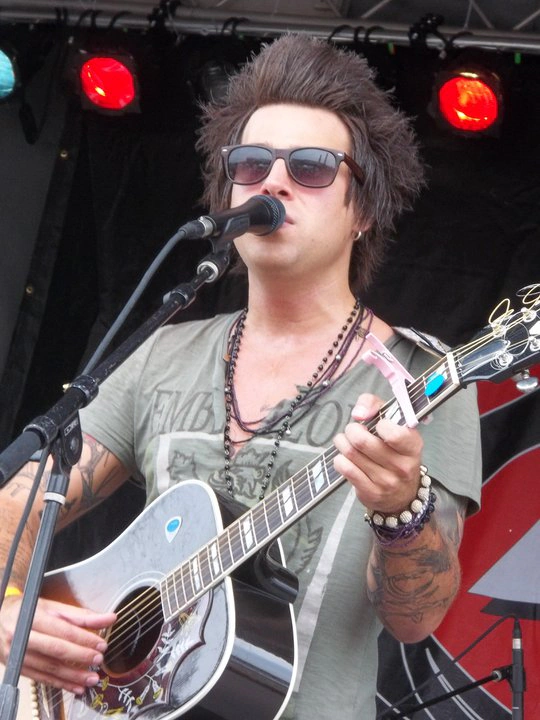
Attr: Lc7926, CC BY-SA 3.0
| 12 Quotes | |
| Born as | Ryan Frank Cabrera |
| Occup. | Musician |
| From | USA |
| Born | July 18, 1982 Dallas, Texas, USA |
| Age | 43 years |
| Cite | |
Citation Formats
APA Style (7th ed.)
Ryan cabrera biography, facts and quotes. (2026, March 21). FixQuotes. https://fixquotes.com/artists/ryan-cabrera/
Chicago Style
"Ryan Cabrera biography, facts and quotes." FixQuotes. March 21, 2026. https://fixquotes.com/artists/ryan-cabrera/.
MLA Style (9th ed.)
"Ryan Cabrera biography, facts and quotes." FixQuotes, 21 Mar. 2026, https://fixquotes.com/artists/ryan-cabrera/. Accessed 31 Mar. 2026.
Early Life and Background
Ryan Frank Cabrera was born on July 18, 1982, in Dallas, Texas, and came of age in the suburban, mall-pop, post-MTV America that shaped so many early-2000s singer-songwriters. He emerged from a mixed cultural background - his father is Colombian - and grew up in a family environment that was supportive but not engineered for show business. That matters in understanding Cabrera's public persona: he did not arrive as a child prodigy polished by industry machinery, but as a personable, upwardly mobile local musician whose appeal rested on accessibility, charm, and emotional directness. Dallas in the 1990s offered a practical proving ground rather than an artistic mythscape - cover bands, local clubs, radio promotion, and the possibility of being discovered through persistence rather than elite pedigree.
His adolescence unfolded during a transition in American pop, when boy bands, pop-punk, teen TV, and confessional acoustic rock all competed for attention. Cabrera absorbed that blend. He was athletic, social, and by his own account not initially destined for a serious musical life, which helps explain the ease and non-doctrinaire quality of his songs. Even at the beginning, he projected a clean-cut openness rather than tortured mystery. That image would later help him on television and in celebrity culture, but it also exposed him to the suspicion often directed at commercially legible pop artists. The tension between sincere craftsmanship and the glare of image-making became one of the quiet dramas of his career.
Education and Formative Influences
Cabrera attended Jesuit College Preparatory School of Dallas and briefly entered college life before music overtook any conventional path. His own retrospective joke, “I got quite the college experience”. , captures both the interruption and the acceleration: he tasted ordinary youth just as performance began to define him. He has said, “I started playing guitar kind of by accident”. , a revealing admission because it points to instinct rather than grand design. Early on he played with the Dallas band Rubix Groove, a cover act that sharpened his stage instincts, taught him crowd psychology, and gave him a working musician's respect for hooks that connect immediately. Influences from late-1990s pop-rock and singer-songwriter confessionals fed his development, but his real education came from live rooms, radio-friendly melody, and the dawning realization that personality itself had become part of the modern musician's instrument.
Career, Major Works, and Turning Points
Cabrera's first independent release, Elm St., appeared in 2001 and attracted enough local attention to move him toward a major-label career. His breakthrough came with Take It All Away in 2004, led by the hit "On the Way Down" and followed by "True", songs that translated diaristic feeling into polished but approachable pop-rock. His rise was amplified by heavy rotation on MTV and by his visibility within celebrity-tabloid culture, especially through his association with Ashlee Simpson and appearances around the reality-TV universe of the era. In 2005 he released You Stand Watching, featuring "Shine On", which confirmed both his melodic strengths and the difficulty of sustaining momentum in a rapidly changing marketplace. Later projects, including The Moon Under Water in 2008 and Wake Up Beautiful in 2015, showed persistence rather than blockbuster dominance, and his career increasingly blended recording, touring, television appearances, and nostalgia-circuit resilience. The arc is less one of collapse than adaptation: Cabrera moved from breakout heartthrob to durable working entertainer, maintaining relevance by leaning into likability, craft, and the emotional recognizability of his early songs.
Philosophy, Style, and Themes
Cabrera's music has usually favored clarity over density: earnest romantic address, acoustic textures, concise choruses, and production designed to flatter vulnerability without burying it. His own comment, “I wanted the songs to be themselves, instead of worrying about all this crazy slickster production”. , gets to the center of his aesthetic. So does his related insistence that he was “maintaining the dignity and the hearts of the songs, letting them breathe and become what they are”. These are not empty studio slogans. They suggest a musician wary of over-manufacture, conscious that in pop the line between enhancement and falsification is thin. His best-known songs work because they preserve a conversational pulse; they sound like feelings arranged for radio rather than feelings replaced by radio technique.
Psychologically, Cabrera has often seemed animated by a need to reconcile visibility with authenticity. “Whenever people get to see you, it's a great thing. Once people see an image and see the character, they can get into the music a lot more”. That sentence is unusually candid about the age he entered: image is not the enemy of song but one of its delivery systems. Yet the statement also hints at a performer trying to humanize celebrity, to make character the bridge rather than the mask. Across his work and interviews runs a democratic optimism - an emphasis on being oneself, keeping songs emotionally legible, and resisting the cynicism that fame can invite. He was never a radical stylist, but that was partly the point: his theme was recognizability, the belief that ordinary longing, if sung cleanly enough, could still matter.
Legacy and Influence
Ryan Cabrera's legacy lies less in formal innovation than in his embodiment of a specific pop moment and in the durability of that mode. He helped define the early-2000s lane where acoustic confession, teen-idol visibility, and reality-TV exposure converged, and he did so without surrendering entirely to novelty or scandal. For listeners who came of age with MTV's last monocultural burst, songs like "True" remain time capsules of vulnerable, radio-sized sincerity. For younger artists, his career offers a case study in survival after hype: a reminder that not every meaningful pop life is measured by constant chart ascent. Cabrera endures as a craftsman of approachable feeling, a musician whose work captured the emotional grammar of his era and whose continued presence reflects the long afterlife of millennial pop memory.
Our collection contains 12 quotes written by Ryan, under the main topics: Witty One-Liners - Music - Sarcastic - Sports - Student.
Source / external links