
Scott Stapp Biography Quotes 21 Report mistakes
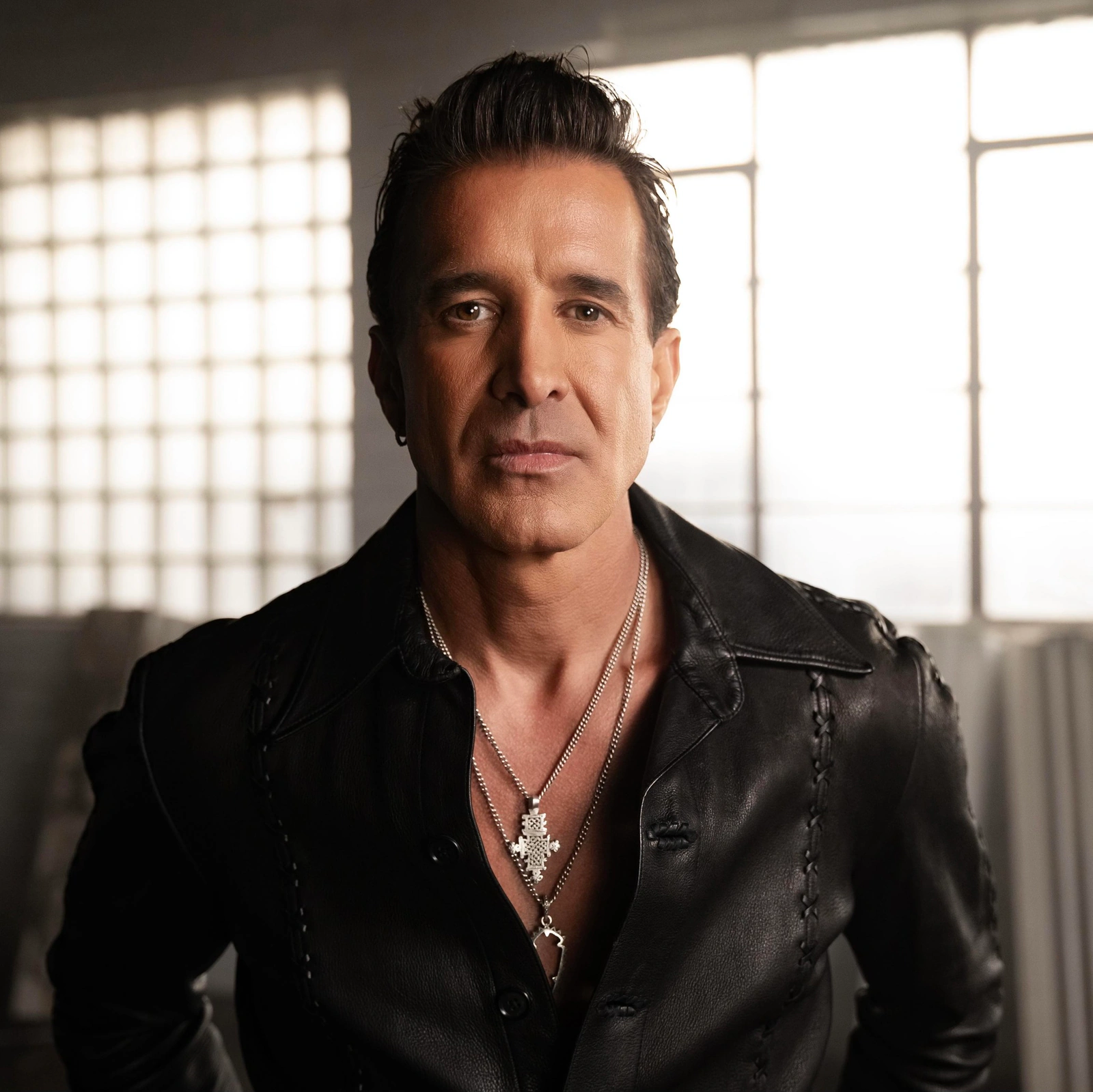
| 21 Quotes | |
| Born as | Anthony Scott Flippen |
| Occup. | Musician |
| From | USA |
| Born | August 8, 1973 Orlando, Florida, USA |
| Age | 52 years |
| Cite | |
Citation Formats
APA Style (7th ed.)
Scott stapp biography, facts and quotes. (2026, March 7). FixQuotes. https://fixquotes.com/artists/scott-stapp/
Chicago Style
"Scott Stapp biography, facts and quotes." FixQuotes. March 7, 2026. https://fixquotes.com/artists/scott-stapp/.
MLA Style (9th ed.)
"Scott Stapp biography, facts and quotes." FixQuotes, 7 Mar. 2026, https://fixquotes.com/artists/scott-stapp/. Accessed 27 Mar. 2026.
Early Life and Background
Scott Stapp was born Anthony Scott Flippen on August 8, 1973, in Orlando, Florida, and came of age in the suburban Sun Belt culture that helped shape late-20th-century American rock. He was later adopted by his stepfather and took the surname Stapp, a change that reflected the instability and reassembly that marked his early life. His childhood unfolded within a strict Christian household, one in which religious discipline, moral scrutiny, and emotional tension were closely intertwined. That atmosphere would become central to both his public image and private battles: the vocabulary of sin, grace, judgment, and redemption arrived in his life long before fame did.
The contradictions of that upbringing became the engine of his adult identity. He was drawn to belief but also to rebellion, and those competing impulses gave his later songwriting its confessional intensity. Long before he was a multiplatinum frontman, he was a young man trying to reconcile wounded self-worth with a hunger for transcendence. The emotional weather of his youth - authority, instability, ambition, shame, and longing - would later surface in the dramatic vocal delivery and spiritually charged lyrics that made him famous. Even his stage presence suggested someone turning private crisis into public testimony.
Education and Formative Influences
Stapp attended Lake Highland Preparatory School in Orlando and later studied at Florida State University, though music soon displaced any conventional academic path. More important than formal schooling was the collision of influences around him: Southern evangelical culture, hard rock, post-grunge, and the mass-media age that rewarded emotional directness. He absorbed the example of arena-scale singers who treated rock as catharsis, but he also carried the cadence of testimony and sermon into his phrasing. In the early 1990s he met guitarist Mark Tremonti, a fellow Floridian with whom he would form Creed. Their partnership fused Tremonti's muscular, radio-ready riffs with Stapp's searching lyric voice, producing songs that sounded both commercially polished and existentially burdened.
Career, Major Works, and Turning Points
Creed emerged in the mid-1990s and became one of the defining American rock acts of the post-grunge boom. With bassist Brian Marshall and drummer Scott Phillips, Stapp led the band through My Own Prison (1997), Human Clay (1999), and Weathered (2001), albums that sold in massive numbers and produced era-defining singles such as "My Own Prison", "What's This Life For", "Higher", "With Arms Wide Open" and "One Last Breath". Stapp's voice - part plea, part proclamation - made him instantly recognizable, while his lyrics invited listeners to hear spiritual crisis inside mainstream rock. Success, however, amplified conflict. Substance abuse, erratic performances, and internal tensions destabilized the group; Creed first broke up in 2004, briefly reunited in 2009 for Full Circle, and then receded again. In parallel, Stapp launched a solo career with The Great Divide (2005), later followed by Proof of Life (2013), while publicly confronting addiction, mental-health struggles, financial collapse, and a highly visible unraveling in the 2010s. Those crises, painful as they were, became turning points in his self-understanding and in how audiences interpreted the man behind the anthems.
Philosophy, Style, and Themes
Stapp's work is best understood as the art of a man who turned inner fracture into uplift. He was often miscast simply as a "Christian rocker", but his own position was more conflicted and revealing: “Now, there are people that are Christian artists, because they have a purpose to be evangelical for Christ. I don't feel I've been called to that yet”. That distinction matters. His songs rarely preach in a doctrinal sense; they dramatize struggle, pleading, and incomplete surrender. The central Stapp persona is not the saint but the seeker - someone craving order while repeatedly sabotaging himself. That tension gave Creed's biggest songs their broad appeal. They offered listeners the emotional architecture of faith without requiring certainty, and they treated doubt not as failure but as a condition of being alive.
His most revealing statements show how thoroughly his art was bound to a cycle of collapse and recovery. “I always believed in God and Christ, but I was in rebellion - trying to make my relationship with God fit into my life instead of making my life fit in with him. I was stubborn”. That sentence could stand as a key to both his biography and his catalog. It explains the accusatory self-examination in songs such as "My Own Prison" and the desperate upward reach of "Higher". Just as telling is his admission, “You can sell millions of records, be showered with all this love and admiration and still feel despised and unwanted. That's what I felt”. The psychology beneath the fame was one of spiritual thirst entangled with shame and grandiosity - a combination that made his performances feel enormous, wounded, and intensely personal. Even at his most bombastic, Stapp was singing from a place of perceived abandonment.
Legacy and Influence
Scott Stapp remains one of the most polarizing and recognizable voices of his generation. To critics, he often symbolized the excesses of post-grunge; to fans, he gave language to pain, faith, masculinity, and survival in an era when mainstream rock was searching for emotional scale after grunge's first wave. Creed's commercial impact was undeniable, and Stapp's lyrics helped normalize overtly spiritual and confessional themes on modern-rock radio without fully leaving the secular marketplace. His later openness about addiction, collapse, and recovery also reframed his story: less as a tale of simple rise and fall than of recurring reckoning. However uneven his career has been, his enduring significance lies in that exposed intensity. He made rock songs that sounded like arguments with God, the self, and the mirror - and for many listeners, that was precisely the point.
Our collection contains 21 quotes written by Scott, under the main topics: Music - Faith - Forgiveness - Father - God.
Frequently Asked Questions
- Scott Stapp daughter: Milán Stapp (with wife Jaclyn).
- Scott Stapp movie: No major films; portrayed Frank Sinatra in TV's Godfather of Harlem.
- Scott Stapp discography: Solo: The Great Divide, Proof of Life, The Space Between the Shadows, Higher Power; with Creed: My Own Prison, Human Clay, Weathered, Full Circle.
- Jaclyn Stapp: Scott Stapp's wife; former Miss New York USA (2004) and philanthropist.
- Scott Stapp young: Orlando-born (1973); began writing music early; co-founded Creed in 1994.
- Scott Stapp songs: Higher, With Arms Wide Open, My Sacrifice; solo: The Great Divide, Purpose for Pain, Higher Power.
- Scott Stapp band: Lead singer of Creed; also fronted Art of Anarchy.
- How old is Scott Stapp? He is 52 years old
Source / external links