
Shaboozey Biography Quotes 12 Report mistakes
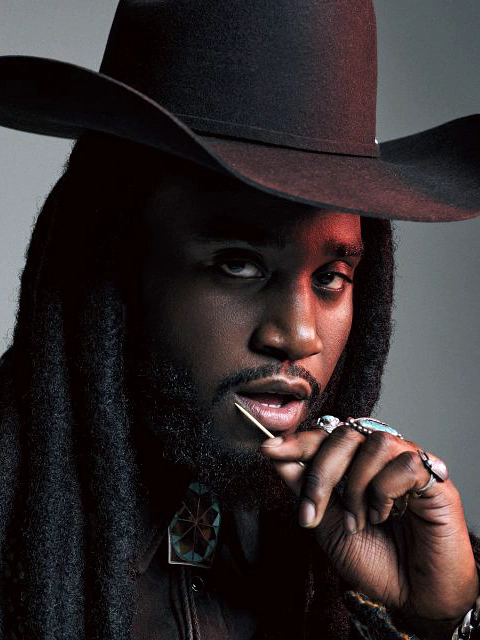
| 12 Quotes | |
| Born as | Collins Obinna Chibueze |
| Occup. | Musician |
| From | USA |
| Born | May 9, 1995 Woodbridge, Virginia, USA |
| Age | 30 years |
| Cite | |
Citation Formats
APA Style (7th ed.)
Shaboozey biography, facts and quotes. (2026, March 19). FixQuotes. https://fixquotes.com/artists/shaboozey/
Chicago Style
"Shaboozey biography, facts and quotes." FixQuotes. March 19, 2026. https://fixquotes.com/artists/shaboozey/.
MLA Style (9th ed.)
"Shaboozey biography, facts and quotes." FixQuotes, 19 Mar. 2026, https://fixquotes.com/artists/shaboozey/. Accessed 19 Mar. 2026.
Early Life and Background
Shaboozey was born Collins Obinna Chibueze around 1995 in Virginia, the son of Nigerian parents, and grew up in the state’s less metropolitan terrain rather than in the entertainment capitals that usually manufacture pop careers. That geography mattered. His public identity has often emphasized the small-town texture of his upbringing - roads, trucks, fields, open space, and the friction between rural life and Black cultural expression. In that setting, he absorbed a double inheritance: the immigrant discipline and ambition common to many first-generation households, and the soundscape of an America where hip-hop, country, rock, and regional radio mingled more freely in lived experience than in industry categories.The stage name "Shaboozey" emerged from the mispronunciation and playful mutation of his surname, a detail that captures something central about his later art: the transformation of misreading into self-invention. He came of age in an era when streaming and internet culture weakened genre gatekeeping, allowing artists from outside traditional pipelines to build aesthetics from fragments once kept apart. For Chibueze, this did not mean rootlessness. It meant a sharper awareness of how identity could be coded, simplified, or denied - especially for a Black artist drawn to country imagery and Americana. His early life gave him both outsider distance and insider familiarity, a combination that would become the engine of his music.
Education and Formative Influences
Publicly available details about his formal education are limited, but the deeper education in Shaboozey's story came through cultural osmosis rather than conservatory polish. He has described himself less as a technician than as a creative synthesizer, and his development reflects that stance: hip-hop's narrative swagger, country's plainspoken sentiment, rock's cinematic scale, and the visual logic of fashion and film all fed his sensibility. The Virginia of his youth exposed him to country not as a novelty but as an ambient language, while Black musical traditions supplied rhythm, attitude, and historical grounding. As he began releasing music in the 2010s, he was part of a generation for whom playlists replaced purist allegiance; influence was not linear but layered. That eclecticism shaped both his sound and his confidence to treat genre as material to be reworked rather than a border to obey.Career, Major Works, and Turning Points
Shaboozey first gained attention through independently released tracks and projects that mixed trap, melodic rap, alternative textures, and stylized Western imagery, establishing him as an artist with a strong visual world as much as a catalog of songs. Early releases such as "Lady Wrangler" and the project Cowboy Live Forever, Outlaws Never Die announced his fascination with frontier myth, but they also suggested critique: he was inserting a Black, diasporic self into iconography from which Black creators have often been symbolically excluded. His profile expanded sharply when he appeared on Beyonce's 2024 album Cowboy Carter, a landmark in the reexamination of country music's racial history and boundaries. In the same period, his own breakthrough accelerated with "A Bar Song (Tipsy)", a genre-bending smash that recast J-Kwon's 2004 hit within a country-party frame and made him a mass-market force. That success was not an abandonment of his earlier vision but its commercial vindication - proof that what once looked unconventional could become central to the sound of the moment.Philosophy, Style, and Themes
Shaboozey's artistic philosophy is built on refusal - refusal of stereotype, refusal of genre policing, refusal of the idea that authenticity must be singular. “I never came in the game wanting to be stereotypical, or just your usual artist. I came in just trying to be like, Man, I love art. I love being creative and that's what I am”. That statement is more than branding; it reveals a psychology organized around permission, the right to make from instinct before category. He often frames music as an open field rather than a credentialed institution, and that helps explain the looseness and confidence of his records: rap cadences can sit beside country guitar, singalong hooks beside mood-piece atmospherics, because he treats invention as primary and purity as secondary.At the same time, his work is not genre tourism. It is tied to memory, place, and historical repair. “I've always been on a real mission to bridge the gap between cultures, whether that's hip hop and country or just urban and rural”. That mission carries both personal and political weight, especially in a country tradition whose Black roots have often been minimized. When he says, “I found country music could teach people that the little things in life are where the value is. Just having a working truck that you can take your girl in to ride to a cliff and watch the sunset is enough”. , he reveals a second key trait: beneath the spectacle, he is drawn to ordinary dignity. His songs often chase release, romance, celebration, or outlaw freedom, but underneath lies a search for belonging - to landscape, to ancestry, and to an American story large enough to hold contradiction.
Legacy and Influence
Shaboozey's legacy is still being written, but his significance is already clear. He arrived at a moment when country, hip-hop, and pop were renegotiating their borders, and he helped turn that renegotiation into mass culture rather than niche experimentation. As a Black artist from Virginia with Nigerian heritage, he has embodied a more accurate America than the one many genre myths permit, and his success has widened the imaginative space for artists who refuse to choose between traditions. If his career continues on its present path, he will be remembered not simply for hit records, but for making hybridity feel native, for restoring Black presence to country's public picture, and for proving that commercial popularity and cultural revision can move together.Our collection contains 12 quotes written by Shaboozey.
Source / external links