
Sona Jobarteh Biography Quotes 8 Report mistakes
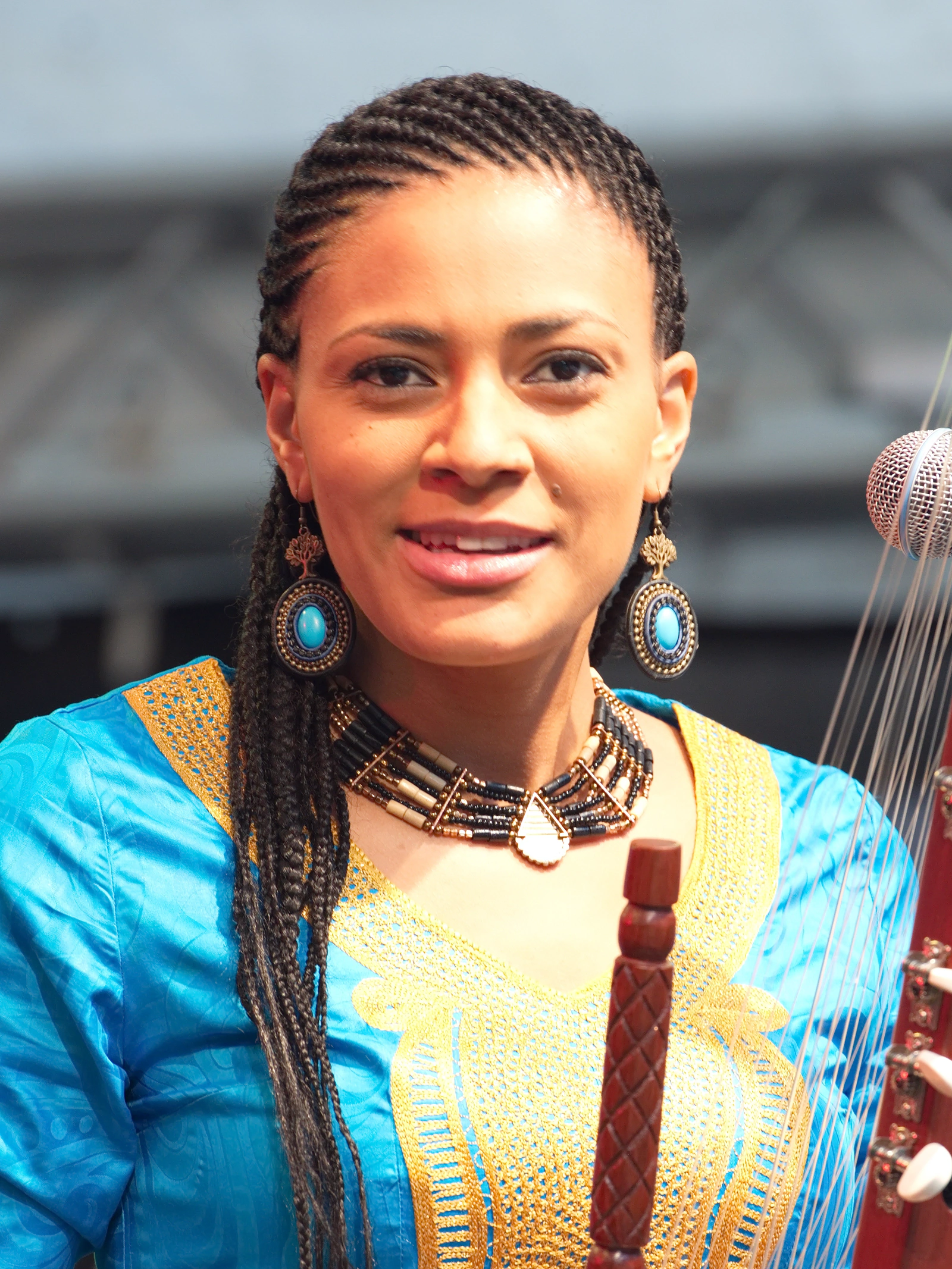
Attr: Atamari, CC BY-SA 4.0
| 8 Quotes | |
| Born as | Maya Sona Jobarteh |
| Occup. | Musician |
| From | Gambia |
| Born | 1983 London, England, United Kingdom |
| Cite | |
Citation Formats
APA Style (7th ed.)
Sona jobarteh biography, facts and quotes. (2026, February 16). FixQuotes. https://fixquotes.com/artists/sona-jobarteh/
Chicago Style
"Sona Jobarteh biography, facts and quotes." FixQuotes. February 16, 2026. https://fixquotes.com/artists/sona-jobarteh/.
MLA Style (9th ed.)
"Sona Jobarteh biography, facts and quotes." FixQuotes, 16 Feb. 2026, https://fixquotes.com/artists/sona-jobarteh/. Accessed 29 Mar. 2026.
Early Life and Background
Sona Jobarteh was born in 1983 into a storied Mandinka griot lineage with roots in The Gambia and Senegal, a hereditary community entrusted with history, praise-poetry, and musical memory. She grew up between West Africa and the United Kingdom, shaped by the double vision of diaspora life: the intimacy of family tradition and the distance that makes a tradition legible as both inheritance and choice. In her case the inheritance was unmistakable - the kora, the 21-string harp-lute associated with male jali performers - and the choice was radical: to play it as a woman without being confined to the social rules that often govern who performs, where, and for whom.Her family network placed her in direct proximity to modern kora history. She is a cousin of Toumani Diabate and comes from the Jobarteh line associated with the instrument across generations; her upbringing therefore carried the weight of expectation and an unusually high musical standard. At the same time, arriving in Britain meant encountering other systems of authority - conservatory training, orchestral discipline, and an audience culture that prized innovation and authorship - conditions that helped her imagine a career beyond ceremonial performance and into composition, touring, and institution-building.
Education and Formative Influences
Jobarteh studied classical music and composition in the UK, including work at the Royal College of Music, while also receiving intensive kora and griot training within her family. That dual education mattered: conservatory methods gave her tools for arrangement, harmony, and ensemble writing, while griot pedagogy demanded memory, precision, and an ethical relationship to repertoire and community. The result was a musician fluent in two musical languages and sensitive to the politics of presentation - how West African instruments are framed on global stages, and how a tradition can be honored without being embalmed.Career, Major Works, and Turning Points
In the late 2000s and 2010s she emerged as one of the most visible kora virtuosos of her generation, touring internationally and collaborating across genres while building a reputation as both a singer and instrumentalist with a composer-arranger's ear. Her debut album, Fasiya (2011), announced a distinctive signature: Mandinka foundations, pop and soul clarity, and orchestral thinking that placed the kora at the center rather than as a decorative color. A second major phase came with her deepening public work in The Gambia - founding the Gambia Academy and related cultural initiatives - and with high-profile appearances that positioned her not merely as a performer but as a public intellectual of culture, gender, and education. The turning point was the realization that visibility in music could be leveraged into durable infrastructure: classrooms, curricula, and a new story about what an African-led model of schooling could look like.Philosophy, Style, and Themes
Jobarteh's inner life, by her own framing, is organized around responsibility rather than celebrity. “While music is my passion in life, my commitment to a new education model for Africa is my life's mission and purpose”. That sentence is revealing because it reverses the usual hierarchy: art is not the end but the means, a disciplined channel for social engineering and self-determination. Her work often reads like a negotiation between tenderness and resolve - the tenderness of song, the resolve of institution-building - and she repeatedly emphasizes time, stamina, and incremental change, insisting that progress requires both vision and endurance.Her aesthetic argument is equally direct: she refuses the museum approach to heritage. “Tradition has to evolve. Traditions are not stagnant. They are things that grow with humanity, with society, and they always have”. In practice this means original songwriting alongside ancestral motifs, clean vocal lines that carry narrative, and arrangements that welcome guitars, percussion, and sometimes orchestral textures without turning the kora into a token. The deeper psychological stake is autonomy - especially as a woman in a male-coded instrumental world. “One of the main reasons I've been able to succeed in the way I have as a female is because I consciously made a decision that I would never enter myself into the cultural context that the kora is played”. That is less a rejection of culture than a strategic reframing: she separates the instrument's sonic inheritance from the social gatekeeping around it, making space for female authority without asking permission.
Legacy and Influence
Jobarteh's enduring influence lies in the way she links virtuosity to governance: not state governance, but cultural governance - who gets to represent a tradition, who receives education, and what Africa-centered modernity can sound like. As a British-Gambian artist she has helped expand the global image of the kora from heritage object to contemporary compositional instrument, while also modeling a form of leadership that treats the stage as a platform for building schools and changing expectations. Her legacy is thus dual: recordings and performances that broaden West African music's mainstream vocabulary, and a growing institutional footprint in The Gambia that aims to outlast touring cycles and prove that artistry can be a blueprint for societal design.Our collection contains 8 quotes written by Sona, under the main topics: Music - Meaning of Life - Equality - Change - Success.
Source / external links