
Steven Adler Biography Quotes 16 Report mistakes
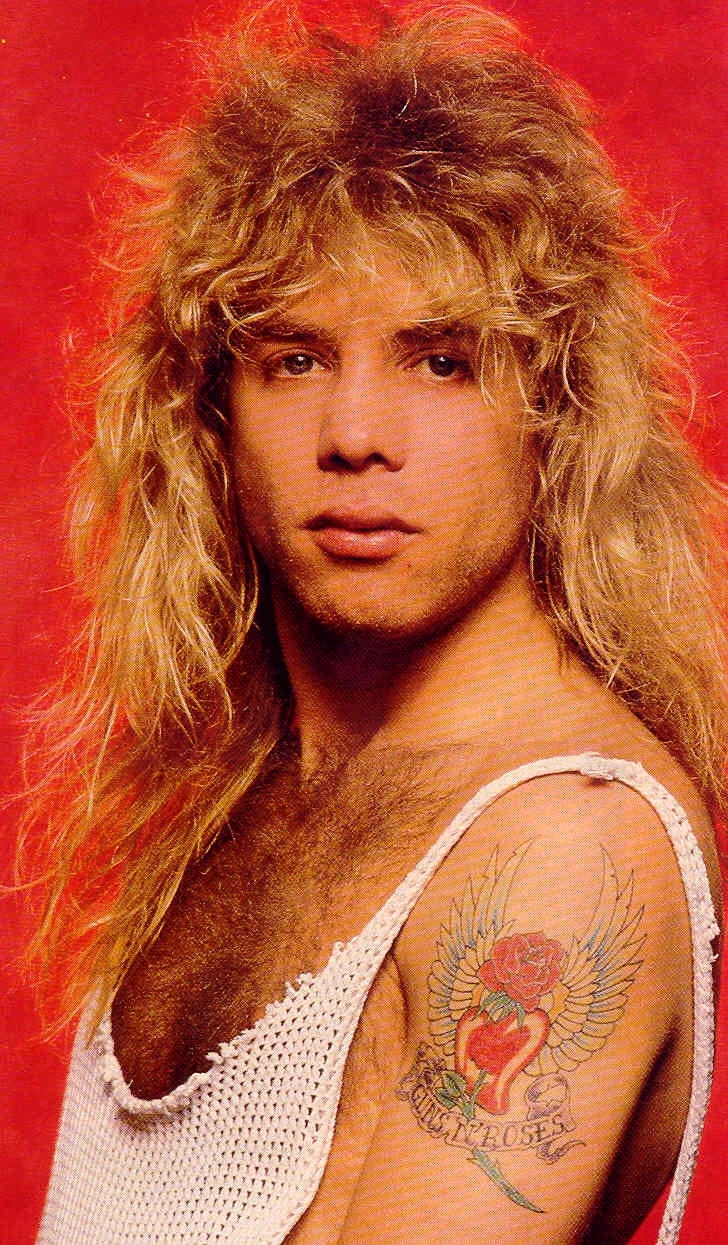
| 16 Quotes | |
| Born as | Michael Coletti |
| Occup. | Musician |
| From | USA |
| Born | January 22, 1965 Cleveland, Ohio, USA |
| Age | 61 years |
| Cite | |
Citation Formats
APA Style (7th ed.)
Steven adler biography, facts and quotes. (2026, February 11). FixQuotes. https://fixquotes.com/artists/steven-adler/
Chicago Style
"Steven Adler biography, facts and quotes." FixQuotes. February 11, 2026. https://fixquotes.com/artists/steven-adler/.
MLA Style (9th ed.)
"Steven Adler biography, facts and quotes." FixQuotes, 11 Feb. 2026, https://fixquotes.com/artists/steven-adler/. Accessed 28 Mar. 2026.
Early Life and Background
Steven Adler was born Michael Coletti on January 22, 1965, in the United States and grew up in the hard-scrabble sprawl of Los Angeles County as the city shifted from postwar optimism to late-1970s disillusion. His childhood was marked by family instability and a constant sense of being on the outside looking in - conditions that often breed a drummer's particular hunger: to belong, to be essential, to make the room move. He drifted through neighborhoods where rock was not a distant fantasy but a local trade, and where the line between weekend release and self-erasure was thin.In adolescence he took the stage name "Steven Adler", a self-authored identity that fit the era's new mythology of reinvention. The Los Angeles he came of age in was fertile and ruthless: punk had torn down the old rules, glam was sharpening its hooks, and the clubs on the Sunset Strip rewarded audacity more than polish. Adler absorbed that lesson early. Even before fame, his temperament seemed built for band life - sociable, impulsive, eager to please - and for the risks that band life could amplify.
Education and Formative Influences
Adler's real education was musical and street-level. He learned drums in the practical way many working rock musicians do: by listening, copying, and playing until feel became muscle memory. A defining formative influence was his friendship with Saul "Slash" Hudson; the two moved through the same Southern California youth circuits, bound by music and the shared desire to outrun their circumstances. The emerging hard-rock revival, the speed and threat of punk, and the groove-heavy tradition of classic rock all fed into his developing style, but his strongest influence was always the bandstand itself - the feedback loop of crowd, volume, and momentum.Career, Major Works, and Turning Points
Adler co-founded Guns N' Roses and became the drummer on the lineup that transformed the group from Strip sensation to global phenomenon. His playing anchored the band's breakout era, including the landmark album "Appetite for Destruction" (1987) and its era-defining singles, where his swing-and-snap feel gave the songs their dangerous danceability. He also played on early sessions connected to "GN'R Lies" (1988) and the transition period leading toward the early 1990s, but addiction and deteriorating reliability in the studio and on the road became a turning point that ended with his dismissal from the band in 1990. The aftermath was uneven: intermittent projects, attempts at solo and band work, and years where his public narrative was as much about survival as about records - a common fate for artists whose most famous work was created at the intersection of youth, speed, and excess.Philosophy, Style, and Themes
Adler's inner life, as it emerges from his interviews and public struggle, circles around two competing needs: intensity and safety. On one hand he elevates volume and adrenaline into an ethos: “Loud is a way of life”. That sentence is not a joke so much as a confession - of how he experienced belonging, how he kept fear at bay, and how he measured the authenticity of rock in physical terms. His drumming fit that creed: not a clinic of technical complexity, but a pumping, forward-leaning groove that let riff and vocal swagger land with maximum force. The simplicity was part of the power, and it matched the band's core idea that danger could be catchy.On the other hand, Adler's later self-understanding is structured by recovery language and by the hard clarity of hindsight. “I just got tired of being sick and tired and feeling down. Unfortunately, you don't realize this until you're getting sober but the reason why you're depressed all the time is it's the drugs that are depressing you”. Read psychologically, this is an admission that the earlier "loud" identity carried a hidden tax: the chemical chase that promised control while quietly stripping it away. Yet even in reflection he keeps the stakes in human terms rather than mythic ones; the industry does not impress him as much as the basic task of showing up and playing. “It's only rock and roll, my god! It's not rocket science”. Beneath the humor is a moral: ego and grudge can destroy what talent creates, and the tragedy is rarely musical - it is relational.
Legacy and Influence
Adler's enduring influence rests on a paradox: he is both a symbol of hard-rock catastrophe and a model of what it sounds like when a band grooves as one organism. His work on Guns N' Roses remains a reference point for drummers who want swing without softness and power without stiffness, and his story functions as a cautionary biography inside the larger epic of late-1980s rock - proof that the era's glamour was inseparable from its damage. In public memory he is also an emblem of survival, returning again and again to the idea that living past the wreckage matters as much as the art that came before it, and that the human bonds inside great music are the most fragile instrument of all.Our collection contains 16 quotes written by Steven, under the main topics: Witty One-Liners - Music - Mental Health - Success - Forgiveness.
Source / external links