
Stevie Wonder Biography Quotes 11 Report mistakes
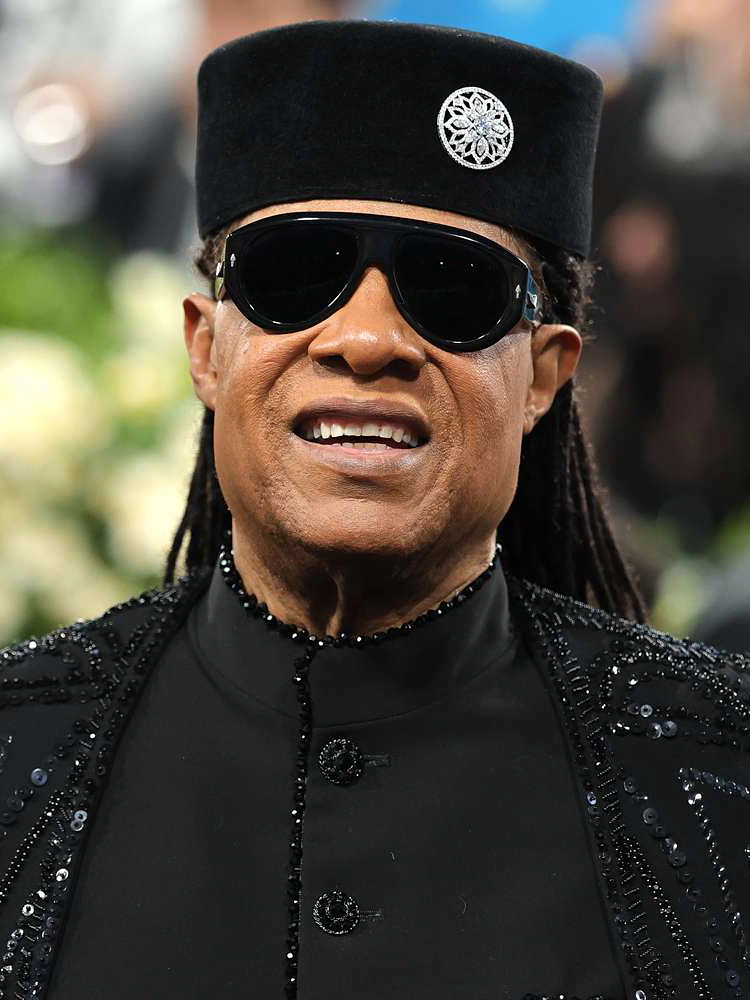
Attr: people.com
| 11 Quotes | |
| Occup. | Musician |
| From | USA |
| Born | May 13, 1950 |
| Age | 75 years |
| Cite | |
Citation Formats
APA Style (7th ed.)
Stevie wonder biography, facts and quotes. (2026, February 11). FixQuotes. https://fixquotes.com/artists/stevie-wonder/
Chicago Style
"Stevie Wonder biography, facts and quotes." FixQuotes. February 11, 2026. https://fixquotes.com/artists/stevie-wonder/.
MLA Style (9th ed.)
"Stevie Wonder biography, facts and quotes." FixQuotes, 11 Feb. 2026, https://fixquotes.com/artists/stevie-wonder/. Accessed 22 Mar. 2026.
Early Life
Stevie Wonder was born Stevland Hardaway Judkins on May 13, 1950, in Saginaw, Michigan. A premature birth and resulting retinopathy of prematurity left him blind in infancy, a fact that shaped his tactile, highly intuitive musicianship but did not limit his drive. His mother, Lula Mae Hardaway, moved the family to Detroit, where he sang in church and absorbed the sounds of gospel, jazz, blues, and the emerging Motown style. A self-taught multi-instrumentalist, he mastered harmonica, piano, drums, and bass as a child, displaying an easy command of rhythm and melody that drew notice in neighborhood performances and school talent shows.Breakthrough at Motown
His path changed when Ronnie White of the Miracles introduced the young prodigy to Motown founder Berry Gordy. Signed to the Tamla imprint as Little Stevie Wonder, he was mentored by producer Clarence Paul and worked closely with Henry Cosby and Sylvia Moy, who helped guide his transition through adolescence. In 1963 his exuberant live recording Fingertips (Part 2) reached the top of the charts, making him a sensation. After a brief lull while his voice changed, he returned with a run of singles that announced a maturing artist: Uptight (Everything's Alright), I Was Made to Love Her, and For Once in My Life. Lula Mae Hardaway co-wrote several early hits, and Motown peers such as Smokey Robinson and Marvin Gaye offered examples of artistic range within the label's system.Reinvention and the Classic Period
As he neared adulthood, Wonder negotiated greater creative control from Motown, opening the door to a decisive reinvention. Teaming with electronic sound designers Malcolm Cecil and Robert Margouleff, he explored the synthesizer-rich palette of the TONTO system and fused it with R&B, funk, and pop. In rapid succession came Music of My Mind and Talking Book in 1972, where his clavinet-driven Superstition and the tender You Are the Sunshine of My Life demonstrated new sonic ambition. Innervisions (1973) deepened both the sound and the social gaze with Higher Ground and Living for the City. A serious car accident in 1973 briefly sidelined him, but he returned with Fulfillingness' First Finale (1974) and then Songs in the Key of Life (1976), a panoramic double album that yielded Sir Duke, I Wish, and As. In the studio and onstage he drew on a circle of gifted collaborators, including bassist Nathan Watts, keyboardist Greg Phillinganes, and singers Deniece Williams and Minnie Riperton, while guitarist Jeff Beck intersected with the sessions around the time of Superstition.Social Voice and Global Popularity
Wonder's music of the 1970s and early 1980s united craft with conscience. Hotter than July (1980) celebrated musical kinship with Master Blaster (Jammin'), a nod to Bob Marley, and carried a broader campaign: his birthday tribute Happy Birthday became the anthem of his effort to establish a U.S. holiday honoring Martin Luther King Jr. His celebrity amplified his activism, and he partnered with civil rights leaders, including Coretta Scott King, to lobby lawmakers and rally public support. In the pop arena he bridged genres and generations, recording the chart-topping Ebony and Ivory with Paul McCartney in 1982 and contributing to the all-star recording We Are the World in 1985 under producer Quincy Jones alongside Lionel Richie and Michael Jackson. He won an Academy Award for I Just Called to Say I Love You from the film The Woman in Red, further cementing his global reach.Later Career
Wonder continued to release hits and explore new settings for his unmistakable voice, songwriting, and harmonica. In Square Circle (1985) featured Part-Time Lover, while Characters (1987) and Conversation Peace (1995) extended his blend of social commentary and love songs. A Time to Love (2005) revisited the layered textures and warm harmonies of his classic approach. As a collaborator, he enriched other artists' work with harmonica solos and vocal cameos, appearing on tracks like Chaka Khan's I Feel for You and Eurythmics' There Must Be an Angel (Playing with My Heart). Across decades he remained a magnetic live performer, leading bands under the Wonderlove banner and reinterpreting his catalog with improvisational freedom and technological curiosity.Advocacy and Honors
Beyond music, he became a prominent advocate for civil rights, anti-apartheid efforts, and disability inclusion. His sustained push helped make the Martin Luther King Jr. holiday a reality in the United States. He lent his platform to humanitarian causes and public awareness campaigns and, in recognition of his role as a cultural ambassador, was named a United Nations Messenger of Peace. His awards include more than twenty Grammy Awards, with multiple Album of the Year wins during his 1970s peak, as well as induction into the Songwriters Hall of Fame and the Rock and Roll Hall of Fame. He received the Kennedy Center Honors and, in 2014, the Presidential Medal of Freedom from President Barack Obama, symbolizing his influence far beyond the recording studio.Personal Life and Creative Circle
Relationships and collaborations often intertwined in Wonder's life. He married songwriter and vocalist Syreeta Wright in 1970; though the marriage ended, their musical partnership yielded enduring work and mutual respect, including his production guidance on her solo projects. Over the years he also married fashion designer Kai Millard and later Tomeeka Robyn Bracy, while maintaining close ties with an extended musical family of bandmates, producers, and engineers who helped translate his ideas into records and stages. Even as trends shifted, he kept faith with the community that grew around him at Motown and beyond, including figures like Berry Gordy, Sylvia Moy, and peers who evolved alongside him.Artistry and Legacy
Stevie Wonder's legacy rests on the union of virtuosity and empathy. His writing braids pop clarity with jazz harmony, gospel uplift, and funk rhythm; his arranging blends handclaps, clavinets, and Moog bass with orchestration and choral layers; his harmonica voice is as recognizable as his tenor. He expanded the vocabulary of R&B by pioneering synthesizer-driven textures without sacrificing human feel, influencing artists from Prince to Alicia Keys and John Legend. Equally vital is his insistence that joy and justice can share the same song: lullabies and dance-floor anthems coexist with portraits of inequality and hope. Through decades of reinvention, he sustained a rare balance of commercial success and artistic leadership, becoming a touchstone for musicians, producers, and listeners around the world.Our collection contains 11 quotes written by Stevie, under the main topics: Motivational - Truth - Wisdom - Deep - Honesty & Integrity.
Other people related to Stevie: Kanye West (Musician), Alicia Keys (Musician), Angélique Kidjo (Musician), Lauryn Hill (Musician), Michael Bolton (Musician), Sly Stone (Musician), Coolio (Musician), George Benson (Musician), David Sanborn (Musician), George Michael (Musician)