
Sting Biography Quotes 49 Report mistakes
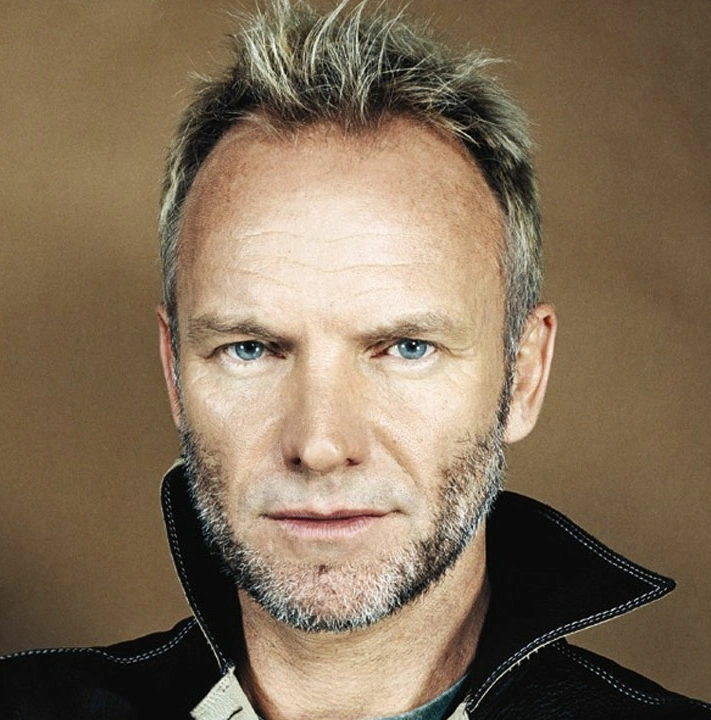
| 49 Quotes | |
| Born as | Gordon Matthew Thomas Sumner |
| Occup. | Musician |
| From | United Kingdom |
| Spouses | Frances Tomelty (1976-1984) Trudie Styler (1992-) |
| Born | October 2, 1951 Wallsend, England |
| Age | 74 years |
| Cite | |
Citation Formats
APA Style (7th ed.)
Sting biography, facts and quotes. (2026, February 11). FixQuotes. https://fixquotes.com/artists/sting/
Chicago Style
"Sting biography, facts and quotes." FixQuotes. February 11, 2026. https://fixquotes.com/artists/sting/.
MLA Style (9th ed.)
"Sting biography, facts and quotes." FixQuotes, 11 Feb. 2026, https://fixquotes.com/artists/sting/. Accessed 25 Mar. 2026.
Early Life and Background
Gordon Matthew Thomas Sumner was born on October 2, 1951, in Wallsend, near Newcastle upon Tyne, in England's industrial Northeast. He grew up in a shipyard-and-mine landscape shaped by postwar austerity and rigid social codes, where work was physical, prospects were often inherited, and a voice - literally and socially - could mark your place. That early immersion in laboring Britain left him with a lifelong ear for the cadence of ordinary speech and the moral weather of working-class life, later audible in songs that move between empathy and unsparing observation.Family and neighborhood both pressed him toward practicality, yet music offered an escape hatch and a means of self-invention. He played in local bands as a teenager, absorbing rock, jazz, and folk in clubs that were among the few spaces where class lines could blur. The nickname "Sting" came from a black-and-yellow striped sweater he wore onstage, a small act of persona-building that foreshadowed his larger talent for turning biography into art without letting it harden into a single identity.
Education and Formative Influences
Sting trained as a teacher at Northern Counties College of Education and worked as a schoolteacher before music became his full profession, an experience that sharpened his sense of audience and structure. In the mid-1970s he played jazz-inflected gigs around Newcastle, notably with Last Exit, and studied the discipline of harmony and ensemble interplay while also learning how to lead - to write, front, and organize a band. Those years situated him at the hinge between the economic gloom of late-70s Britain and the cultural volatility that punk and new wave would soon ignite.Career, Major Works, and Turning Points
In 1977 he moved to London and formed The Police with Stewart Copeland and Andy Summers, a power trio that fused punk urgency with reggae offbeat and pop precision; their ascent ran through albums including Outlandos d'Amour (1978), Reggatta de Blanc (1979), Zenyatta Mondatta (1980), Ghost in the Machine (1981), and Synchronicity (1983). Sting became one of the era's defining singer-songwriters, pairing hookcraft with literate unease on songs such as "Roxanne", "Message in a Bottle", "Every Little Thing She Does Is Magic", and "Every Breath You Take". After the band's intensifying internal strains and a pause following Synchronicity, he launched a solo career with The Dream of the Blue Turtles (1985), working with top jazz players and expanding his palette; subsequent records and tours - including ...Nothing Like the Sun (1987) and later reinventions such as the lute-and-song cycle Songs from the Labyrinth (2006) and the reflective The Last Ship (2013) - established a career defined by restless format changes. Alongside music he became a high-profile activist, especially through Amnesty International and rain-forest advocacy, aligning celebrity with sustained political work rather than one-off gestures.Philosophy, Style, and Themes
Sting's inner life is marked by a tension between control and volatility: the carefully engineered song sits beside an almost compulsive emotional alertness. “I exist in a state of almost perpetual hysteria”. Read psychologically, that admission helps explain his drive toward formal discipline - tight basslines, interlocking guitar figures, and lyric architectures that convert anxiety into pattern. His best writing often stages surveillance, distance, and longing as if he is both participant and narrator, watching himself watch others, trying to regulate fear through craft.His art is also a sustained argument for hybridity as survival, rooted in class mobility and cultural curiosity. “I see music as one language. If one musical form eats its own tail, it dies. So it needs to be a mongrel, it needs to be hybridised”. That belief is audible in how reggae, jazz harmony, European art song, and folk narrative coexist in his catalog, not as eclectic tourism but as a method for staying alive to new feeling. It also parallels his self-making in a country where voice codes identity: “I learned to change my accent; in England, your accent identifies you very strongly with a class, and I did not want to be held back”. Behind the cosmopolitan surface is a writer preoccupied with the costs of transformation - what must be shed, what can be carried, and what returns as melancholy.
Legacy and Influence
Sting endures as a model of the modern musician who treats pop stardom as a platform for compositional ambition, literary lyricism, and public responsibility. With The Police he helped define the sound of late-70s and early-80s Britain and the global language of new wave; solo, he showed that a mainstream audience could follow an artist into jazz instrumentation, Renaissance repertoire, and theater without losing the essential allure of melody. His influence runs through generations of singer-songwriters and bands drawn to hybrid forms, meticulous arrangements, and morally alert storytelling, and his body of work remains a reference point for how personal reinvention can be made audible - not as escape from origins, but as an ongoing conversation with them.Our collection contains 49 quotes written by Sting, under the main topics: Witty One-Liners - Truth - Wisdom - Justice - Music.
Source / external links