
Ted Nugent Biography Quotes 15 Report mistakes
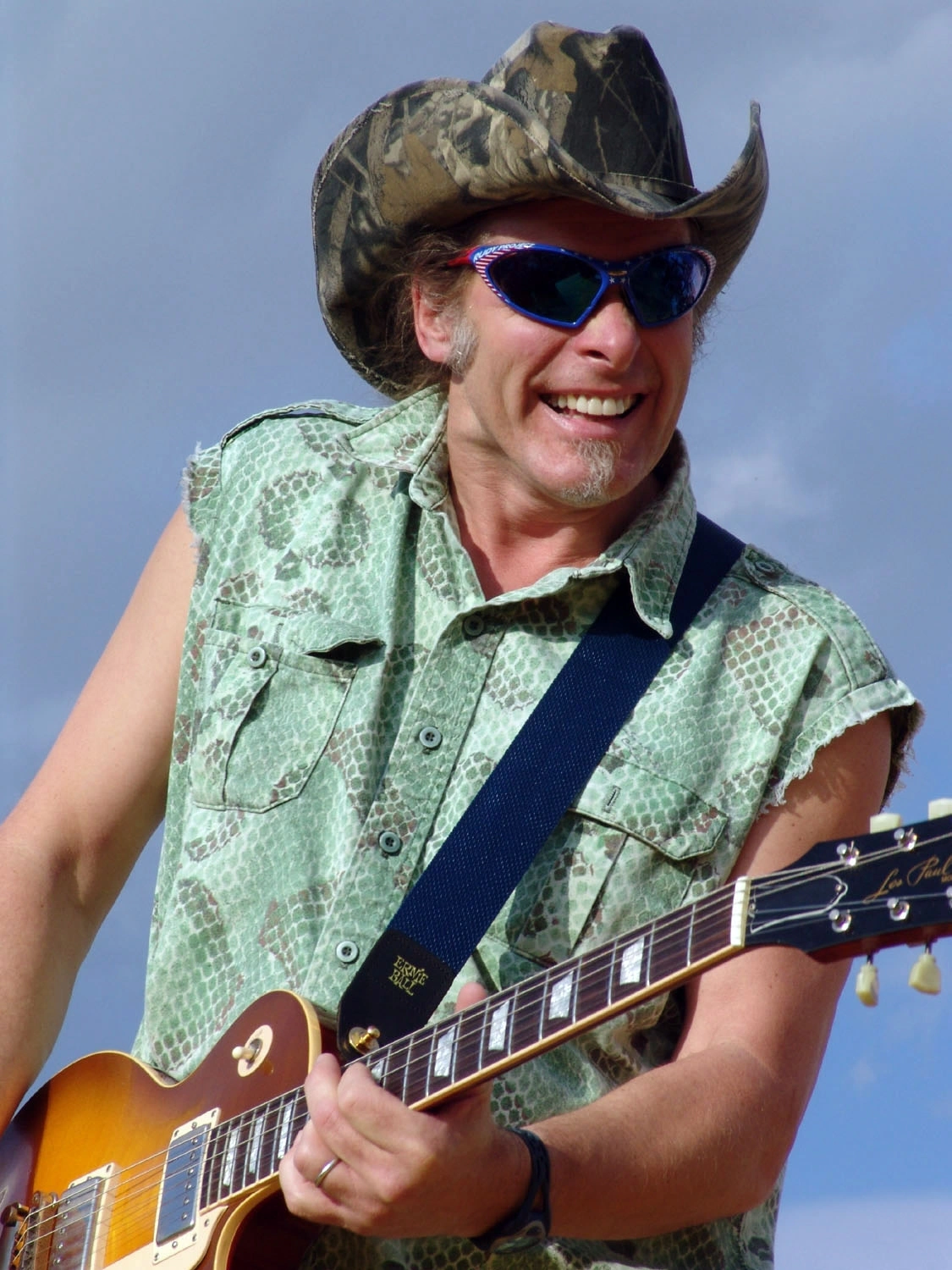
| 15 Quotes | |
| Born as | Theodore Anthony Nugent |
| Occup. | Musician |
| From | USA |
| Born | December 13, 1948 Redford, Michigan, U.S. |
| Age | 77 years |
| Cite | |
Citation Formats
APA Style (7th ed.)
Ted nugent biography, facts and quotes. (2026, February 11). FixQuotes. https://fixquotes.com/artists/ted-nugent/
Chicago Style
"Ted Nugent biography, facts and quotes." FixQuotes. February 11, 2026. https://fixquotes.com/artists/ted-nugent/.
MLA Style (9th ed.)
"Ted Nugent biography, facts and quotes." FixQuotes, 11 Feb. 2026, https://fixquotes.com/artists/ted-nugent/. Accessed 5 Mar. 2026.
Early Life and Background
Theodore Anthony Nugent was born on December 13, 1948, in Detroit, Michigan, into a mid-century industrial America where rock and roll, automotive labor, and Cold War patriotism shared the same air. He was raised in a Catholic household and grew up amid the postwar tension between conformity and rebellion that made electric guitar feel like both escape and identity.As a boy he moved with his family to the Chicago suburbs, including a period in the Palatine area. The relocation widened his horizons: Detroit gave him volume and attitude; suburban Illinois offered room to practice, hunt, and cultivate an image of self-reliance. Early on he fused two compulsions that would never fully separate - the adrenalized stage persona and an outdoorsman ethos that treated the wild as both sanctuary and proving ground.
Education and Formative Influences
Nugent attended local schools in suburban Chicago and later studied briefly at St. Viator College in Bourbonnais, Illinois, though his real education came from obsessive musicianship and the era's loud new language: British blues-rock, Detroit R&B grit, and the American garage-band circuit. He played early groups before landing in The Amboy Dukes, and by the late 1960s he was absorbing the lessons of the counterculture while positioning himself as its contrarian - a young performer fascinated by freedom but suspicious of what he saw as fashionable drift into drugs and defeatism.Career, Major Works, and Turning Points
Nugent broke nationally with The Amboy Dukes and their 1968 hit "Journey to the Center of the Mind", a psychedelic anthem whose success sat uneasily beside his later insistence on sobriety and discipline. In the mid-1970s he went solo and built a reputation as a ferocious live act, anchored by the 1975 album Ted Nugent, the 1976 multiplatinum Free-for-All, and 1977's Cat Scratch Fever, whose title track became his signature. Through the late 1970s and early 1980s he sustained arena visibility with records like Weekend Warriors and the 1984 supergroup Damn Yankees (notably "High Enough"). His career then shifted from hit-making toward brand persistence: relentless touring, radio presence, and a parallel ascent as a celebrity hunter and political activist, controversies included - from inflammatory rhetoric to public arguments over the Vietnam-era draft and later culture-war commentary - which both narrowed and intensified his audience.Philosophy, Style, and Themes
Musically, Nugent is a high-decibel traditionalist: blues-based hard rock stripped to riff, swagger, and rhythmic pummel. His sound favors biting Gibson-style tones, percussive right-hand attack, and arrangements built for arenas - simple hooks, call-and-response choruses, and extended solos that dramatize physical endurance as much as melody. Lyrically he leans on lust, bravado, and American road mythology, presenting the performer as predator and ringleader, a persona that made him a durable emblem of 1970s rock machismo even as tastes fragmented.The deeper throughline is a moral psychology of appetite and vigilance: he frames life as a test of nerve, where pleasure is earned and weakness invites predation. His humor often sharpens into combativeness, as when he boasts, “I have busted more hippies' noses than all the narcs in the free world”. , a sentence that reveals not only provocation but an identity built against an enemy class. Food and hunting become metaphors for authenticity and management rather than guilt - “My idea of fast food is a mallard”. - signaling a worldview that treats the natural world as participatory, not ornamental. Even his self-help register turns into a binary challenge, “Do you want to feel good, or do you want to do good?” , suggesting a conscience shaped less by introspection than by action, duty, and the belief that intensity is its own proof of truth.
Legacy and Influence
Nugent endures as a polarizing archetype: a guitarist whose best records and live shows distilled hard rock to its most kinetic essentials, and a public figure who turned personal passions - hunting, guns, and culture-war politics - into a second stage as vivid as the first. In music history he is not chiefly an innovator but a consolidator, keeping the blues-rock power-trio ethos alive through changing decades, influencing players drawn to aggressive rhythm work and showmanship. Culturally, his legacy is inseparable from the way he fused celebrity with ideology, proving that in late-20th and early-21st century America, the rock musician could function not only as entertainer but as partisan symbol - admired for bluntness, condemned for it, and rarely ignored.Our collection contains 15 quotes written by Ted, under the main topics: Witty One-Liners - Ethics & Morality - Puns & Wordplay - Music - Sarcastic.
Other people related to Ted: Tommy Shaw (Musician)
Source / external links