
Tim Buckley Biography Quotes 6 Report mistakes
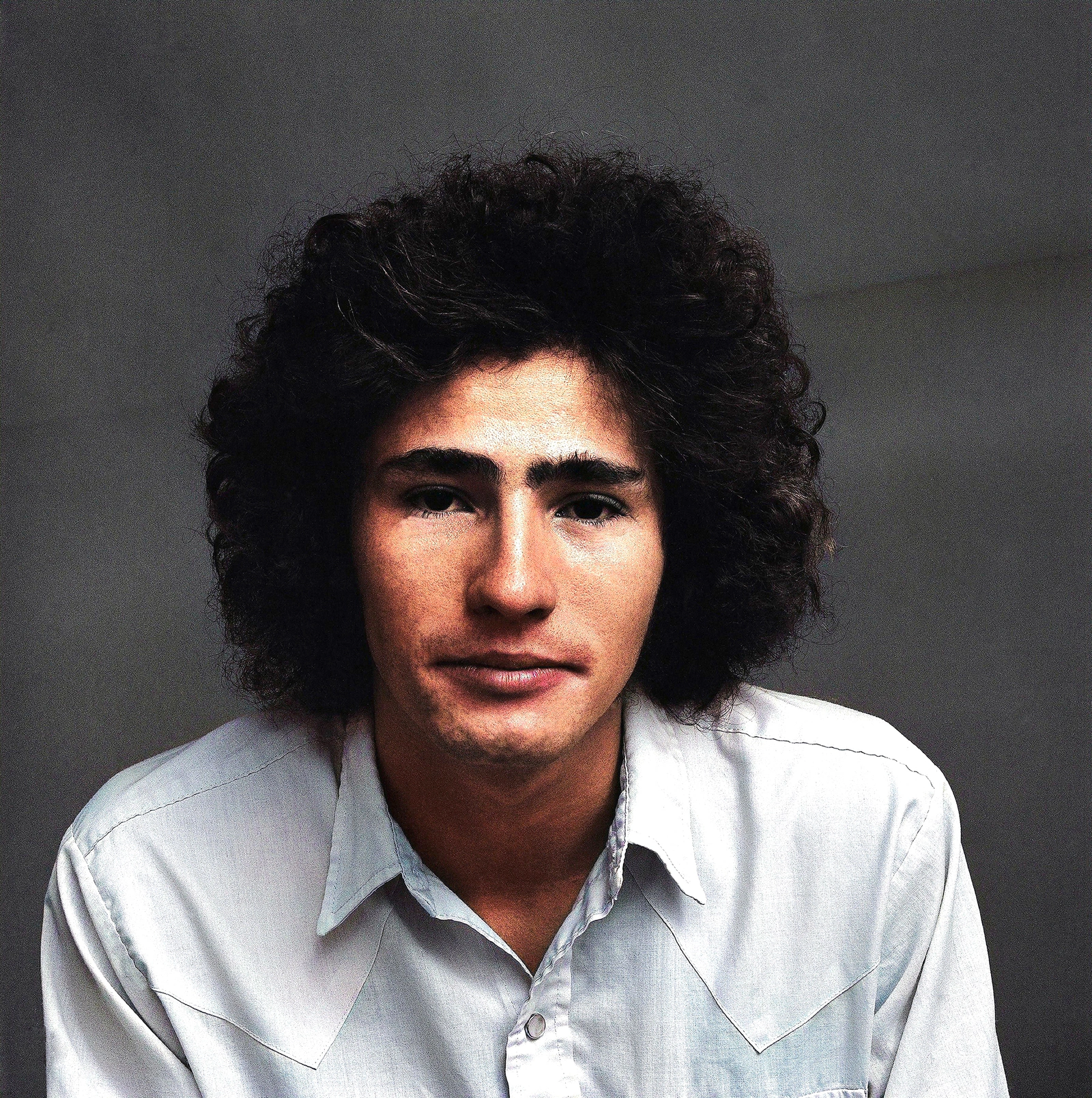
| 6 Quotes | |
| Born as | Timothy Charles Buckley III |
| Occup. | Musician |
| From | USA |
| Born | February 14, 1947 Washington, D.C., USA |
| Died | June 29, 1975 Santa Monica, California, USA |
| Cause | Heroin overdose |
| Aged | 28 years |
| Cite | |
Citation Formats
APA Style (7th ed.)
Tim buckley biography, facts and quotes. (2026, February 11). FixQuotes. https://fixquotes.com/artists/tim-buckley/
Chicago Style
"Tim Buckley biography, facts and quotes." FixQuotes. February 11, 2026. https://fixquotes.com/artists/tim-buckley/.
MLA Style (9th ed.)
"Tim Buckley biography, facts and quotes." FixQuotes, 11 Feb. 2026, https://fixquotes.com/artists/tim-buckley/. Accessed 6 Mar. 2026.
Early Life
Timothy Charles Buckley III, known to audiences as Tim Buckley, was born on February 14, 1947, in Washington, D.C., and grew up in Southern California. In the postwar neighborhoods of Orange County he soaked up folk, blues, and jazz alongside country and R&B, listening widely and learning guitar and banjo as a teenager. In high school he met poet and songwriter Larry Beckett, a partnership that became central to his early writing. They began crafting literate, expansive songs that were unusually ambitious for their age, blending folk forms with poetic imagery influenced by modernist verse. By the mid-1960s Buckley was performing around Los Angeles, where his precocious voice and compositional daring quickly drew attention.Breakthrough and Early Records
Buckley was signed as a teenager to Elektra Records by label founder Jac Holzman after strong club appearances in the Los Angeles scene. His self-titled debut album, released in 1966, introduced a youthful but already distinctive singer-songwriter, while the follow-up, Goodbye and Hello (1967), produced with Paul Rothchild, vaulted him into critical prominence. Goodbye and Hello showcased the Buckley, Beckett partnership at full stretch, offsetting intimate acoustic tunes with sweeping, politically tinged and philosophically searching pieces. Its adventurous arrangements marked him out from many contemporaries, and press and peers recognized his quick growth and unusual range.Exploration and Experimentation
Rather than consolidate a folk-rock niche, Buckley pursued exploration. Happy Sad (1969) opened his music to jazz modalities and extended forms, featuring relaxed tempos, serpentine melodies, and improvisatory singing. Blue Afternoon followed later that year, deepening the nocturnal, spacious feel. With Lorca (1970) and Starsailor (1970), he ventured even further into experimental territory, pushing harmony, rhythm, and voice to extremes. Starsailor contains Song to the Siren, co-written with Larry Beckett, a haunting ballad that would become one of his most celebrated compositions and find later fame through widely admired cover versions. Throughout this period, guitarist and musical confidant Lee Underwood was a crucial collaborator on stage and in the studio, translating Buckley's shifting concepts into agile ensemble interplay. The music's intensity won devoted admirers, but it also challenged casual listeners and confounded commercial expectations.Shifts in Style and Later Career
By the early 1970s, Buckley reoriented toward groove-driven, sensual music drawing from soul, funk, and rhythm and blues. Greetings from L.A. (1972) showcased a raw, physical sound, sweaty club rhythms, bold horn writing, and lyrics steeped in bodily experience, fronted by his elastic, high-wire voice. Sefronia (1973) and Look at the Fool (1974) continued the search for a broader audience while retaining flashes of his exploratory spirit. He toured persistently, adapting his sets to the changing tone of his records, and remained restlessly creative even as the business side of music proved uneven. Despite the stylistic shifts, the through-line was his fearlessness as a singer: he leapt from intimate whispers to piercing cries, treated syllables as percussive events, and used timbre as a narrative device.Artistry
Buckley's artistry was defined by a remarkable vocal range and a willingness to treat the voice as an improvising instrument. He resisted genre boundaries, folding folk storytelling into jazz harmony, avant-garde textures, and later the sensual immediacy of soul and funk. His writing partnership with Larry Beckett yielded texts that were vivid, elusive, and often allegorical, while Lee Underwood's guitar work provided a responsive counterpart to Buckley's spontaneous phrasing. Producers such as Paul Rothchild and label champion Jac Holzman played pivotal roles in giving his early records the space to be adventurous without abandoning songcraft. The best of his work is characterized by questing energy: a desire to find new colors inside familiar forms and to make recorded music feel as alive as a performance.Personal Life
Buckley's personal life was complex and often private. He became a father to Jeffrey Scott Buckley (later known simply as Jeff Buckley), whose mother Mary Guibert raised him; Tim and Jeff had little contact, though Jeff would eventually become a celebrated singer in his own right. Friends and collaborators have recalled Tim as both warm and mercurial, capable of deep camaraderie and sudden swerve, with music at the center of his identity. The demands of constant reinvention and the pressures of the road intersected with a 1970s milieu where substances were common, a context that shadowed his final years.Death and Legacy
On June 29, 1975, Tim Buckley died in Santa Monica, California, at the age of 28 from an overdose after a night out with friends, a sudden loss that stunned those close to him and the broader music community. His passing curtailed a career of extraordinary promise and left behind a compact but striking body of work. In the decades since, his music has been repeatedly rediscovered. Song to the Siren became a touchstone through later recordings, and live tapes and archival releases have highlighted the daring of his concerts. Lee Underwood's writings and interviews have provided insight into Buckley's methods, while Larry Beckett has continued to illuminate the lyrical aims they shared. Critics now often view the run from Happy Sad through Starsailor as a singular arc in American music, and the later soul-inflected records as a courageous, if commercially risky, reinvention. His influence echoes in artists drawn to borderless singing and to the idea of the album as a laboratory for sound and language. The subsequent emergence of Jeff Buckley in the 1990s added a poignant postscript: two distinct voices, bound by lineage and a similar fearlessness, expanding what popular music could express.Our collection contains 6 quotes written by Tim, under the main topics: Sports - Coaching - New Year - Team Building.
Source / external links