
Tom Lehrer Biography Quotes 18 Report mistakes
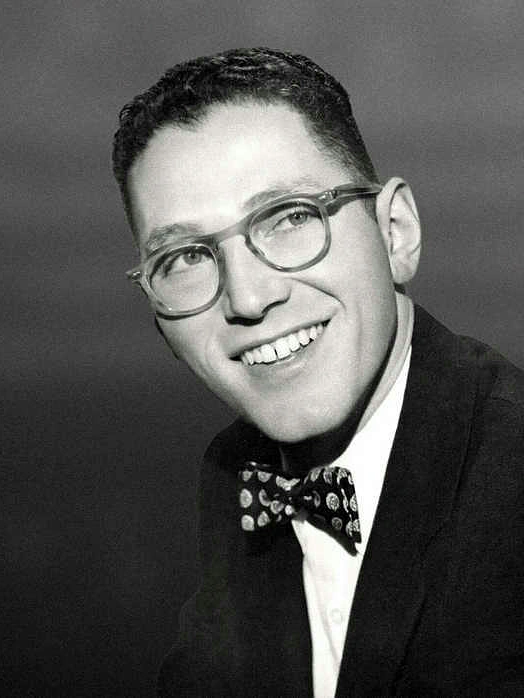
Attr: aish.com
| 18 Quotes | |
| Occup. | Musician |
| From | USA |
| Born | April 9, 1928 New York City, U.S. |
| Age | 97 years |
| Cite | |
Citation Formats
APA Style (7th ed.)
Tom lehrer biography, facts and quotes. (2026, February 11). FixQuotes. https://fixquotes.com/artists/tom-lehrer/
Chicago Style
"Tom Lehrer biography, facts and quotes." FixQuotes. February 11, 2026. https://fixquotes.com/artists/tom-lehrer/.
MLA Style (9th ed.)
"Tom Lehrer biography, facts and quotes." FixQuotes, 11 Feb. 2026, https://fixquotes.com/artists/tom-lehrer/. Accessed 26 Mar. 2026.
Early Life and Background
Tom Lehrer was born on April 9, 1928, in New York City, the only child of a comfortably middle-class Jewish family on Manhattan's Upper East Side. Raised between the Depression's long aftershocks and the mobilized confidence of wartime America, he grew up in a city where radio comedy, Tin Pan Alley songwriting, and the brisk wit of newspaper columnists formed an everyday soundtrack. That mix of high polish and streetwise irony would later surface in his songs: meticulously crafted melodies carrying lyrics sharp enough to puncture pieties.A child of precocious intellect, Lehrer was reputedly reading early and tinkering at the piano while still in grade school, absorbing popular standards as readily as he did formal exercises. New York in the 1930s and 1940s offered him both a refuge and a laboratory: museums, concert halls, and public libraries on one side; the relentless, skeptical humor of urban conversation on the other. His future persona - the courteous professor delivering lethal punch lines - grew from that tension between civility and satire, between the desire to belong and the impulse to stand apart and comment.
Education and Formative Influences
Lehrer entered Harvard University as a teenager and studied mathematics, graduating in 1946, then continuing graduate work. Harvard's postwar milieu mattered: a campus reintegrating veterans, flush with debate about science, ethics, and Cold War power, also fostered a lively culture of student humor and revues. Lehrer wrote for the Hasty Pudding Theatricals and other student productions, learning how to compress ideas into rhyme and how to use musical form as misdirection. Classical technique, Broadway structure, and collegiate parody all became tools he could wield with almost mathematical precision.Career, Major Works, and Turning Points
Lehrer began recording his songs in the early 1950s, financing the first album himself - Songs by Tom Lehrer (1953) - and selling it by mail, a low-tech distribution method that matched his outsider stance. His material quickly gained notoriety for turning taboo and topical subjects into singable, elegant miniatures: "Poisoning Pigeons in the Park", "The Masochism Tango", and "I Hold Your Hand in Mine" mocked the period's surface propriety; later, the Cold War brought "We'll All Go Together When We Go" and "Who's Next?" to the fore. In 1959 he performed on NBC's That Was the Week That Was and released More of Tom Lehrer, followed by An Evening Wasted with Tom Lehrer (1960). Yet the defining turn was his refusal to become a full-time celebrity satirist. He taught mathematics and later musical theater, including at MIT and the University of California, Santa Cruz, periodically returning to perform, then withdrawing again - a pattern suggesting that control, not applause, was his true career anchor. In the 1960s he wrote topical songs for the American version of That Was the Week That Was; his best-known set from that era includes "The Vatican Rag", "Pollution", and "Wernher von Braun", and the compilation That Was the Year That Was (1965) captured his satirical peak.Philosophy, Style, and Themes
Lehrer's art is often described as "comic songs", but the comedy is the surface sheen on a deeper discipline: strict rhyme schemes, clear melodic borrowing from older forms, and an almost surgical approach to timing. He favored the polite cadence of the parlor song while aiming it at modern anxieties - nuclear annihilation, bureaucratic cruelty, the slippery moral language of institutions. The effect is not rant but demonstration: he shows how easily a respectable tune can carry an indecent idea, implicating the listener in the pleasure of it. His recurring narrator is genial, even demure, which heightens the shock when the lyrics reveal what the era preferred not to say aloud.Psychologically, Lehrer cultivated a defensive frankness about ambition and self-importance, using jokes as a way to puncture the aura around genius, including his own. “It is a sobering thought that when Mozart was my age, he had been dead for two years”. That line reads like a throwaway, but it signals a lifelong strategy: treat accomplishment as contingent, fame as faintly absurd, and the cult of greatness as something to be deflated before it can demand obedience. His skepticism extended to speech itself, a theme that fits a performer who chose silence at key moments rather than endless commentary: “If a person feels he can't communicate, the least he can do is shut up about it”. And beneath the polish sits a bleak, pragmatic view of human systems - political, social, even personal - that he renders with a shrugging metaphor: “Life is like a sewer... what you get out of it depends on what you put into it”. The cruelty is never random; it is structured, like his music, and that structure is his critique.
Legacy and Influence
Lehrer left a paradoxical legacy: a small catalog that became a template. His songs influenced later musical satirists and songwriter-comedians in the English-speaking world, from stage cabaret to television sketch music, proving that topical material can be literate, tuneful, and unsentimental without becoming didactic. He also modeled a rare kind of artistic autonomy - the right to stop - which has made him a touchstone for performers wary of being trapped by their own success. In 2020 he placed his lyrics and music into the public domain, an unusually generous coda consistent with his lifelong suspicion of prestige: the work mattered, the cult around it did not.Our collection contains 18 quotes written by Tom, under the main topics: Witty One-Liners - Dark Humor - Puns & Wordplay - Mortality - Life.