
Tommy Lee Biography Quotes 5 Report mistakes
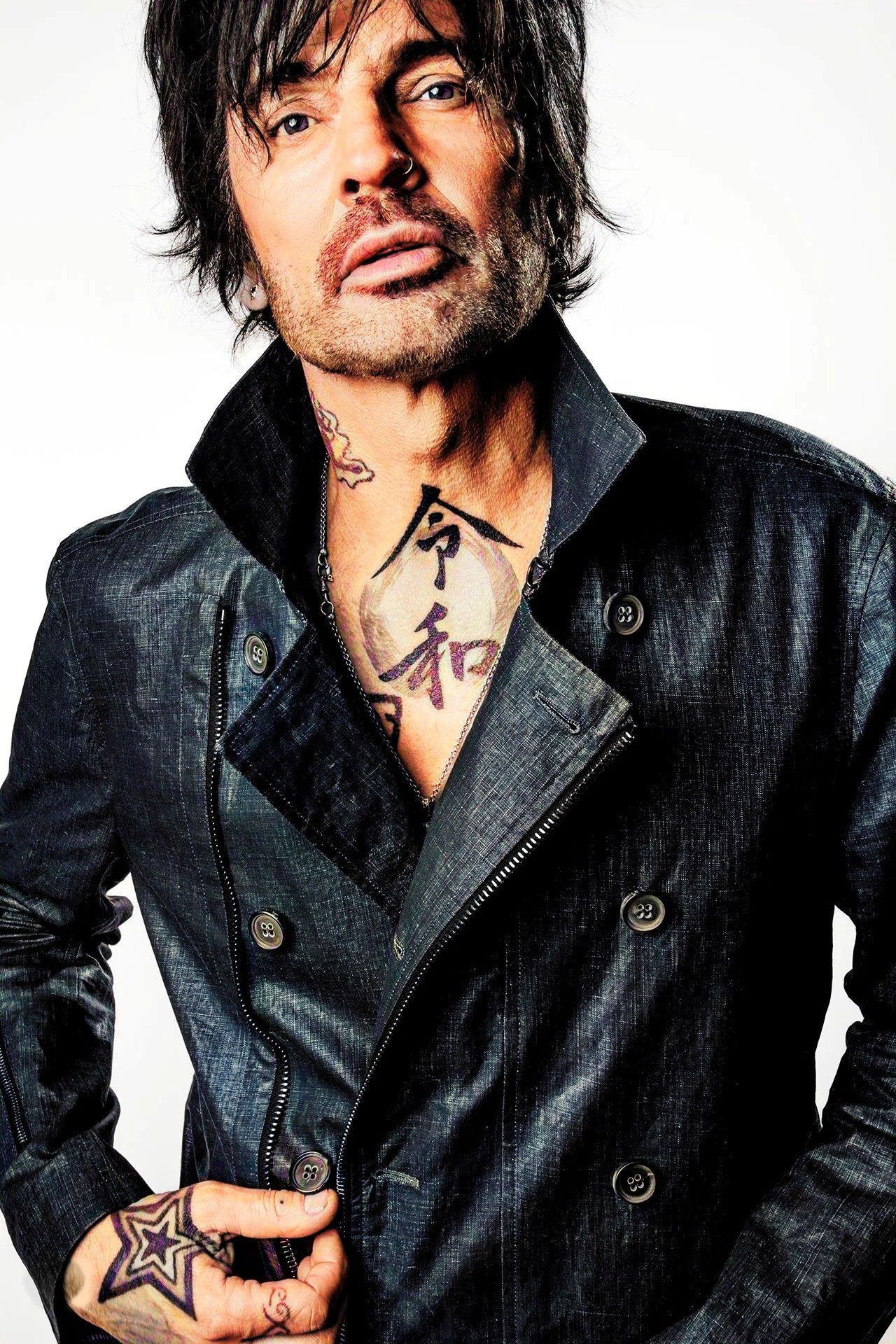
| 5 Quotes | |
| Born as | Thomas Lee Bass |
| Occup. | Musician |
| From | USA |
| Spouses | Elaine Starchuk (1984-1985) Heather Locklear (1986-1993) Pamela Anderson (1995-1998) Brittany Furlan (2019-) |
| Born | October 3, 1962 Athens, Greece |
| Age | 63 years |
| Cite | |
Citation Formats
APA Style (7th ed.)
Tommy lee biography, facts and quotes. (2026, February 11). FixQuotes. https://fixquotes.com/artists/tommy-lee/
Chicago Style
"Tommy Lee biography, facts and quotes." FixQuotes. February 11, 2026. https://fixquotes.com/artists/tommy-lee/.
MLA Style (9th ed.)
"Tommy Lee biography, facts and quotes." FixQuotes, 11 Feb. 2026, https://fixquotes.com/artists/tommy-lee/. Accessed 5 Mar. 2026.
Early Life and Background
Thomas Lee Bass was born on October 3, 1962, in Athens, Greece, to an American father and Greek mother, then grew up largely in Southern California after the family relocated to the United States. The postwar mobility of military and aerospace America shaped his earliest sense of identity: home was less a single place than a moving perimeter of sound, speed, and reinvention. He absorbed the Los Angeles basin's late-1970s mix of hard rock, glam theatrics, and street-level hustle, learning early that image could be a kind of armor.As a teenager he fixated on drums with a near-total intensity, treating the kit as both escape and declaration. Friends and bandmates later described a personality that was restless, thrill-seeking, and hungry for sensation, but also unusually disciplined when music demanded it. That tension - between appetite and craft - became a defining engine of his public life, repeatedly pushing him toward extremes and then forcing him to rebuild from the wreckage.
Education and Formative Influences
Lee attended high school in the Los Angeles area but effectively chose the local club circuit as his real classroom, dropping out to pursue music full time. In the era of the Sunset Strip, apprenticeship meant rehearsal rooms, flyers, and nightly auditions for chemistry, not credentials. He studied drummers in heavy rock and punk-adjacent scenes, but he also listened outward, learning how arrangement, groove, and spectacle could fuse into a single statement - a foundation that later let him pivot from metal to rap-rock and electronic textures without losing his core identity as a drummer.Career, Major Works, and Turning Points
In 1981 he co-founded Motley Crue with bassist Nikki Sixx, helping turn a scrappy Hollywood band into one of the defining stadium acts of 1980s hard rock. Albums such as Too Fast for Love (1981), Shout at the Devil (1983), Theatre of Pain (1985), Girls, Girls, Girls (1987), and Dr. Feelgood (1989) paired blunt hooks with high-gloss decadence, while Lee's playing fused muscular backbeat simplicity with showman flourishes, including rotating drum rigs that made the drummer a visual lead. The 1990s brought volatility: shifting musical fashions, internal fractures, and intense tabloid attention. He pursued side projects including Methods of Mayhem (1999) and a solo career (notably Never a Dull Moment, 2002), while also returning to Motley Crue for reunions that reframed the band as legacy spectacle. A major personal turning point came with legal troubles and incarceration in the late 1990s; the interruption forced an abrupt confrontation with consequences in a life designed around acceleration.Philosophy, Style, and Themes
Lee's philosophy of music has often been less doctrine than kinetic curiosity: if a sound excites him, he tries to inhabit it. That openness is visible in his willingness to embrace hip-hop cadences, industrial edges, and electronic programming alongside arena-rock muscle. Even in interviews he resists the pose of the pundit, shrugging off the constant churn of headlines with a weary realism: “There's no new news”. The line reads as both defense mechanism and self-diagnosis - a man who has watched fame recycle the same narrative beats, learning to detach from the spectacle even as he helps generate it.At his best, Lee treats surprise as the only reliable constant, a worldview formed by sudden commercial reversals and the way culture can elevate a record long after expectations settle. “You never know what's going to happen sometimes, or what you think's going to happen never happens, or when you least expect it, the Santana record comes along and just blows up”. That emphasis on unpredictability is not just industry wisdom; it explains his own zigzags, and it also frames his most revealing admission about consequence and recovery: “It sounds kind of strange, but Jail time was almost a good experience for me”. Under the bravado sits a personality that seems to require hard stops to hear itself clearly - a drummer whose internal metronome sometimes had to be reset by silence.
Legacy and Influence
Lee endures as one of hard rock's most recognizable drummer-showmen and a key architect of Motley Crue's blend of menace, melody, and theater, a template that echoed through glam metal, pop-punk spectacle, and later rap-rock staging. His technical approach - big-pocket groove, sharp accents, and a flair for making drums visually central - helped normalize the drummer as front-line personality, not background utility. Just as lasting is his cultural imprint as a figure of late-20th-century celebrity excess and reinvention: a life lived loudly enough to become cautionary tale, entertainment product, and, at moments of candor, a document of what it costs to keep moving at full volume.Our collection contains 5 quotes written by Tommy, under the main topics: Witty One-Liners - Friendship - Music - Life - Learning from Mistakes.
Other people related to Tommy: Pamela Anderson (Actress), Vince Neil (Musician), Mick Mars (Musician), Randy Castillo (Musician)
Source / external links