
Trini Lopez Biography Quotes 1 Report mistakes
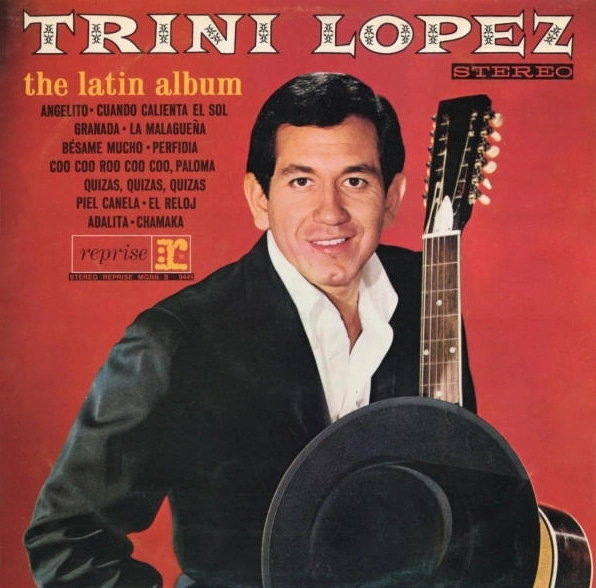
| 1 Quotes | |
| Born as | Trinidad López III |
| Native name | Trini López |
| Occup. | Musician |
| From | Mexico |
| Born | May 15, 1937 Dallas, Texas, United States |
| Age | 88 years |
| Cite | |
Citation Formats
APA Style (7th ed.)
Trini lopez biography, facts and quotes. (2026, February 11). FixQuotes. https://fixquotes.com/artists/trini-lopez/
Chicago Style
"Trini Lopez biography, facts and quotes." FixQuotes. February 11, 2026. https://fixquotes.com/artists/trini-lopez/.
MLA Style (9th ed.)
"Trini Lopez biography, facts and quotes." FixQuotes, 11 Feb. 2026, https://fixquotes.com/artists/trini-lopez/. Accessed 27 Mar. 2026.
Early Life and Background
Trini Lopez was born Trinidad Lopez III on May 15, 1937, into a Mexican American family in Dallas, Texas, in the neighborhood of Little Mexico, a tight-knit enclave shaped by Catholic rituals, Spanish-language radio, and the grinding arithmetic of working-class survival. His parents had roots in Mexico, and the household carried that dual consciousness common to immigrant families in mid-century America: pride in cultural inheritance paired with the pressure to assimilate quickly, sound American, and earn steadily.Music became both refuge and passport. As a boy he sang and played guitar at school functions and local gatherings, absorbing the borderland blend around him - ranchera and bolero in the air, country and early rhythm-and-blues on the dial, and the emerging rock-and-roll pulse that made teenagers feel like citizens of a new republic. Those early years trained him in performance as a social act: the job was not simply to play well, but to win a room, to turn strangers into a chorus.
Education and Formative Influences
Lopez attended local Dallas schools and learned largely by ear, building his technique through constant playing rather than conservatory study, while the citys club scene provided a rough curriculum in stamina and crowd psychology. He came up in the same Dallas ecosystem that produced other ambitious Latino artists, and his early professional formation was shaped by the postwar entertainment circuit: dance halls, radio spots, and the expectation that a young performer had to be versatile enough to move between genres and audiences without losing his own stamp.Career, Major Works, and Turning Points
By the late 1950s Lopez had become a reliable live draw, and his break accelerated when he came to the attention of key industry figures; in the early 1960s he signed with Reprise Records and cut live material that captured his defining gift - charismatic, percussive guitar and a call-and-response vocal style that made a record feel like a party. His 1963 album Trini Lopez at PJ's, recorded at the Los Angeles club PJs, turned that approach into a commercial identity, producing hit versions of "If I Had a Hammer" and "Lemon Tree" that traveled internationally and made him, for a time, one of the most visible Mexican American pop stars in the United States. He followed with more albums and extensive touring, later branching into film work and continuing to perform for decades as the hitmaking era passed into oldies nostalgia.Philosophy, Style, and Themes
Lopezs art centered on inclusion - the idea that the line between stage and floor should dissolve. His rhythmic strumming was engineered for propulsion, often emphasizing upbeat accents that pushed songs forward like a dance band even when the material came from folk-pop. He treated the guitar as both harmony and drum, using bright chord voicings and sharp attacks to create a sound that could cut through club noise, while his vocal phrasing leaned into exuberance rather than introspection. Thematically, he favored songs that invited communal singing and optimistic uplift, aligning with a 1960s mainstream that wanted release from Cold War anxiety and social fracture, even as that decade was beginning to demand more confrontation in art.Psychologically, his career reads as a long negotiation between authenticity and access - how to remain himself while becoming legible to mass audiences. His public persona projected ease, but it was the product of craft: an immigrant-family discipline applied to showmanship. That same practical pride appears in his embrace of tools and professional recognition; “I was approached personally by the Gibson Corporation”. The sentence is more than a brag - it reveals a musician who measured success not only in applause, but in the respect of makers and peers, in being chosen by institutions that historically overlooked artists who looked and sounded like him. His signature guitars and polished stage presentation were extensions of that inner logic: if you could not control the world, you could control your sound, your gear, and your readiness when opportunity arrived.
Legacy and Influence
Lopez endured as a symbol of crossover possibility and as a reminder that Latino presence in American pop was not a late-20th-century novelty but a mid-century reality earned on bandstands and in clubs. His recordings remain a template for capturing live energy in the studio and for turning folk and standards into participatory pop, and his visibility helped widen the imagined space for Mexican American performers navigating English-language markets. Even when his chart moment faded, his role as an early, internationally successful Latino pop headliner continued to resonate - a bridge between community roots and global stages.Our collection contains 1 quotes written by Trini, under the main topics: Career.
Source / external links