
Tupac Shakur Biography Quotes 32 Report mistakes
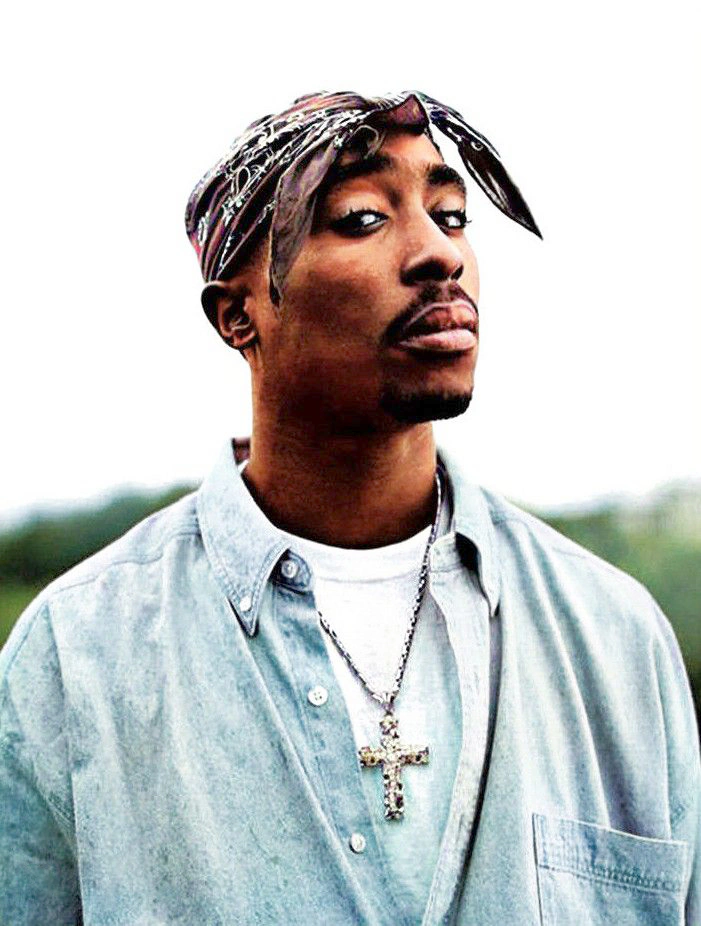
| 32 Quotes | |
| Born as | Tupac Amaru Shakur |
| Known as | 2Pac |
| Occup. | Musician |
| From | USA |
| Born | June 16, 1971 Harlem, New York, USA |
| Died | September 13, 1996 Las Vegas, Nevada, USA |
| Cause | Gunshot wounds |
| Aged | 25 years |
| Cite | |
Citation Formats
APA Style (7th ed.)
Tupac shakur biography, facts and quotes. (2026, February 11). FixQuotes. https://fixquotes.com/artists/tupac-shakur/
Chicago Style
"Tupac Shakur biography, facts and quotes." FixQuotes. February 11, 2026. https://fixquotes.com/artists/tupac-shakur/.
MLA Style (9th ed.)
"Tupac Shakur biography, facts and quotes." FixQuotes, 11 Feb. 2026, https://fixquotes.com/artists/tupac-shakur/. Accessed 6 Mar. 2026.
Early Life and Background
Tupac Amaru Shakur was born Lesane Parish Crooks on June 16, 1971, in East Harlem, New York City, to Afeni Shakur, a prominent member of the Black Panther Party who had been acquitted months earlier in the "Panther 21" case. She soon renamed him for Tupac Amaru II, the 18th-century Andean anti-colonial rebel, fastening a revolutionary genealogy onto a child born into surveillance, poverty, and the aftershocks of the 1960s. His father, Billy Garland, and stepfather, Mutulu Shakur, were also tied to Black liberation politics, a legacy that brought pride, precocity, and instability in equal measure.Shakur's childhood moved through New York and then Baltimore, where he attended Paul Laurence Dunbar High School and began performing, writing poetry, and studying acting. Friends recalled him as magnetic and bookish, capable of tenderness and theatrical bravado, but also alert to danger - the street as a constant audition for survival. Later relocations to the Bay Area exposed him to both artistic community and escalating precarity, hardening the dual identity that would define him: sensitive craftsman and embattled public figure.
Education and Formative Influences
At the Baltimore School for the Arts, Shakur trained in theater, literature, and jazz, reading Shakespeare while absorbing the cadences of Black speech and the political vocabulary of his home. He was influenced by the Panthers' emphasis on self-determination, by the discipline of performance, and by the contradictions of Reagan-era America - shrinking safety nets, expanding prisons, and a music industry beginning to market urban despair as entertainment. Those converging pressures taught him to treat art as testimony: a place where charisma could become argument.Career, Major Works, and Turning Points
Shakur emerged in the early 1990s as a rapper-actor whose intensity made him hard to categorize: he debuted with 2Pacalypse Now (1991), broke wider with Strictly 4 My N.I.G.G.A.Z... (1993), and became a superstar with Me Against the World (1995) and All Eyez on Me (1996), while acting in films such as Juice (1992), Poetic Justice (1993), and Above the Rim (1994). His career accelerated alongside controversy - legal troubles, a 1994 shooting in New York City, and a prison sentence that deepened his paranoia and sharpened his myth. After his release, he joined Death Row Records and turned personal grievance into operatic spectacle, culminating in the East Coast-West Coast feud; on September 7, 1996, he was shot in Las Vegas and died on September 13, 1996, at age 25.Philosophy, Style, and Themes
Shakur wrote like someone negotiating between prophecy and reportage. He could deliver street-level detail with the compression of a poet, then pivot into moral inquiry, making songs function as courtroom arguments, prayers, and love letters. The work is powered by a self that is never singular: outraged son, protective friend, wounded romantic, political heir, and marketable villain. That multiplicity was not indecision but strategy - a way to hold contradictory truths in the same breath, mirroring communities asked to survive by splitting themselves.His best lines expose a psychology both defiant and fatalistic, as if he expected consequences but refused retreat. “I'm a reflection of the community”. is not a slogan so much as an alibi and a burden, locating his violence, tenderness, and excess in a social ecology of abandonment. Even his mysticism is practical: “Reality is wrong. Dreams are for real”. frames imagination as resistance when institutions offer only containment. Underneath is a leader's hunger to be useful and believed, paired with the fear that history would cash out his life as cautionary tale - a tension that makes the music feel urgent rather than merely confessional.
Legacy and Influence
In the decades after his death, Shakur has endured as both cultural icon and contested text: a songwriter whose empathy in tracks like "Keep Ya Head Up" and rage in "Hail Mary" became templates for political rap, melodic confession, and the hyper-visible artist living under suspicion. Posthumous releases and archival projects extended his reach, but his deeper legacy is structural: he proved a rapper could be simultaneously activist, actor, romantic poet, and mass celebrity, and that lyrical intimacy could coexist with revolutionary inheritance. In America, where race, poverty, and policing remain unresolved, his work persists less as nostalgia than as an ongoing argument about what a life is worth.Our collection contains 32 quotes written by Tupac, under the main topics: Witty One-Liners - Motivational - Justice - Love - Mortality.
Other people related to Tupac: Snoop Dogg (Musician), Suge Knight (Producer), Puff Daddy (Musician), Angie Martinez (Musician), Tim Roth (Actor), John Singleton (Director), Rosie Perez (Actress), Jada Pinkett Smith (Actress), Omar Epps (Actor)