
Usher Raymond Biography Quotes 11 Report mistakes
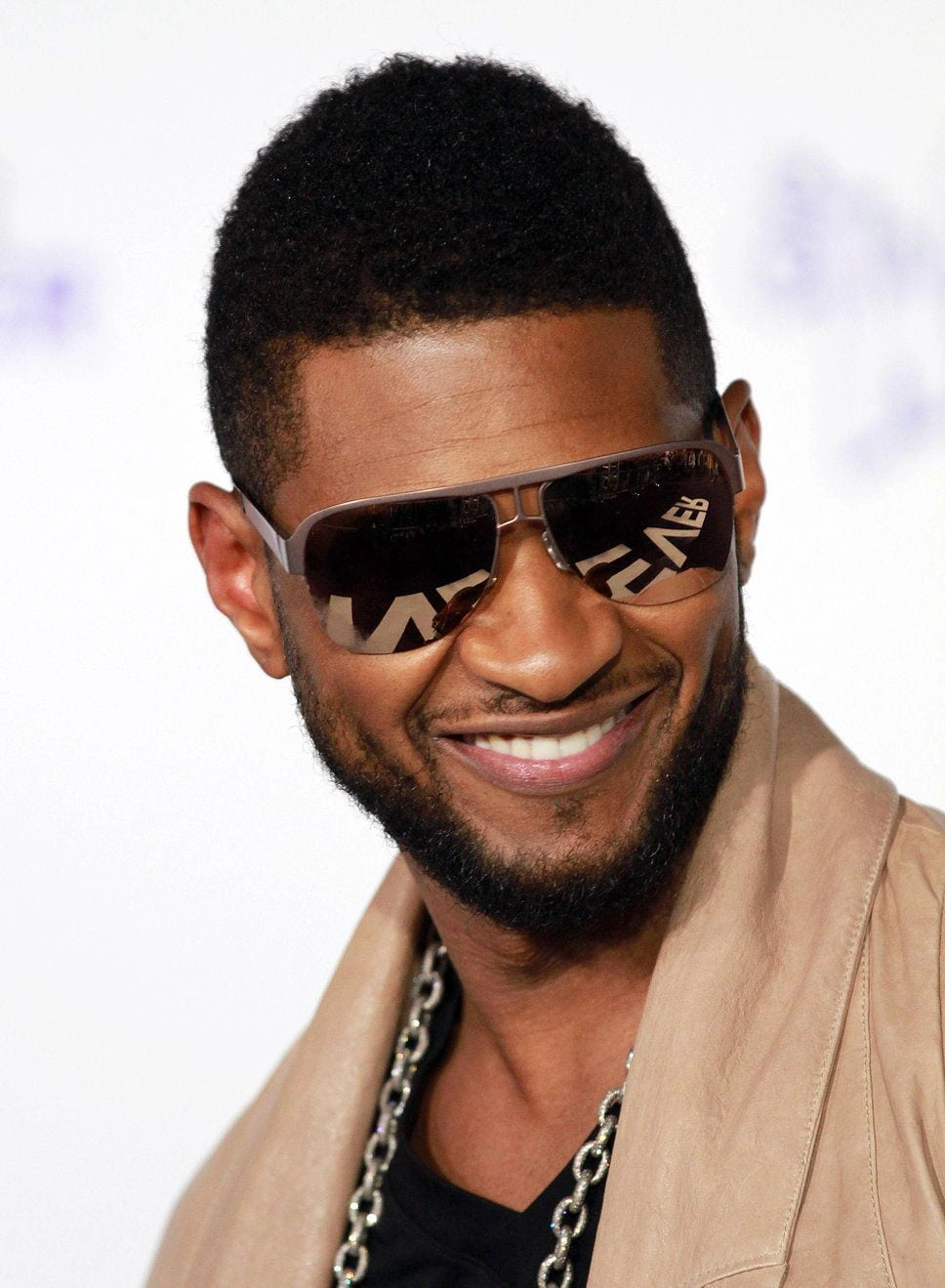
| 11 Quotes | |
| Born as | Usher Raymond IV |
| Occup. | Musician |
| From | USA |
| Born | October 14, 1978 Dallas, Texas, USA |
| Age | 47 years |
| Cite | |
Citation Formats
APA Style (7th ed.)
Usher raymond biography, facts and quotes. (2026, February 28). FixQuotes. https://fixquotes.com/artists/usher-raymond/
Chicago Style
"Usher Raymond biography, facts and quotes." FixQuotes. February 28, 2026. https://fixquotes.com/artists/usher-raymond/.
MLA Style (9th ed.)
"Usher Raymond biography, facts and quotes." FixQuotes, 28 Feb. 2026, https://fixquotes.com/artists/usher-raymond/. Accessed 5 Mar. 2026.
Early Life and Background
Usher Raymond IV was born on October 14, 1978, in Dallas, Texas, and spent his earliest years in the American South as R&B was shifting from late-1980s quiet storm into the harder, hip-hop-inflected 1990s. He was raised primarily by his mother, Jonnetta Patton, whose managerial vigilance became a defining force in his youth, and by a tight-knit family that treated talent as something to be trained, not simply admired. The stage arrived early, through church - a setting that taught him projection, call-and-response timing, and how to carry feeling without losing control.
When the family relocated to Chattanooga, Tennessee, and then oriented toward Atlanta, he entered a city that was becoming a new capital of Black pop: a place where gospel technique, rap cadence, and radio-ready hooks mixed in real time. Those moves mattered psychologically. They made ambition feel geographical - you went where the work was - and they also placed him in environments where a young singer could be praised one night and pressured the next. Usher learned to be disarmingly personable while guarding his private self, a pattern that later shaped his celebrity and his songs about intimacy, remorse, and reinvention.
Education and Formative Influences
Usher attended North Springs High School in Atlanta, but his real education was apprenticeship: talent shows, studio sessions, and the etiquette of industry rooms where adults tested whether a teenager could perform on command. A pivotal early break came when he signed with LaFace Records and recorded an early debut album, Usher (1994), with guidance from figures including L.A. Reid and production input connected to Sean "Puffy" Combs; the experience taught him how quickly an artist can be molded, and how strategic a performer must be to keep a core identity intact.
Career, Major Works, and Turning Points
His breakthrough arrived with My Way (1997) and the era-defining singles "You Make Me Wanna..." and "Nice & Slow", establishing a voice that could whisper and command, and a visual persona built for MTV as well as urban radio. The early 2000s sharpened his dominance: 8701 (2001) confirmed his staying power, while Confessions (2004) became a cultural event - a confessional narrative marketed as personal truth, fueled by hits like "Yeah!" and "Burn", and timed to a moment when R&B was merging with crunk and club-rap. Later albums such as Here I Stand (2008) and Raymond v. Raymond (2010) reflected adulthood, public scrutiny, and the demands of remaining contemporary; his residencies and global touring reinforced him as a showman in the lineage of Michael Jackson and Bobby Brown, with choreography as argument rather than decoration.
Philosophy, Style, and Themes
Usher's music is built on controlled vulnerability: a tenor that can sound like velvet even when the lyric is self-incriminating. He helped define modern R&B's conversational realism - the sense that romance is negotiated in real time, with consequences - while keeping pop clarity and dance-floor urgency. Stylistically, he moved between Atlanta groove, sleek New York polish, and club maximalism, using rhythm as a psychological engine: a pulse that suggests desire as compulsion and apology as performance. His best records dramatize the fear beneath charisma - the knowledge that attention is conditional, and that the body is both instrument and billboard.
He has often spoken about the craft behind the image, treating fame as something engineered rather than fated: "I learned how music works dealing with Jermaine Dupri, and I learned how image works dealing with Puff Daddy" . That dual education explains his career-long tension between sincerity and staging - why even his most intimate songs arrive packaged as spectacles. His lyrical world also accepts separation as growth rather than mere failure, framing love as a test of direction and pace: “Breaking up is a natural evolution when you try to figure out what you want in life. If you're with an individual who isn't moving in the same direction and at the same rate that you are, it ain't going to work”. And beneath the seduction, a work ethic hardens into credo, as if still trying to outrun the instability of early stardom: “Down time is not the name of the game”. Together these ideas form a portrait of an artist who treats discipline as self-protection and reinvention as the price of staying alive in public.
Legacy and Influence
Usher stands as one of the central architects of late-1990s and 2000s R&B-pop, a bridge from classic slow-jam vocalism to the beat-first, club-ready mainstream that followed. His blend of choreography, vocal finesse, and diaristic storytelling became a template for subsequent male pop-R&B stars, while Confessions remains a touchstone for how an album can feel both personally revealing and expertly commercial. Beyond records, his longevity - adapting to new production eras, touring formats, and audience expectations - has made him a case study in modern stardom: how to keep the private self intact while turning public emotion into enduring song.
Our collection contains 11 quotes written by Usher, under the main topics: Witty One-Liners - Motivational - Music - Parenting - Work Ethic.
Source / external links