
Warren Zevon Biography Quotes 32 Report mistakes
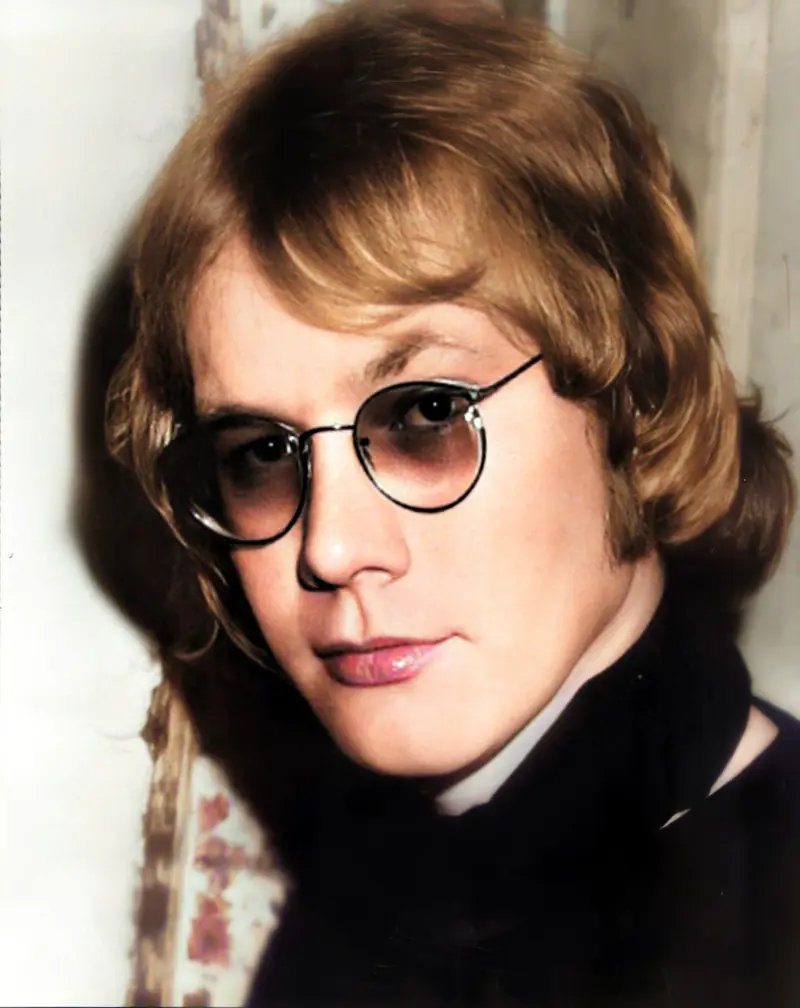
| 32 Quotes | |
| Born as | Warren William Zevon |
| Occup. | Musician |
| From | USA |
| Born | January 24, 1947 Chicago, Illinois, USA |
| Died | September 7, 2003 Los Angeles, California, USA |
| Cause | Lung cancer |
| Aged | 56 years |
Warren William Zevon was born on January 24, 1947, in Chicago, Illinois, and raised largely in Los Angeles. His father, William "Stumpy" Zevon, was a gambler with rough-edged ties to the underworld, and his mother, Beverly, came from a Mormon background. The family's moves and the clash of those worlds colored his sensibility early. As a teenager in Los Angeles he studied classical music intensely, befriending conductor Robert Craft and even meeting Igor Stravinsky, experiences that sharpened his ear for structure and dissonance while deepening his appetite for modern composition. He left high school to pursue music, a decision that sent him into the mid-1960s folk and pop circuits where craft mattered as much as charisma.
Zevon's first professional foothold came as half of the duo Lyme and Cybelle, cutting minor chart sides for White Whale Records. He wrote songs that found their way into other voices, most notably "She Quit Me", retitled "He Quit Me" for the film Midnight Cowboy. His first solo album, Wanted Dead or Alive (1969), showed ambition but landed with little commercial impact. During lean periods he worked as a session player and arranger, toured as pianist and bandleader for the Everly Brothers, and decamped to Spain, where in a barroom friendship with David Lindell he co-wrote "Roland the Headless Thompson Gunner", a ballad that fused reportage with mordant myth.
Breakthrough in Los Angeles
Returning to Los Angeles, Zevon fell in with the city's most influential singer-songwriters. Jackson Browne became his staunchest early champion, helping him secure an Asylum Records deal and producing his 1976 self-titled album. The record gathered the scene's best players, Waddy Wachtel on guitar, David Lindley's coloristic strings, and members of the Eagles and other West Coast stalwarts, and unveiled songs that would shadow his career: "Hasten Down the Wind", "Poor Poor Pitiful Me", "Carmelita", and "Desperados Under the Eaves". Linda Ronstadt's hit covers of several of these songs brought Zevon's pen to mainstream attention even as he cultivated a reputation for unsparing, literary narratives delivered with an arched eyebrow.
His commercial peak arrived with Excitable Boy (1978), co-produced by Browne and Wachtel. "Werewolves of London" became a signature hit, powered by John McVie and Mick Fleetwood's granite rhythm section and Wachtel's louche guitar hook. The album also held the apocalyptic "Lawyers, Guns and Money" and the expatriate fable "Roland the Headless Thompson Gunner", cementing Zevon's persona as the sardonic balladeer of bad decisions, haunted by history and American bravado.
Voice, Themes, and Craft
Zevon's songs balanced punchline wit with an aftertaste of regret. He was a chronicler of Los Angeles breakdowns ("The French Inhaler", "Desperados Under the Eaves"), of geopolitical farce ("The Envoy"), of intimate ruin and stubborn tenderness ("Accidentally Like a Martyr"). His classical training lent his chord changes unusual twists, and his storytelling favored unsentimental clarity. Collaborators like Waddy Wachtel, David Lindley, and bassist-arranger Jorge Calderon became essential interpreters of the sardonic swing he favored: songs that sounded like barroom sing-alongs until the knives on the table caught the light.
Struggles and Reinventions
The turn into the 1980s brought accolades but also volatility. Zevon wrestled with alcoholism and the self-sabotage that trails it, struggles he acknowledged with bleak comic honesty. Bad Luck Streak in Dancing School (1980) kept his reputation for razor writing intact; The Envoy (1982) documented cold-war absurdities but did not meet label expectations, and he lost his Asylum contract. After a period of recovery, he returned fiercely with Sentimental Hygiene (1987), recorded largely with members of R.E.M. (Peter Buck, Mike Mills, and Bill Berry), whose wiry energy fit his barbed tales. A companion side project with those players, later released as Hindu Love Gods, revealed his relish for raw, garage-band covers. He followed with Transverse City (1989), an ambitious, technologically shadowed cycle featuring guests such as Jerry Garcia, David Gilmour, and Neil Young, proof that heavyweight peers heard the restless intelligence in his work.
1990s to Early 2000s
The 1990s found Zevon alternating between stripped-down intimacy and full-band bite: Mr. Bad Example (1991), the solo-travelogue live set Learning to Flinch (1993), and Mutineer (1995) refined his late-style sense of scale and vulnerability. Life'll Kill Ya (2000) and My Ride's Here (2002) were widely hailed as returns to vintage form, short, sharp, unsparing. He collaborated with friends across disciplines: Mitch Albom co-wrote the darkly comic hockey saga "Hit Somebody!"; poet Paul Muldoon and novelist Carl Hiaasen contributed lyrics to My Ride's Here. Through it all, Jorge Calderon remained a close creative ally, and Waddy Wachtel's guitar became an extension of Zevon's own stiletto timing.
Personal Life and Circle
Zevon married Crystal Zevon in the 1970s; they had two children, Jordan and Ariel. The marriage did not last, but the family remained central in his later years. He moved within a circle that included Jackson Browne and Linda Ronstadt, who had believed in his writing from the start, and he formed a durable bond with David Letterman, on whose late-night shows he was a frequent and beloved guest. The mix of brittle humor and unvarnished confession that made his records distinctive also endeared him to colleagues like Bruce Springsteen, Tom Petty, Don Henley, and Joe Walsh, who recognized in his songs the rare combination of fearlessness and craft.
Final Album and Farewell
In 2002 Zevon was diagnosed with malignant pleural mesothelioma. He had long avoided doctors, a trait he joked about with typical gallows humor. He used the diagnosis not as a curtain call but as an imperative to work, convening friends to make The Wind (2003). Produced with Jorge Calderon, the album featured appearances by Bruce Springsteen, Tom Petty, Jackson Browne, Don Henley, Joe Walsh, and Emmylou Harris, among others, and it included a wrenching cover of "Knockin' on Heaven's Door" alongside new originals like "Keep Me in Your Heart". In a remarkable televised valediction, he sat as the sole guest with David Letterman, speaking with candor about mortality and offering the line that became shorthand for his philosophy: "Enjoy every sandwich". The Wind earned him posthumous Grammy Awards and stands as both testament and goodbye. Zevon died in Los Angeles on September 7, 2003.
Legacy
Warren Zevon's legacy rests on songs that refuse to choose between humor and heartbreak, literate allusions and barroom punch. His catalog has been kept alive by fellow artists' covers and by a tribute collection, Enjoy Every Sandwich: The Songs of Warren Zevon, that underlined how writers as different as Jackson Browne and punk-inclined players found their measure in his work. Bob Dylan's decision to feature Zevon songs in live sets near the end of Zevon's life signaled the fraternity of writers who understood the scale of his achievement. For listeners and musicians alike, Zevon remains the master of the fatal shrug and the precise verb, a composer who faced down fear with a grin and a chord change no one saw coming.
Our collection contains 32 quotes who is written by Warren, under the main topics: Witty One-Liners - Music - Learning - Live in the Moment - Father.
Other people realated to Warren: Paul Muldoon (Poet)
Source / external links