
Wolfgang Amadeus Mozart Biography Quotes 7 Report mistakes
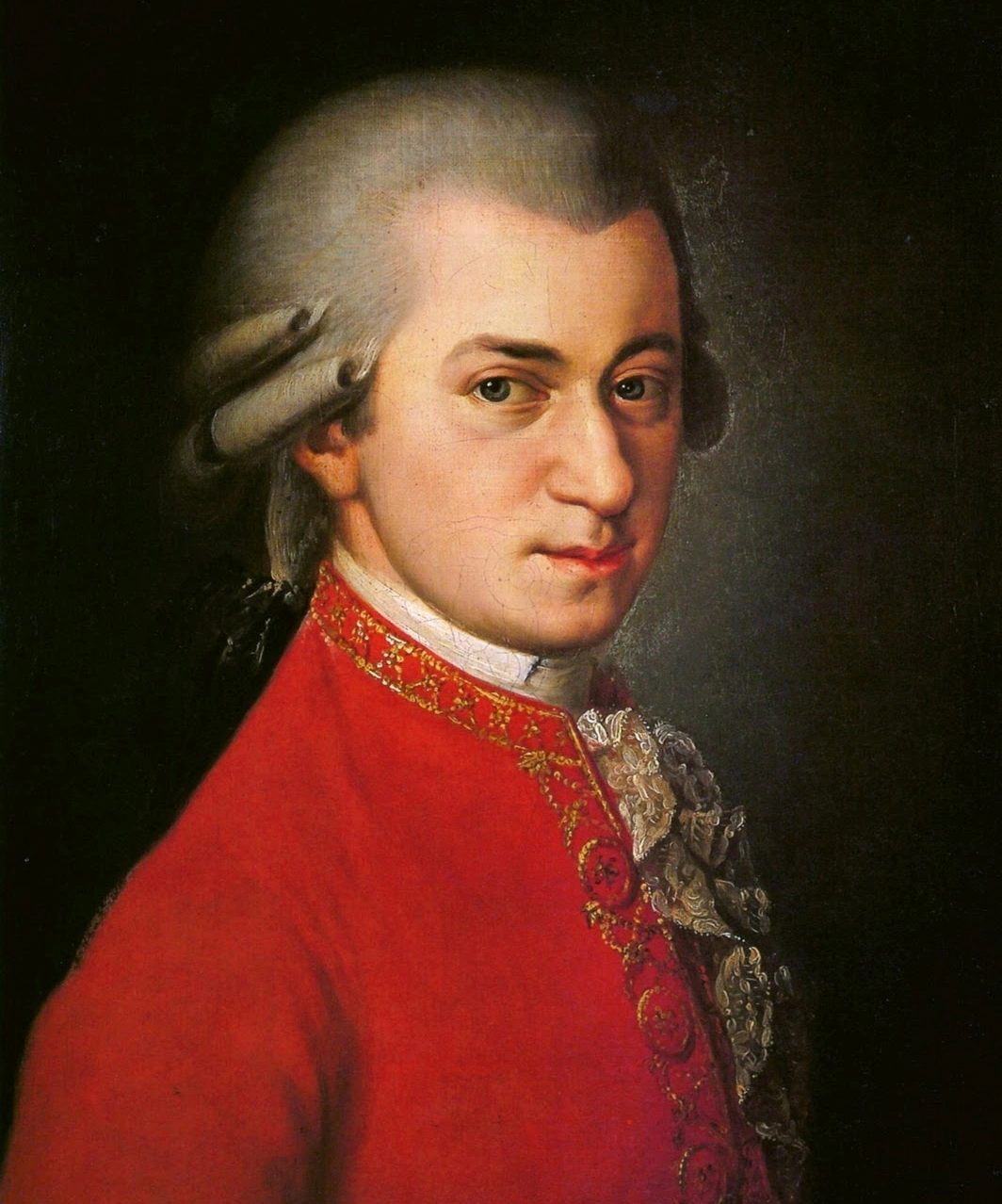
7 Quotes
Born asJohannes Chrysostomus Wolfgangus Theophilus Mozart
Occup.Musician
FromAustria
BornJanuary 27, 1756
Salzburg, Austria
DiedDecember 5, 1791
Wien, Austria
Aged35 years
Early Life and Family
Wolfgang Amadeus Mozart was born on 27 January 1756 in Salzburg, then a principality within the Holy Roman Empire. At baptism he was named Johannes Chrysostomus Wolfgangus Theophilus Mozart, a multilingual formulation whose "Theophilus" he variously rendered as Gottlieb, Amade, or Amadeus. He was the youngest child of Leopold Mozart, a violinist, composer, and author of an influential violin tutor, and Anna Maria Pertl Mozart. His sister, Maria Anna ("Nannerl"), was herself a talented keyboard player. Under Leopold's close guidance, both children began music early; Leopold recognized Wolfgang's extraordinary ear, memory, and facility at the keyboard and violin, and nurtured those gifts with disciplined instruction and ceaseless encouragement.

Child Prodigy and European Tours
By the age of five Mozart was composing short pieces; by six he was performing for aristocratic audiences. Leopold took Nannerl and Wolfgang on extended tours to Munich and Vienna, and in 1763 launched a grand European journey to courts and cities including Paris and London. In London, the boy absorbed the galant style and met Johann Christian Bach, whose gracious idiom left a lasting imprint. These travels brought him celebrity, but also exposed him to the latest musical fashions, orchestral techniques, and theatrical styles, forming a cosmopolitan foundation rare for a child.

Italian Journeys and Operatic Beginnings
Between 1769 and 1773 Mozart undertook several trips to Italy, the center of opera. In Bologna he studied counterpoint with Padre Giovanni Battista Martini and was admitted to the Accademia Filarmonica. He visited Rome, where he famously heard Allegri's Miserere and later wrote it down from memory. Commissions followed, among them the opera Mitridate, re di Ponto (Milan, 1770) and Lucio Silla (Milan, 1772), which showed precocious command of vocal writing and stagecraft. Pope Clement XIV honored him with the Order of the Golden Spur, a testament to his rising stature.

Salzburg Employment and Paris Sojourn
Returning to Salzburg, Mozart served the court of the Prince-Archbishop, eventually under Hieronymus von Colloredo. He produced symphonies, serenades, church music, and concertos, but chafed at restrictions and limited prospects. In 1777 he set out with his mother to seek employment. In Mannheim he encountered the celebrated orchestra led by Christian Cannabich and met the Weber family, falling in love with the singer Aloysia Weber. The journey continued to Paris, where his mother, Anna Maria, died in 1778. Though grief-stricken, he scored a success with the "Paris" Symphony (No. 31). He returned to Salzburg in 1779 and soon secured a major commission for the opera Idomeneo, premiered in Munich in 1781.

Break with Salzburg; Vienna Freelance
In 1781 tensions with Archbishop Colloredo culminated in a break; Mozart was formally dismissed, a message delivered by the court official Count Karl von Arco. Choosing independence in Vienna, he built a career as a freelance composer, pianist, and teacher. He renewed acquaintance with the Webers and, in 1782, married Constanze Weber. That same year his German Singspiel Die Entfuhrung aus dem Serail made a striking public impression with its virtuoso arias and lively orchestration. Emperor Joseph II valued musical life in his capital, and Mozart thrived in its competitive environment.

Operatic Mastery and Collaborations
Mozart's most enduring operatic achievements arose from his partnership with the librettist Lorenzo Da Ponte. Le nozze di Figaro (1786) layered social insight with musical wit; Don Giovanni (premiered in Prague in 1787 under enthusiastic local patronage) fused comic and tragic impulses with unprecedented dramatic power; Così fan tutte (1790) probed the ambiguity of desire with crystalline ensembles. He also worked with the impresario and actor-singer Emanuel Schikaneder, whose troupe would later stage Die Zauberflote (1791). Colleagues and contemporaries in Vienna included the court composer Antonio Salieri, with whom Mozart shared stages and performers; later rumors of enmity and intrigue far exceed the evidence and obscure a more complex collegial relationship.

Concertos, Quartets, and Friendships
From 1784 to 1786 Mozart dominated the Viennese concert scene as a pianist-composer, unveiling a stream of piano concertos that balanced brilliance and intimacy. He cultivated audiences and patrons through subscription concerts and the support of figures such as Baron Gottfried van Swieten, who introduced him to the counterpoint of J. S. Bach and Handel, and the merchant Michael Puchberg, who assisted him financially during leaner years. His friendship with Joseph Haydn deepened in this period; Mozart's six string quartets dedicated to Haydn pay homage to an elder master while asserting an independent voice. He also wrote for and collaborated with leading performers, notably the clarinetist Anton Stadler, for whom he composed the Clarinet Quintet and the late Clarinet Concerto.

Freemasonry and Artistic Circles
Mozart joined a Masonic lodge in Vienna in 1784, entering a circle that included the naturalist and writer Ignaz von Born and other enlightened thinkers. He contributed music for lodge ceremonies, including the Masonic Funeral Music. The ethos of fraternity and moral improvement resonated in works such as Die Zauberflote, whose symbolism and humanistic themes reflect the ideals of that milieu. His pupils during these years included the English composer Thomas Attwood, the prodigy Johann Nepomuk Hummel, and the young Franz Xaver Sussmayr, who assisted with late projects.

Financial Pressures and Resilience
Despite fame, Mozart's finances were unstable. Seasonal demand, illness, shifting patronage, and the costs of family life strained his income. Letters to Puchberg testify to periods of difficulty, yet the setbacks did not stifle creativity. In 1788 he completed the three final symphonies (Nos. 39, 41), summits of formal mastery and expressive range. He traveled to perform and to seek favor, visiting Prague and Berlin, and dedicated string works to King Friedrich Wilhelm II of Prussia. His household with Constanze included two surviving sons, Karl Thomas and Franz Xaver Wolfgang, while other children sadly died in infancy, a common tragedy of the era.

Final Year and Death
The year 1791 brought a late flowering. Mozart wrote the Clarinet Concerto for Anton Stadler; composed La clemenza di Tito for the Prague festivities of the coronation of Leopold II; and created Die Zauberflote with Emanuel Schikaneder, a popular triumph that blended folksong-like charm with profound allegory. An anonymous commission (later linked to Count Franz von Walsegg) prompted the Requiem. Mozart fell ill in the autumn and died in Vienna on 5 December 1791, attended by Constanze and close friends. He was buried in a common grave at St. Marx cemetery, in accordance with Viennese practice for his social rank. The Requiem was left incomplete and, to fulfill obligations, was substantially finished by his pupil Franz Xaver Sussmayr, drawing on sketches and instruction. Constanze worked diligently after his death to secure performances and publish his works, safeguarding the estate and reputation.

Legacy
Mozart's output spans opera, symphony, concerto, chamber music, sacred works, and keyboard pieces, distinguished by effortless melody, dramatic insight, and architectural clarity. Admired by contemporaries and successors alike, he was esteemed by Haydn and later by Beethoven, who studied his works with reverence. Over the nineteenth century, writers and musicians elevated Mozart as a model of classical balance and expressive depth, while scholars organized his oeuvre, notably the catalog by Ludwig von Kochel that assigns the familiar "K". numbers. Myths about his life have persisted, yet the historical record, shaped by letters from Leopold and Constanze and by testimony from colleagues, reveals a working artist of rare discipline and imagination. From the lively stages of Vienna and Prague to the intimate world of chamber music, the presence of patrons, friends, rivals, and family helped form a career that, though brief, reshaped European music and continues to resonate worldwide.

Our collection contains 7 quotes who is written by Wolfgang, under the main topics: Wisdom - Music - Love - Mortality - Confidence.

Other people realated to Wolfgang: Ludwig van Beethoven (Composer), Peter Shaffer (Playwright), Thomas Beecham (Composer)

Source / external links

7 Famous quotes by Wolfgang Amadeus Mozart