
Xavier Cugat Biography Quotes 1 Report mistakes
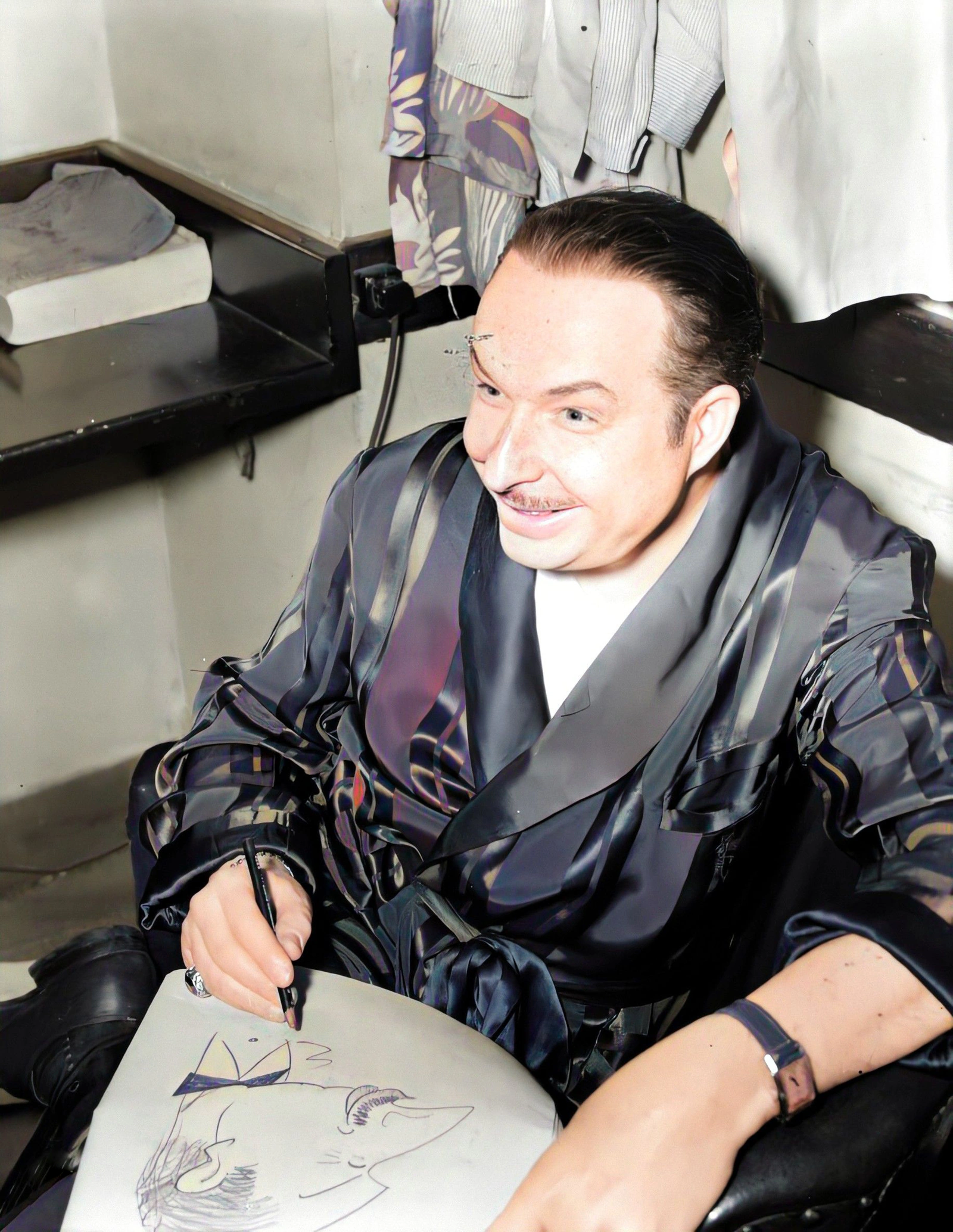
Attr: William P. Gottlieb
| 1 Quotes | |
| Occup. | Musician |
| From | Spain |
| Born | January 1, 1900 |
| Died | October 27, 1990 |
| Aged | 90 years |
| Cite | |
Citation Formats
APA Style (7th ed.)
Xavier cugat biography, facts and quotes. (2026, February 11). FixQuotes. https://fixquotes.com/artists/xavier-cugat/
Chicago Style
"Xavier Cugat biography, facts and quotes." FixQuotes. February 11, 2026. https://fixquotes.com/artists/xavier-cugat/.
MLA Style (9th ed.)
"Xavier Cugat biography, facts and quotes." FixQuotes, 11 Feb. 2026, https://fixquotes.com/artists/xavier-cugat/. Accessed 25 Mar. 2026.
Early Life
Xavier Cugat was born on January 1, 1900, in Catalonia, Spain, and spent his earliest years in a Mediterranean world steeped in folkloric rhythms and salon music. His family emigrated to Havana, Cuba, when he was a child, placing him at a cultural crossroads where Spanish melodies mingled with Afro-Cuban percussion. The sounds of danzon, bolero, and rumba surrounded his formative years and would later become the raw materials of a career that bridged continents. Trained as a classical violinist, he absorbed technique and repertoire in Havana while also internalizing the pulse of Cuban popular music. That blend of discipline and sensibility proved decisive once he set his sights on a larger stage.Classical Training and First Steps in Entertainment
Cugat's early professional life leaned toward classical performance, but it unfolded alongside an instinct for show business. As a young musician in Cuba and later in the United States, he played violin in ensembles that supported theater and film, learning how to read audiences, draw energy from a room, and adapt repertoire on the fly. Relocating to the American entertainment circuit exposed him to jazz, vaudeville, and Hollywood, and he simultaneously developed a parallel craft as a caricaturist. His witty drawings of celebrities and fellow musicians were published in newspapers, underscoring a lifelong flair for visual style and presentation that would become vital to the staging of his band.Rise as a Bandleader
By the early 1930s, Cugat had organized his own orchestra with the clear aim of bringing Latin rhythms to mainstream American audiences. He wrapped Afro-Cuban grooves in familiar instrumentation, polished arrangements, and danceable tempos, presenting a sound that was both authentic and accessible. The conga, bongos, claves, and maracas sat comfortably beside violins, saxophones, and brass. He insisted on consistent rhythmic drive and a lush, sophisticated ensemble texture, pairing veteran Latin players with versatile American studio musicians. That careful balancing act made the orchestra a compelling gateway to rumba, tango, and later mambo and cha-cha-cha for audiences who were hearing those styles for the first time on a big stage.The Waldorf-Astoria Years
Cugat's residency at New York's Waldorf-Astoria Hotel turned his orchestra into a national brand. Nightly performances in the hotel's glamorous rooms were broadcast on radio, spreading his sound well beyond Manhattan. The Waldorf residency provided stability, visibility, and a perfect laboratory for refining arrangements. It also attracted a steady stream of celebrities and industry figures, cementing the band's reputation as the house sound of elegance and cosmopolitan nightlife. From that perch, Cugat helped spark the rumba craze of the 1930s and kept pace as musical fashions shifted in the 1940s and 1950s.Hollywood, Radio, and Television
Hollywood soon folded Cugat into its musicals and comedies, recognizing that his orchestra brought both musical horsepower and a vivid visual signature. He and his band appeared on screen with stars including Fred Astaire, Rita Hayworth, Esther Williams, and Red Skelton, using film to translate club energy into cinematic spectacle. Radio sustained his national presence between films, while later television variety programs introduced him to new audiences. He understood that the look of Latin music mattered in American popular culture, so he built a stage picture that included suave tailoring, bright percussion, and, famously, a tiny Chihuahua that became part of his persona. The result was a multimedia profile rare for bandleaders of his generation.Collaborators, Singers, and Proteges
A large part of Cugat's success came from the singers and instrumentalists he championed. Vocalist Lina Romay brought warmth and glamour to the band's recordings and film appearances in the 1940s, shaping the ensemble's image as both sophisticated and approachable. Desi Arnaz, who would later become a major television figure, gained early experience within Cugat's orbit, absorbing bandleading lessons and the commercial possibilities of the conga line that he would famously popularize on his own. Over the years, Cugat's band became an incubator for arrangers and percussionists who moved on to lead groups or enrich the burgeoning Latin-jazz scene. He treated personnel changes as opportunities to refresh the group's colors, keeping the book current while preserving its rhythmic core.Style, Repertoire, and Showmanship
Cugat's musical persona rested on three pillars: a steady clave-derived groove, plush orchestrations, and theatrical presentation. He curated a repertoire that flowed from bolero and rumba to samba and cha-cha-cha, always with a dancer's sensibility. Strings added sheen to melodic lines; trumpets and saxophones punctuated phrases; percussion anchored everything with interlocking patterns. He conducted with a gift for timing, leaving space for vocalists to shape phrases and for percussionists to ignite the dance floor. The arrangements took care to respect Latin idioms while translating them for large-band settings and radio microphones. His showmanship, equal parts elegance and wink, helped American audiences embrace music that was, to many, newly encountered.Personal Life and Partnerships
Cugat's personal life often intersected with his professional identity. He married multiple times, and two of those unions meshed directly with his band's public face. Singer Abbe Lane, his wife during the 1950s and early 1960s, became a marquee vocalist with the orchestra; their touring and recording partnership gave the band a sultry, contemporary profile at midcentury. Later, his marriage to the entertainer Charo brought a new burst of television visibility, and the couple's joint appearances made them pop-culture fixtures. Cugat also maintained parallel pursuits as a restaurateur and caricaturist, reinforcing the blend of music, image, and hospitality that defined his brand.Business Savvy and Cultural Translation
Beyond the bandstand, Cugat excelled at translating culture into commerce without diluting its charm. He calibrated repertoire to match social trends, updated arrangements as dance fashions changed, and adapted gracefully to new media. The Waldorf platform offered a steady stream of well-heeled patrons ready to be converted into lifelong fans of Latin music. Film placements and variety shows extended that conversion nationally. Cugat's approach was pragmatic: honor the rhythms, keep the melodies singable, and present the whole package with worldliness and humor. That philosophy allowed Latin forms to slip seamlessly into American weddings, supper clubs, and living rooms.Later Years
As big-band economics shifted and Latin music split into multiple streams, from mambo and cha-cha-cha to salsa and Latin pop, Cugat gradually recentered his activities, performing selectively and leveraging his name in hospitality and media. He spent more time in Spain later in life while maintaining ties to audiences who had grown up dancing to his records. Even as new generations favored smaller ensembles and edgier hybrids, his concerts retained the elegance and balance that had defined his orchestra at its peak.Legacy
Xavier Cugat's legacy rests on his role as a bridge-builder. Born in Spain, raised in Cuba, and celebrated in the United States, he carried the rhythms of the Caribbean and the Iberian Peninsula into the heart of American popular culture. He made the Waldorf-Astoria a cathedral of Latin dance, helped cinema find a visual language for Afro-Cuban and South American grooves, and opened sustained pathways for singers and instrumentalists to thrive before national audiences. Figures such as Desi Arnaz, Abbe Lane, and Lina Romay were among the most visible talents around him, and their success intertwined with his. Long after his final curtain, Cugat's recordings, film cameos, and the image of a debonair bandleader punctuating a downbeat with maracas remain a shorthand for the moment when Latin music became, unmistakably, part of America's musical mainstream. He died in 1990, leaving behind a body of work that continues to animate dance floors and a template for how to blend cultural fidelity with show-business savvy.Our collection contains 1 quotes written by Xavier, under the main topics: Money.
Source / external links