
Ziggy Marley Biography Quotes 36 Report mistakes
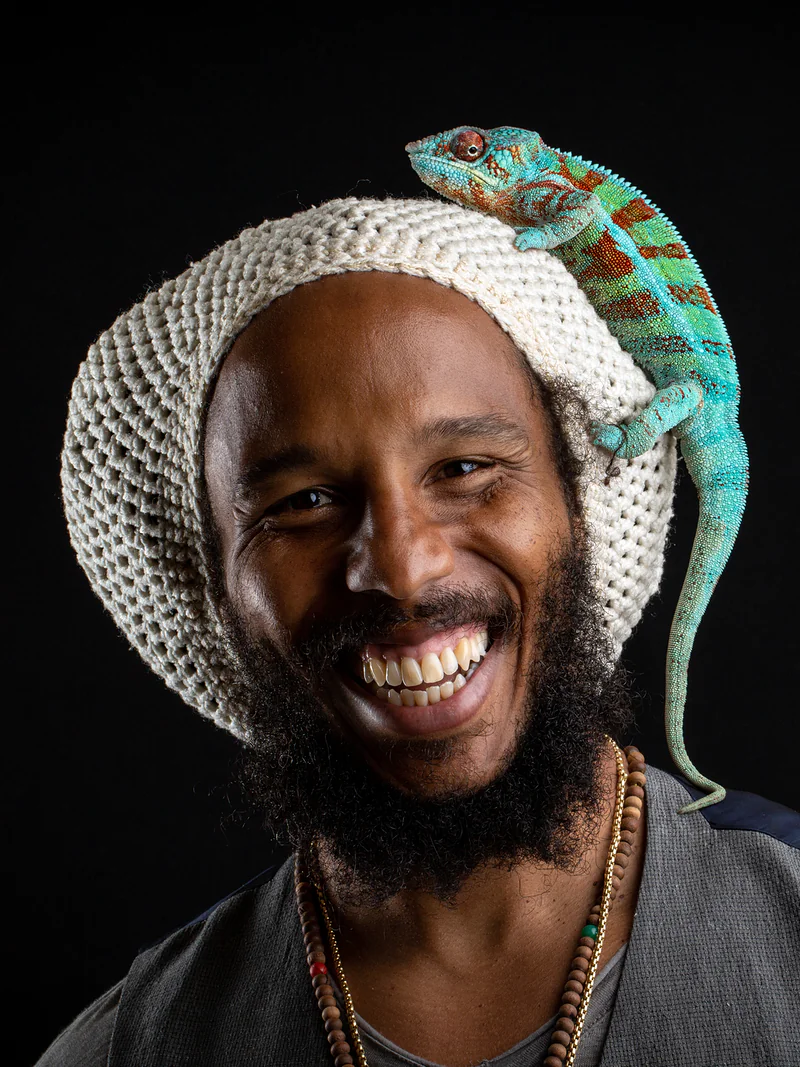
| 36 Quotes | |
| Born as | David Nesta Marley |
| Occup. | Musician |
| From | Jamaica |
| Born | October 17, 1968 Kingston, Jamaica |
| Age | 57 years |
| Cite | |
Citation Formats
APA Style (7th ed.)
Ziggy marley biography, facts and quotes. (2026, February 11). FixQuotes. https://fixquotes.com/artists/ziggy-marley/
Chicago Style
"Ziggy Marley biography, facts and quotes." FixQuotes. February 11, 2026. https://fixquotes.com/artists/ziggy-marley/.
MLA Style (9th ed.)
"Ziggy Marley biography, facts and quotes." FixQuotes, 11 Feb. 2026, https://fixquotes.com/artists/ziggy-marley/. Accessed 5 Mar. 2026.
Early Life and Background
Ziggy Marley was born David Nesta Marley on October 17, 1968, in Kingston, Jamaica, into a family already being written into the mythology of modern music. His father, Bob Marley, was turning reggae into a global language of Rastafari, anti-colonial politics, and spiritual yearning; his mother, Rita Marley, was a singer and anchor within the extended Marley household. Ziggy grew up amid rehearsal rooms, touring schedules, and the charged social atmosphere of 1970s Jamaica, when political violence and economic hardship sharpened the stakes of music that spoke to dignity and liberation.The defining rupture of his childhood came with Bob Marley's illness and death in 1981, when Ziggy was 12. Grief arrived alongside expectation: the world would watch him for signs of inheritance or rebellion. Yet the Marley home also offered discipline and craft - not only the romance of celebrity but the daily labor of voice, rhythm, and message. From early on, Ziggy learned that identity could be both gift and burden, and that surviving fame required a private center strong enough to resist public projections.
Education and Formative Influences
Much of Ziggy's education was practical and musical rather than academic - time in studios, on tours, and around veteran Jamaican musicians who treated reggae as a living, evolving form. He began recording as a child (appearing on Bob Marley and the Wailers material), and in the late 1970s he and siblings formed the Melody Makers, initially as a youthful extension of the Marley circle. Mentorship from producers and bandleaders, immersion in roots reggae, and exposure to international pop and rock shaped him into a musician who could honor Jamaican tradition while absorbing global songcraft.Career, Major Works, and Turning Points
Ziggy Marley and the Melody Makers became his first long arc: early recordings gave way to international breakthrough with albums such as Conscious Party (1988) and One Bright Day (1989), which carried reggae into the MTV era without sanding off its edge. The 1990s brought both consolidation and redefinition, including the Grammy-winning album Fallen Is Babylon (1997) and the gradual winding down of the group as Ziggy moved toward a solo identity. His solo career opened with Dragonfly (2003) and deepened with albums like Love Is My Religion (2006) and Family Time (2009), the latter reflecting his widening audience and his interest in music as a generational bridge. Alongside recording and touring, he expanded into film work, activism, and entrepreneurship, while repeatedly insisting - in sound and in public - that lineage was not a substitute for selfhood.Philosophy, Style, and Themes
At the center of Ziggy's inner life is a long negotiation between inheritance and individuation. His most revealing statements resist the easy category: “I am not reggae, I am me. I am bigger than the limits that are put on me. It all has to do with the individual journey”. That is less a rejection of reggae than a psychological boundary - an insistence that he is not merely a symbol of his father or a mascot for a genre. Musically, this becomes a style that keeps reggae's offbeat pulse and moral gravity while welcoming rock, pop melody, and contemporary production, allowing him to speak to audiences who may arrive through Jamaica but do not want to be confined there.His themes circle love, responsibility, and inner alignment, with a tone that prefers uplift to spectacle. When he says, “Love is more than one thing”. , he frames love as ethic as much as emotion - an organizing principle that can include family, community, and even the discipline of making art with care. He is also drawn to practices that protect mental stillness amid public noise: “Yoga is a great thing and meditation is also great to get connected to yourself more”. That inward turn helps explain the steadiness of his work: even when addressing injustice, he often chooses a healing register, searching for the point where spiritual grounding can translate into social action without hardening into bitterness.
Legacy and Influence
Ziggy Marley endures as both custodian and innovator: a figure who has kept roots reggae visible on global stages while arguing, through his own career, that a famous name is not a finished destiny. His Grammy recognition, long touring life, and cross-generational projects have helped normalize reggae as a flexible contemporary language rather than a period sound frozen in the 1970s. For listeners and younger artists, his example models a particular kind of maturity - honoring origins, widening the palette, and treating music not only as protest or entertainment but as a practice of becoming.Our collection contains 36 quotes written by Ziggy, under the main topics: Wisdom - Justice - Love - Music - Sarcastic.
Other people related to Ziggy: Kenny Chesney (Musician)