
A. J. Foyt Biography Quotes 3 Report mistakes
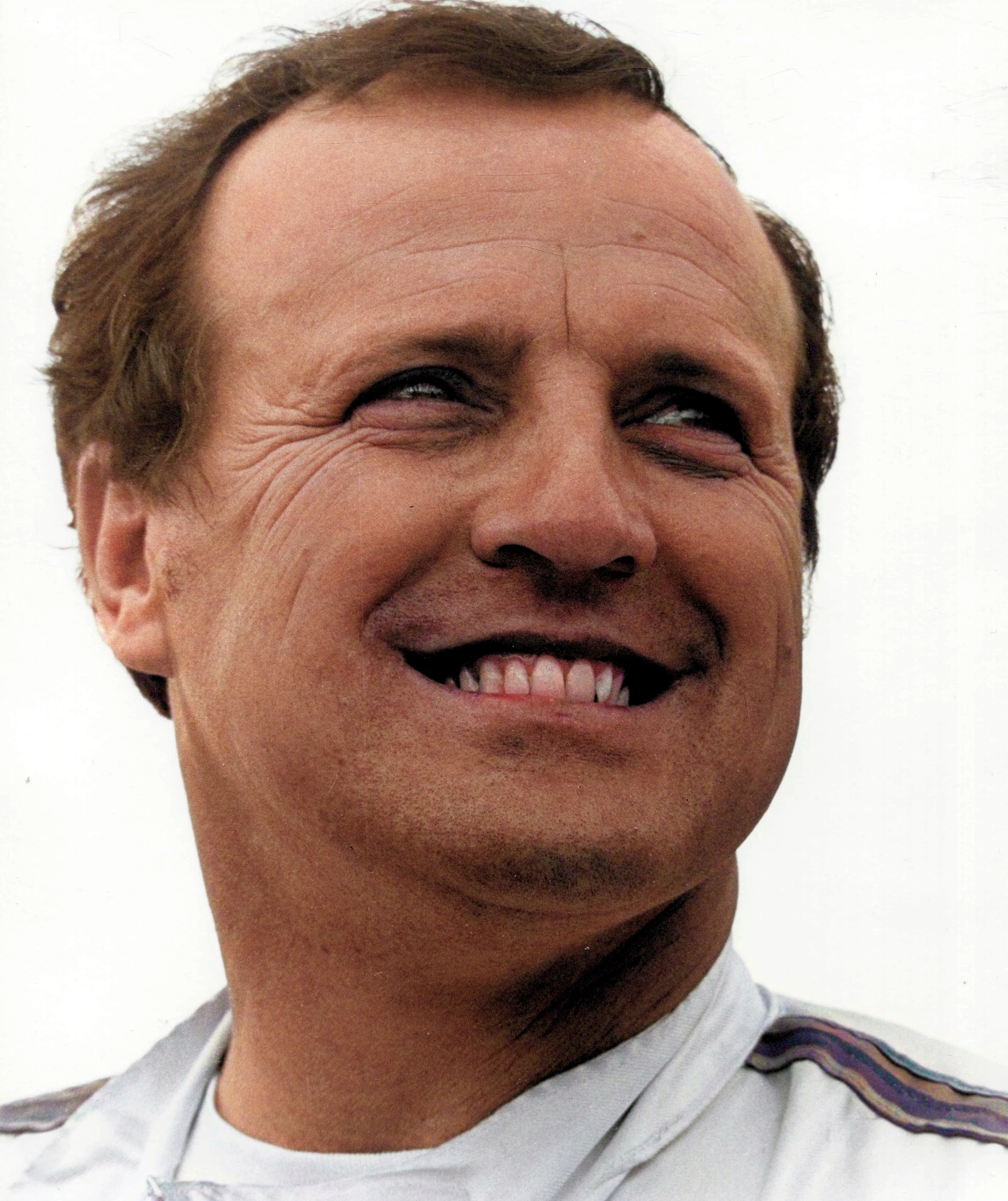
| 3 Quotes | |
| Born as | Anthony Joseph Foyt Jr. |
|---|---|
| Occup. | Celebrity |
| From | USA |
| Spouse | Lucy Zarr (1956–2023) |
| Born | January 16, 1935 Houston, Texas, USA |
| Age | 91 years |
| Cite | |
Citation Formats
APA Style (7th ed.)
A. j. foyt biography, facts and quotes. (2026, August 13). FixQuotes. https://fixquotes.com/authors/a-j-foyt/
Chicago Style
"A. J. Foyt biography, facts and quotes." FixQuotes. August 13, 2026. https://fixquotes.com/authors/a-j-foyt/.
MLA Style (9th ed.)
"A. J. Foyt biography, facts and quotes." FixQuotes, 13 Aug. 2026, https://fixquotes.com/authors/a-j-foyt/. Accessed 3 Oct. 2026.
Early Life and Background
Anthony Joseph Foyt Jr. was born on January 16, 1935, in Houston, Texas, into a working-class Italian American family whose life revolved around engines, metal, and speed. His father, Anthony Foyt Sr., ran a midget-racing operation and a mechanic's shop, and the household blended discipline with risk in a way that would define the son. Houston in the 1930s and 1940s was not yet the polished energy capital it would become; it was a rough industrial city where skill with tools, nerve, and stamina carried social weight. Foyt absorbed that code early. He grew up around race cars not as glamorous objects but as machines that demanded labor, improvisation, and pain tolerance.
That background helps explain why Foyt never fit the later corporate image of a polished champion. He emerged from a distinctly regional racing culture - dirt tracks, county-fair circuits, and garage-based engineering - where identity was earned through mechanical understanding and willingness to endure danger. As a boy he helped in the shop, learned to listen to engines, and saw success as something wrestled from breakdowns and doubt. The emotional center of his early life was paternal expectation: admiration for his father mixed with the pressure to validate the family name. That combination produced the obstinacy, pride, and combativeness that would later make him both feared and revered.
Education and Formative Influences
Foyt's formal education never mattered as much to him as apprenticeship by immersion. He attended schools in the Houston area but was pulled toward racing before adulthood, first on motorcycles and then in midgets. The postwar American racing world offered a hard school of its own: drivers moved between midgets, sprint cars, stock cars, and championship cars, often on consecutive nights, and survival required mechanical fluency as much as courage. Foyt came of age in that ecosystem during the 1950s, when dirt-track skill still translated directly to national prominence. He was shaped by an older generation of racer-mechanics who treated driving as craft and combat, not celebrity. That is why his instincts remained practical rather than theatrical - he trusted feel, aggression, and setup changes more than theory, and he learned to race anything with wheels because versatility was not an accessory in his era but the core professional skill.
Career, Major Works, and Turning Points
Foyt's career became one of the broadest and most punishingly accomplished in American motorsport. After establishing himself in midgets and sprint cars, he entered championship-car racing in the late 1950s and won the Indianapolis 500 four times - 1961, 1964, 1967, and 1977 - a record he long shared as the emblem of Indy greatness. He won seven Indy car national championships, dominated on dirt and pavement, and carried the same ferocity into stock cars, taking the 1972 Daytona 500. His range was even more extraordinary in endurance racing: with Dan Gurney he won the 1967 24 Hours of Le Mans in the Ford GT40 Mk IV, making him a rare American to conquer Indy, Daytona, and Le Mans at the highest level. Turning points often came through violence - crashes, burns, broken bones, near-fatal injuries, and repeated returns - yet those ordeals only deepened his myth as a man seemingly built to outlast machinery and impact. In later years he shifted into ownership with A.J. Foyt Enterprises, remaining a formidable if often combustible presence at Indianapolis and in American open-wheel racing.
Philosophy, Style, and Themes
Foyt's psychology was rooted in inheritance, masculine honor, and a refusal to be diminished. He once explained the engine of his ambition with unusual clarity: “My dad was very successful running midgets in Texas. Then, his two drivers ran into some bad luck. People started saying that Daddy had lost his touch. That it was the cars and not the drivers. I wanted to race just to prove all those people wrong”. That statement reveals more than filial loyalty. For Foyt, competition was rarely abstract; it was personal redress. He drove as if every race settled an argument about competence, toughness, and respect. This helps explain his intensity with crews, rivals, and officials. He was not performing temper - he experienced racing as a direct test of identity, and any slight to machine, preparation, or courage struck him as a moral offense.
His heroes and self-conception were equally revealing. “I guess John Wayne would be one. I just respected the way he acted”. The attraction is obvious: Wayne represented stoicism, command, and frontier certainty, ideals that Foyt translated into the cockpit. Yet age brought some self-awareness. “I'm no where as tough as my father. I really think that I am more open to change than he was”. However rough-edged, he understood himself as part of a generational chain rather than a solitary legend. Thematically, his life joins old American motifs - self-making, machine mastery, bodily risk, suspicion of polish - with the modern spectacle of mass sport. His driving style mirrored that worldview: forceful, adaptive, mechanically sympathetic, and willing to impose itself on a race rather than merely read it.
Legacy and Influence
A.J. Foyt remains one of the central figures in 20th-century American sport because his achievements cut across categories that later generations rarely combined. He was not merely an Indianapolis icon but a national racing archetype - dirt tracker, stock-car winner, endurance victor, owner, mechanic's son, and survivable outlaw in an increasingly corporate age. His four Indianapolis 500 wins, his seven national Indy car titles, his Daytona 500 and Le Mans victories, and his astonishing longevity made him the benchmark for all-around greatness. Just as important, he preserved a memory of motorsport before specialization, when a driver could embody regional grit and international excellence at once. His influence lives in the continued prestige attached to versatility, in the mythology of Indianapolis toughness, and in the enduring idea that the greatest racers do not simply win in one lane - they master the whole dangerous terrain of speed.
Last updated August 2026 · Editorial standards
Our collection contains 3 quotes written by J. Foyt, under the main topics: Motivational - Father - Respect.
Source / external links