
Anita Diament Biography Quotes 23 Report mistakes
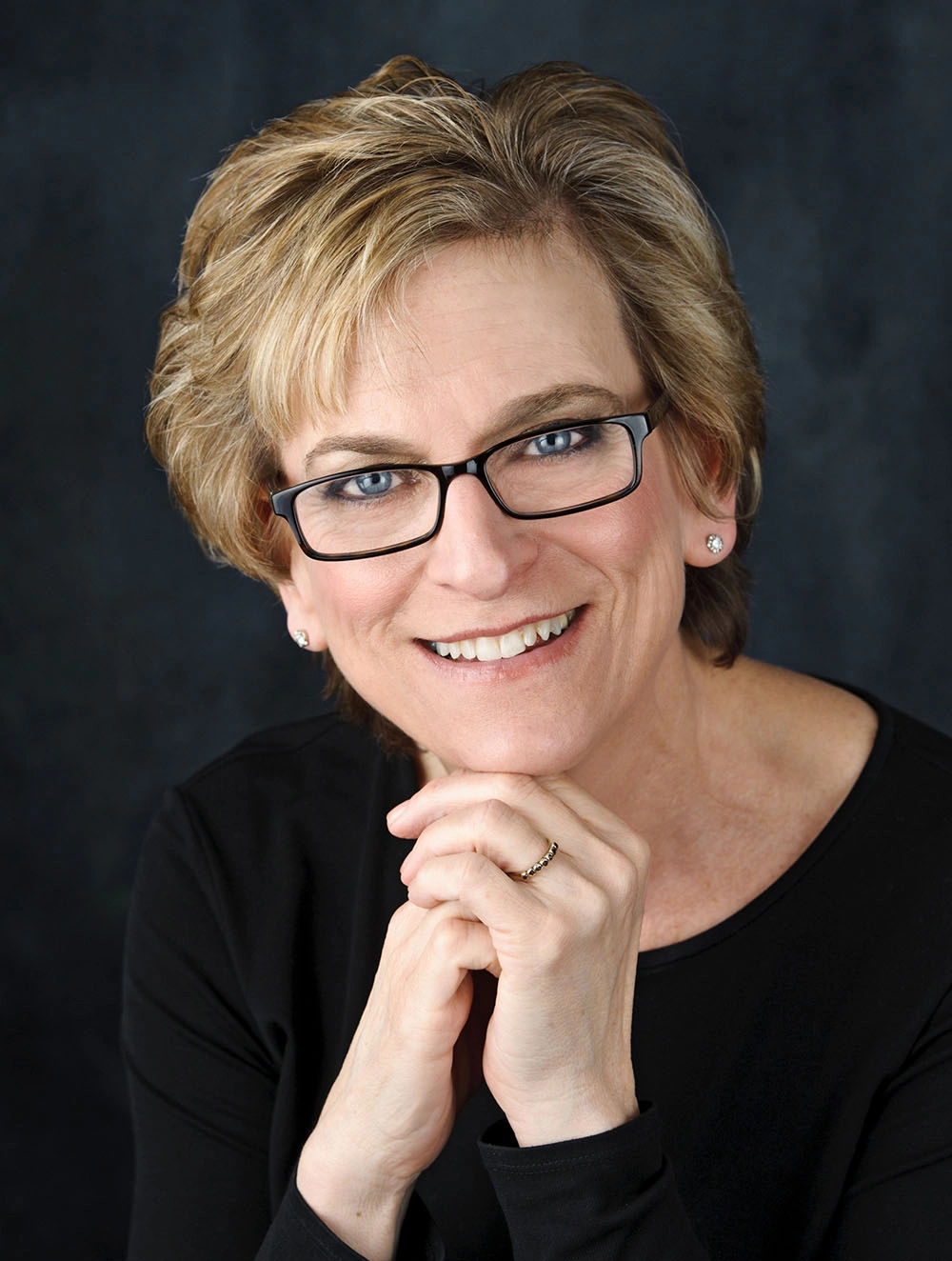
Attr: Photo by Gretje Fergeson
| 23 Quotes | |
| Occup. | Author |
|---|---|
| From | USA |
| Born | June 27, 1951 |
| Age | 75 years |
| Cite | |
Citation Formats
APA Style (7th ed.)
Anita diament biography, facts and quotes. (2026, August 13). FixQuotes. https://fixquotes.com/authors/anita-diament/
Chicago Style
"Anita Diament biography, facts and quotes." FixQuotes. August 13, 2026. https://fixquotes.com/authors/anita-diament/.
MLA Style (9th ed.)
"Anita Diament biography, facts and quotes." FixQuotes, 13 Aug. 2026, https://fixquotes.com/authors/anita-diament/. Accessed 7 Oct. 2026.
Early Life and Background
Anita Diamant was born on June 27, 1951, in the United States and came of age in the decades when American Jewish life, second-wave feminism, and a newly expansive literary culture were all being renegotiated at once. That historical convergence matters to understanding her. She would become not only a novelist but also an interpreter - of ritual, of women's religious experience, of the emotional life concealed inside inherited texts. Her work has always stood at the border between private devotion and public storytelling, and that position was rooted in a generation that inherited both the authority of tradition and the permission to question it.
Before she was widely known for fiction, Diamant was already attentive to domestic and communal spaces that literature often undervalued: kitchens, birthing rooms, mourning rituals, synagogue life, friendship among women, and the fragile architecture of family. Those concerns were not incidental themes later imposed on her writing; they formed the emotional grammar of her career. Living and working in the Boston area, she emerged as a writer whose Jewish identity was neither narrowly doctrinal nor merely ethnic, but practical, interpretive, and lived - concerned with how people create meaning through ceremony, memory, and conversation.
Education and Formative Influences
Diamant studied comparative literature at Washington University in St. Louis and later earned a master's degree in English from Binghamton University. Her early professional formation was in journalism, a discipline that trained her in clarity, compression, reporting, and the patient accumulation of detail. She wrote for newspapers and magazines, including work on Jewish life and contemporary family culture, and that nonfiction apprenticeship shaped nearly everything that followed. It gave her a reporter's instinct for social texture and a scholar's respect for sources without turning her into an academic novelist. Research remained central to her method; as she later said, “As a journalist I'm comfortable doing library research, and I did a lot! I had a fellowship at Radcliff for a year which gave me access to the Harvard system”. That sentence reveals both temperament and method: she is an imaginative writer who builds emotional authority on documentary ground.
Career, Major Works, and Turning Points
Diamant first gained a substantial readership through practical and spiritually engaged nonfiction, especially guides to Jewish practice that addressed women and families with unusual candor. Books such as The New Jewish Wedding, Living a Jewish Life, and Saying Kaddish helped reshape liberal American Jewish ritual by treating ceremony as something emotionally inhabited rather than merely observed. Her decisive turning point came with The Red Tent in 1997, a retelling of the biblical story of Dinah that transformed a marginal female figure into the center of an alternative history. The novel was not an immediate blockbuster, but word of mouth, book clubs, and interfaith readers made it a cultural phenomenon. Diamant followed it with novels including Good Harbor, The Last Days of Dogtown, and Day After Night, while continuing to write nonfiction and to participate in Jewish communal innovation, notably through support for Mayyim Hayyim, the pluralistic mikveh and education center in Newton, Massachusetts. Across genres, her career joined narrative art to ritual literacy.
Philosophy, Style, and Themes
Diamant's writing is animated by a consistent ethical imagination: she asks what happens when lives omitted from official record are restored to visibility. In fiction, that means recovering female interiority from patriarchal narrative; in nonfiction, it means making ritual intelligible, usable, and emotionally honest for modern readers. Her style is lucid, accessible, and sensuous without being ornate. She favors concrete detail, communal scenes, and the authority of embodied experience - food, blood, washing, childbirth, grief, touch. The Bible is not simply a sourcebook for her but a contested partner in interpretation. “Whatever your relationship is to your sacred tradition in the West, you have some relationship to the Bible if only through the names of the characters”. “The Bible - it's sort of the other person in the room. There's this book, the reader, and the Bible”. Those remarks show her psychological stance toward tradition: neither submission nor rejection, but encounter. She writes as someone who feels the text's power and refuses to leave its meanings in inherited hands.
That same sensibility explains her fascination with women's networks and ritual space. “Until very recently, men and women inhabited very separate spheres. There was always interconnection, passion, love. But men and women didn't hang out at the end of the day and chat about what their day was like at the office”. In Diamant's work, that historical separation becomes both wound and opportunity: a sign of exclusion from formal authority, but also an argument that women generated rich forms of knowledge in domestic, bodily, and ceremonial worlds men often did not record. Even when she writes for general audiences, she thinks like a cultural translator, bringing sacred practices into contemporary language without draining them of mystery. Her recurring theme is that belonging is made, not inherited whole; ritual is a vessel for memory, and storytelling is itself a kind of repair.
Legacy and Influence
Anita Diamant's influence is unusually broad because it crosses literary, religious, and communal boundaries. The Red Tent became one of the most widely read works of modern biblical historical fiction and helped normalize feminist midrash for popular audiences, reaching many readers far outside Jewish life. Her nonfiction changed the tone of contemporary Jewish guidebooks by making them intimate, practical, and inclusive, especially for women, converts, interfaith families, and mourners. She also belongs to a late-20th-century cohort of American Jewish writers who shifted authority away from the rabbinic or academic elite and toward the reflective lay reader. Her enduring achievement is not just that she retold old stories, but that she taught readers how to inhabit tradition as a living conversation - critical, affectionate, embodied, and open to those once left at the margins.
Last updated August 2026 · Editorial standards
Our collection contains 23 quotes written by Anita, under the main topics: Music - Book - Never Give Up - Movie - Writing.
Anita Diament Famous Works
- 2020 Period. End of Sentence. (Non-fiction)
- 2014 The Boston Girl (Novel)
- 2009 Day After Night (Novel)
- 2005 The Last Days of Dogtown (Novel)
- 2001 Good Harbor (Novel)
- 1997 The Red Tent (Novel)
Source / external links