
Aziz Ansari Biography Quotes 11 Report mistakes
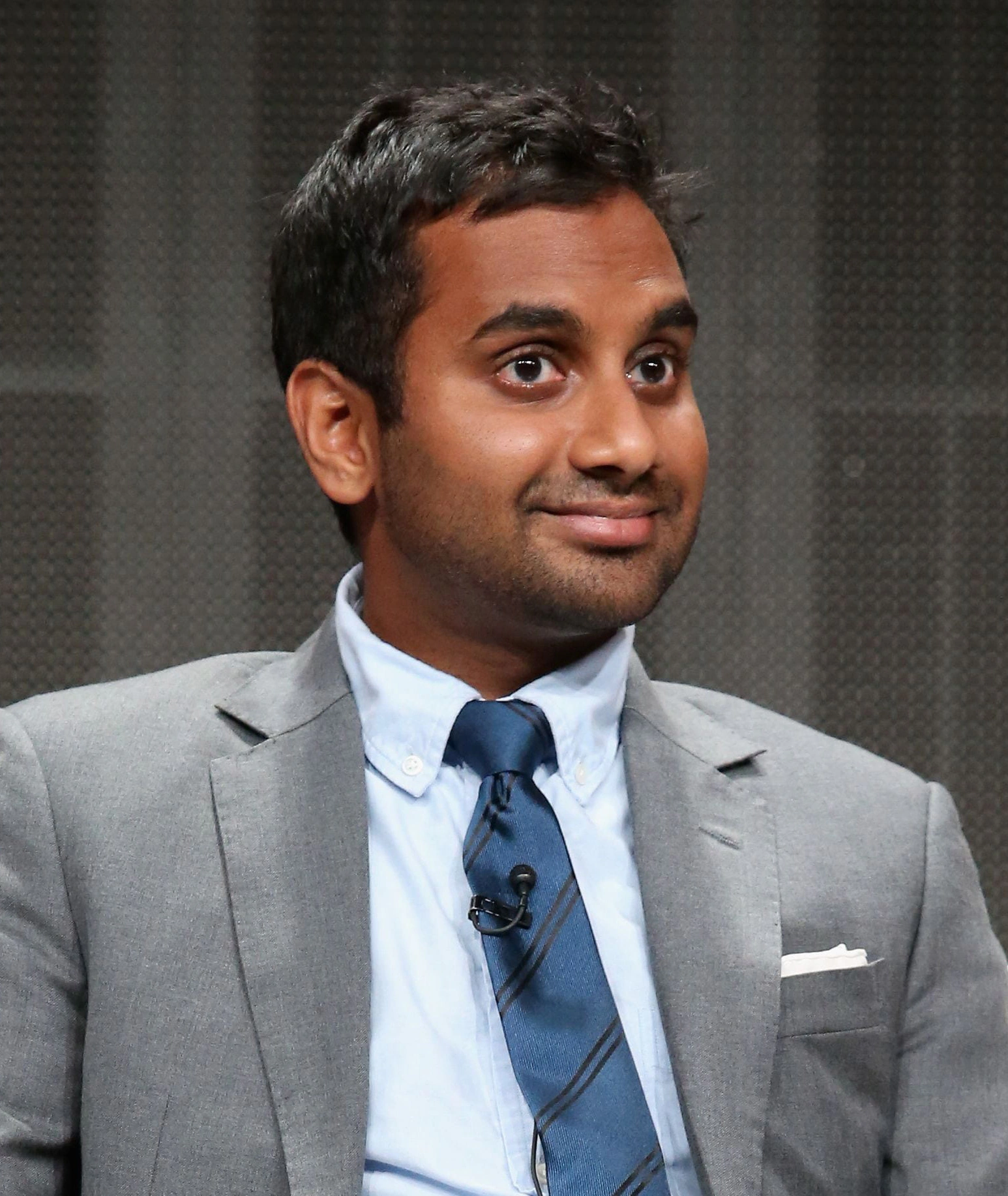
| 11 Quotes | |
| Known as | Aziz |
|---|---|
| Occup. | Comedian |
| From | USA |
| Born | February 23, 1983 Columbia, South Carolina, USA |
| Age | 43 years |
| Cite | |
Citation Formats
APA Style (7th ed.)
Aziz ansari biography, facts and quotes. (2026, August 13). FixQuotes. https://fixquotes.com/authors/aziz-ansari/
Chicago Style
"Aziz Ansari biography, facts and quotes." FixQuotes. August 13, 2026. https://fixquotes.com/authors/aziz-ansari/.
MLA Style (9th ed.)
"Aziz Ansari biography, facts and quotes." FixQuotes, 13 Aug. 2026, https://fixquotes.com/authors/aziz-ansari/. Accessed 7 Oct. 2026.
Early Life and Background
Aziz Ismail Ansari was born on February 23, 1983, in Columbia, South Carolina, the son of Shoukath and Fatima Ansari, Indian Muslim immigrants from Tamil Nadu. His father worked in gastroenterology, his mother in medicine and public health, and their professional success gave the family stability without dissolving the feeling of cultural distance that often marks first-generation American households. Ansari grew up in Bennettsville, a small South Carolina town where race, class, and regional identity were legible in everyday life. That setting mattered. He later drew on the oddity of being a pop-culture-saturated Southern kid with immigrant parents, neither fully defined by ethnic marginality nor comfortably absorbed into a default American norm.
What distinguished Ansari early was not hardship in the conventional biographical sense but a sharpened observational sense born from mismatch. He was immersed in mainstream American comedy, music, and television while also aware that his family story did not resemble those centered in most media. He has said, "For the majority of the time, I may as well have been just a really tan white kid. You know, I may as well have just been, like, a fat kid" - a remark that captures both his comic flattening of identity and the peculiar half-belonging that informed his work. Before fame, he held ordinary jobs, including one he remembered bluntly: “I was a dishwasher at one of those Japanese places that cook on your table. Not too fun”. That detail fits the larger pattern of his early sensibility - ambitious, culturally omnivorous, and attentive to the humiliations and absurdities of service work, dating, status, and self-presentation.
Education and Formative Influences
Ansari attended the South Carolina Governor's School for Science and Mathematics and then enrolled at New York University, studying business at the Stern School of Business. New York was decisive. It exposed him to the density of performance culture, internet-era self-invention, and the labor of becoming funny in public. He has described the beginning with characteristic casual bravado: “I was 18 when I started. I was hanging out with some friends and they asked if I had tried stand-up before. I hadn't, but I thought: 'What the hell?' So I went to an open mic night, and I liked it”. He came up in the 2000s alternative-comedy scene rather than the old nightclub circuit alone, appearing in projects such as Human Giant alongside Rob Huebel and Paul Scheer. The influences were hybrid: sketch comedy, observational stand-up, hip-hop timing, internet irony, and the social embarrassments of young urban adulthood. He developed a style that was less about the formal polish of a classic monologist than about speed, persona, and an almost anthropological reading of modern behavior.
Career, Major Works, and Turning Points
Ansari's breakthrough came when television gave him a body to inhabit beyond stand-up: Tom Haverford on NBC's Parks and Recreation, beginning in 2009. The role made him broadly recognizable and let him refine a comic persona built on aspiration, trend-consciousness, and inflated confidence masking vulnerability. He later noted of the series, “Like with Parks and Recreation, it's so much fun because the people writing it are funny and they're open and you just go in there and have a good time. It's pretty much the easiest job I've ever had”. Parallel to the sitcom, he released stand-up specials including Intimate Moments for a Sensual Evening, Dangerously Delicious, Buried Alive, and Live at Madison Square Garden, becoming one of the defining comics of the smartphone and social-media generation. His 2015 book Modern Romance, written with sociologist Eric Klinenberg, showed a more analytical ambition, examining dating apps, choice overload, and intimacy under technological pressure. That inquiry deepened in Master of None, the Netflix series he co-created with Alan Yang in 2015. The show expanded his range from punchline engineer to writer-director of emotional and formally ambitious stories about immigrant parents, race in casting, friendship, and contemporary love. A major turning point came in 2018, when a widely discussed allegation about a sexual encounter altered his public standing and forced a period of retreat. His later stand-up, especially Right Now and Nightclub Comedian, became more subdued and reflective, less triumphalist, more alert to fragility, accountability, and the limits of curated public identity.
Philosophy, Style, and Themes
Ansari's comedy is built on the friction between appetite and self-awareness. He is a comic of wanting - wanting status, sex, perfect food, better texts, better stories about oneself - and of noticing how those wants turn people into ridiculous strategists. Food is not a side hobby in his work but a key to his worldview: taste, discernment, and pleasure become ways of narrating identity in an age where consumption often substitutes for conviction. “I'm kind of obsessed with food. I like to eat”. And when he said, “When I tour, it's like, well, like a food tour as much as a comedy tour. I try to eat at all the weird places, the obscure barbecue joints, burger places”. , he was revealing more than gluttony . He treats everyday preference as autobiography; where and how one eats, dates, or messages becomes evidence of class aspiration, cosmopolitanism, anxiety, and longing.
His humor also rests on a tension between craft and anti-pretension. He distrusts cheapness while refusing solemnity about his own art. “Every time I've done comedy in, like, traditional comedy clubs, there's always these comedians that do really well with audiences but that the other comedians hate because they're just, you know, doing kind of cheap stuff”. That complaint is aesthetic and moral: he wants comedy to be accessible without becoming lazy, contemporary without pandering. Yet he punctures any grand theory of authorship with lines like, “After you do a joke a few times, you have material that you know works... 'Well, that crowd is obviously wrong. That crowd has absolutely no idea what it's talking about.'”. The joke exposes a central psychological trait - a comic ego that survives by converting uncertainty into performance. Even his claim that “A lot of people my age think stand up sucks”. points to his generational project: to make stand-up feel less like inherited show-business ritual and more like an intelligent, lived conversation about how people actually move through modern life.
Legacy and Influence
Ansari belongs to the cohort that remade American comedy after the monoculture fractured. He moved fluidly between clubs, cable, network sitcoms, prestige streaming television, podcasts, and social media, helping define what a 21st-century comedian could be: not just a joke writer, but a curator of taste, a performer of identity, and a commentator on intimacy under digital conditions. For South Asian Americans, his success mattered both representationally and formally; he was not simply cast as an ethnic novelty, and when he addressed race he often did so by showing its banal entanglement with dating, parenting, and work. Master of None remains his richest contribution, influencing dramedy storytelling with its mix of visual elegance, diasporic detail, and emotional restraint. His career also stands as a case study in the instability of celebrity in the moralized, networked public sphere. That instability did not erase his achievements; it reframed them. Ansari's enduring significance lies in how acutely he captured the desires and confusions of urban millennial adulthood - ambitious, ironic, lonely, consumer-savvy, ethically uncertain - and then, after public rupture, returned sounding older, less certain, and therefore in some ways more legible.
Last updated August 2026 · Editorial standards
Our collection contains 11 quotes written by Aziz, under the main topics: Witty One-Liners - Funny - New Beginnings - Work - Food.
Source / external links