
Brigitte Boisselier Biography Quotes 5 Report mistakes
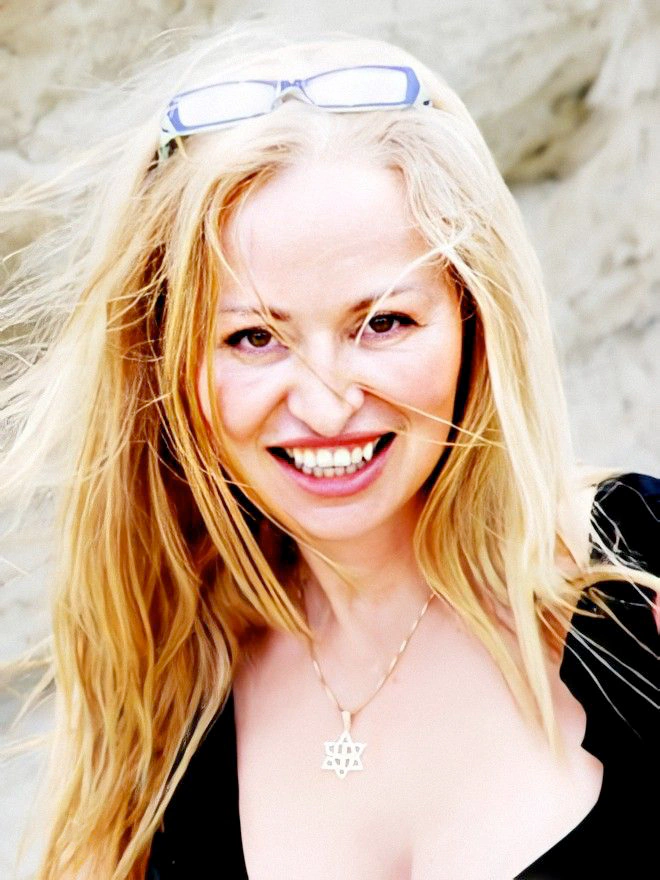
Attr: By Asklepioscaduceus
| 5 Quotes | |
| Known as | Brigitte Roehr |
|---|---|
| Occup. | Celebrity |
| From | France |
| Born | April 3, 1956 Langres, France |
| Age | 70 years |
| Cite | |
Citation Formats
APA Style (7th ed.)
Brigitte boisselier biography, facts and quotes. (2026, March 31). FixQuotes. https://fixquotes.com/authors/brigitte-boisselier/
Chicago Style
"Brigitte Boisselier biography, facts and quotes." FixQuotes. March 31, 2026. https://fixquotes.com/authors/brigitte-boisselier/.
MLA Style (9th ed.)
"Brigitte Boisselier biography, facts and quotes." FixQuotes, 31 Mar. 2026, https://fixquotes.com/authors/brigitte-boisselier/. Accessed 16 Nov. 2026.
Early Life and Background
Brigitte Boisselier was born on April 3, 1956, in France, and came of age in a country where postwar technocracy, secular republicanism, and a powerful faith in science still shaped elite ambition. France in the 1960s and 1970s offered a distinctive mixture of rationalist education, centralized institutions, and public debate about ethics, medicine, and sexuality. Boisselier emerged from that milieu with a profile that later made her unusually visible: scientifically trained, media-fluent, and willing to move between laboratory language and cultural provocation. Although she became internationally known less as a conventional scientist than as a public figure linked to cloning and to the Raelian movement, the roots of that notoriety lay in a specifically French intersection of scientific aspiration and anti-orthodox thought.
Her public life was defined by controversy because she stood at the junction of several volatile subjects at once - biotechnology, reproductive freedom, new religious movements, and the global media economy. In the late 1990s and early 2000s, as cloning became a symbol of both futuristic promise and civilizational dread, Boisselier became one of its most recognizable advocates. To supporters she represented audacity and scientific openness; to critics she embodied hype, ethical recklessness, and the blurred border between research and spectacle. That tension - between trained expertise and theatrical notoriety - became the central drama of her biography.
Education and Formative Influences
Boisselier studied science at an advanced level and was presented in public as a chemist, with doctoral-level training often cited in connection with her later roles. Whatever the disputes over titles, affiliations, and the exact standing of her research career, her intellectual formation clearly drew on laboratory culture: empiricism, technical confidence, and impatience with arguments rooted mainly in taboo. She belonged to a generation shaped by rapid advances in molecular biology, reproductive medicine, and computing, when scientific intervention into life itself seemed to be accelerating. Her later association with the Raelian movement also mattered as a formative influence. Founded by Claude Vorilhon, known as Rael, the movement fused atheism, extraterrestrial creation myths, sensual libertarianism, and a utopian embrace of cloning and immortality. For Boisselier, this environment offered both an ideology and a stage - one that rewarded certainty, anti-conventional rhetoric, and the claim that science could liberate humanity from old fears.
Career, Major Works, and Turning Points
Boisselier first gained wide notice through her leadership role in Clonaid, a company announced by Raelians as a vehicle for human cloning. Around the turn of the millennium, amid international arguments triggered by Dolly the sheep and by tightening bioethical regulation, she became the movement's most prominent spokesperson on reproductive cloning. Her fame reached its peak in December 2002, when she announced that Clonaid had produced the first cloned human baby, a girl called "Eve". The claim generated a global media frenzy, government alarm, and intense scientific skepticism. No independently verified evidence was produced, and the announcement remains unsubstantiated, but the episode fixed Boisselier in public memory. It also revealed her unusual skill in converting speculative biotechnology into headline drama. Beyond the specific claim, her career was built on a repeated pattern: using the language of rights, innovation, and future medicine to challenge legal and moral boundaries, while accepting - and at times cultivating - the suspicion that she was performing as much as persuading.
Philosophy, Style, and Themes
Boisselier's worldview joined technophilia to cultural provocation. She consistently framed cloning not as monstrosity but as the next step in reproductive autonomy, arguing that disgust was a poor guide to ethics. “Every time new technology is introduced, especially involving reproduction, you get the 'yuck' effect”. That sentence captures her basic psychology: she cast herself as the cool empiricist confronting herd emotion, someone who believed outrage often masks intellectual laziness. In the same spirit, she once said, “I am not the kind of girl who can trust a theory based on one person”. The remark is revealing not merely as skepticism but as self-fashioning - she preferred to appear experimental, data-driven, and resistant to inherited authority, even when her own public claims were criticized for outrunning evidence.
Yet Boisselier was never only a laboratory rationalist. Her style depended on confrontation, irony, and an evident awareness that media scandal could be politically useful. “I amused myself playing with the journalists”. That admission is unusually candid and helps explain both her celebrity and her limitations. She understood that in the age of 24-hour news, a biotech controversy could be staged as moral theater, with herself as the unflinching herald of the future. Her connection to Raelian ideas about sexuality and liberation reinforced this posture: she treated norms around family, love, and reproduction as historically contingent rather than sacred. The result was a public philosophy that mixed libertarian ethics, speculative science, and calculated anti-respectability. Admirers saw nerve; detractors saw manipulation. In either reading, she was less a quiet researcher than a combative symbol of how scientific possibility becomes cultural combat.
Legacy and Influence
Brigitte Boisselier's legacy lies less in verified laboratory achievement than in the history of bioethical controversy. She became a durable reference point whenever public debate turned to human cloning, designer reproduction, or the commercialization of radical scientific claims. Her notoriety helped crystallize fears about unregulated biotechnology, but it also exposed how strongly modern societies react when reproduction is detached from familiar moral scripts. As a celebrity-scientific figure tied to a new religious movement, she occupies a peculiar place in recent history: part activist, part provocateur, part cautionary tale about publicity and proof. Even where her central claims failed to win scientific acceptance, her impact endured by forcing institutions, journalists, and ordinary audiences to confront a difficult question - whether the limits of biotechnology should be set by evidence, law, disgust, or imagination.
Last updated March 2026 · Editorial standards
Our collection contains 5 quotes written by Brigitte, under the main topics: Witty One-Liners - Love - Reason & Logic - Technology.
Frequently Asked Questions
- Clonaid Kid Buu: Kid Buu claimed he was cloned by Clonaid; the claim is unproven and widely doubted.
- Clonaid rapper: Refers to rapper Kid Buu’s claim he’s a Clonaid-made clone, no evidence.
- Brigitte Boisselier today: Long associated with the Raëlian Movement; keeps a low profile; no verified human cloning results.
- Marina Cocolios: Brigitte Boisselier’s daughter; maintains a private life.
- Claude Vorilhon: Also known as Raël, founder of the Raëlian Movement.
- Clonaid: Raëlian-linked company that claimed human cloning (e.g., “Baby Eve” in 2002) without providing proof.
- Brigitte Boisselier 2025: French chemist tied to the Raëlian Movement; known for Clonaid; largely out of the spotlight in 2025.
- Brigitte Boisselier daughter marina: Marina Cocolios is Brigitte Boisselier’s daughter.
- How old is Brigitte Boisselier? She is 70 years old
Source / external links