
Chris Brown Biography Quotes 24 Report mistakes
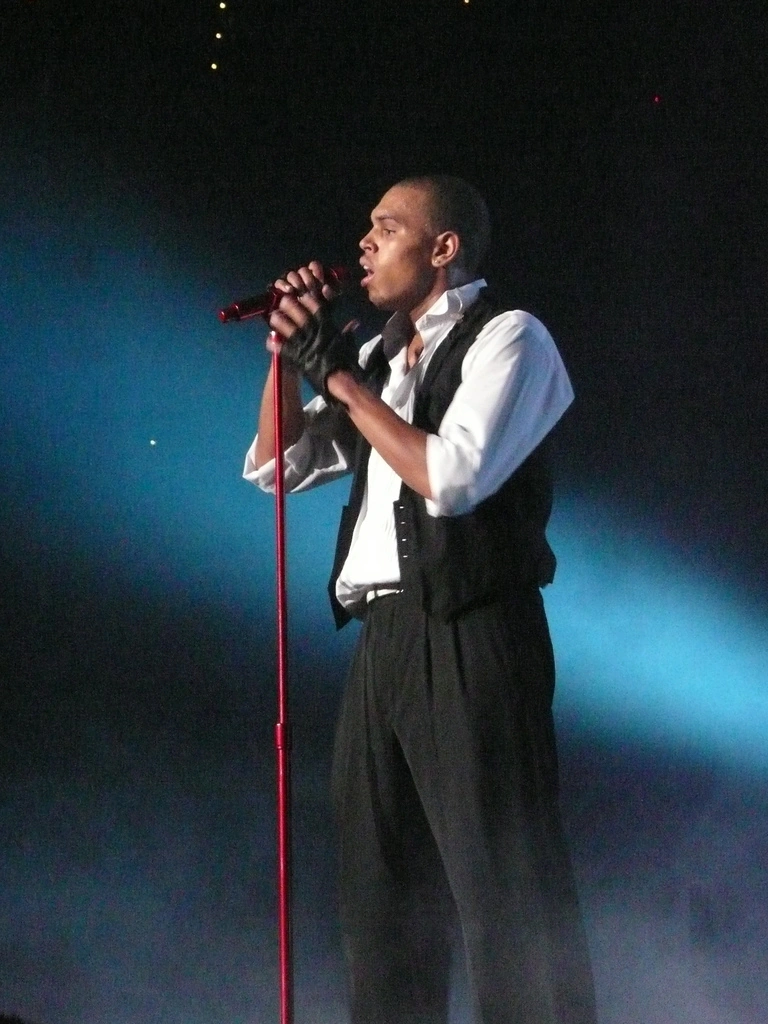
| 24 Quotes | |
| Occup. | Musician |
| From | USA |
| Born | May 5, 1989 |
| Age | 36 years |
| Cite | |
Citation Formats
APA Style (7th ed.)
Chris brown biography, facts and quotes. (2026, February 11). FixQuotes. https://fixquotes.com/artists/chris-brown/
Chicago Style
"Chris Brown biography, facts and quotes." FixQuotes. February 11, 2026. https://fixquotes.com/artists/chris-brown/.
MLA Style (9th ed.)
"Chris Brown biography, facts and quotes." FixQuotes, 11 Feb. 2026, https://fixquotes.com/artists/chris-brown/. Accessed 12 Feb. 2026.
Early Life and Background
Christopher Maurice Brown was born May 5, 1989, in Tappahannock, a small town in Virginia's Northern Neck. His father, Clinton Brown, worked in corrections; his mother, Joyce Hawkins, directed a day care center. In a household where gospel, R&B, and hip-hop were everyday language, Brown absorbed rhythm before he had vocabulary for it, mimicking singers from the radio and channeling a restless athletic energy into movement - the seed of the dance-first stage persona that would later define him.That same intensity also made his adolescence volatile. He grew up amid family strain and economic pressure, and the escape valve was performance: singing at church, practicing dance routines, and recording early demos. By his early teens he was already experiencing the paradox that would follow him for decades - a private self rooted in a close-knit community and a public self built for spectacle, scrutiny, and the fast accelerant of fame.
Education and Formative Influences
Brown attended Essex High School but left as his career accelerated, a common trade-off for young pop prospects in the early-2000s music industry. He drew from Michael Jackson's precision, Usher's contemporary R&B polish, and the then-rising Southern rap cadence, learning to treat the body as an instrument as much as the voice. The era rewarded hybridity - radio-friendly hooks, club percussion, and a visual identity honed through videos - and Brown developed quickly into a performer engineered for that ecosystem.Career, Major Works, and Turning Points
After moving into professional development and label attention, Brown broke through with his self-titled debut album "Chris Brown" (2005), propelled by "Run It!" which topped the Billboard Hot 100 and positioned him as a new teen R&B star. "Exclusive" (2007) expanded his reach with "Kiss Kiss" and "With You", while "Graffiti" (2009) arrived during a severe personal and legal crisis following his 2009 felony assault of Rihanna - a turning point that reshaped his public image, industry relationships, and the moral frame through which audiences interpreted his work. He rebuilt commercial dominance with "F.A.M.E". (2011) and hits like "Yeah 3x" and "Look at Me Now", then pursued maximalist productivity: the sprawling "Fortune" (2012), the chart-heavy "X" (2014), the commercial peak of "Heartbreak on a Full Moon" (2017), and later projects such as "Indigo" (2019) and "Breezy" (2022). Parallel acting roles and constant collaborations kept him omnipresent, even as repeated controversies, lawsuits, and allegations ensured that every comeback was also a referendum.Philosophy, Style, and Themes
Brown's style is built on friction: sweetness and menace, vulnerability and bravado, devotional slow jams beside club-ready aggression. He approaches pop as a wide-spectrum craft, aiming for cross-generational recognition as much as youth relevance, which he articulated when discussing his Hathaway cover: "With the song 'This Christmas' I wanted to do something that was kind of different... It's like I can appeal to everybody and not just a younger demographic". That ambition is audible in his catalog's range - from the nostalgic sheen of holiday soul to trap-inflected late-night confessionals - and visible in performances where choreography is not garnish but narrative.Psychologically, his interviews often disclose a split self: the hometown athlete and gamer versus the highly stylized avatar built for arenas and tabloids. He has described that division plainly: "My personal life is the same. At the end of the day, this is just a job... There's Chris Brown the singer. And there's Christopher Brown, the down-home Tappahannock boy that plays video games and basketball and hangs out". That compartmentalization helps explain both his stamina as an entertainer and the recurring sense, in his lyrics, of intimacy treated as a battleground - love as desire, status, reassurance, and control. Even his account of onstage failure reveals a performer trained to convert panic into composure: "The worst moment was when I was performing... I couldn't get the words out... but I got over it". The through-line is resilience, but also a dependence on the crowd's absolution - a dynamic that mirrors his larger career.
Legacy and Influence
Brown's legacy is inseparable from contradiction. As a musician and dancer, he helped reset the 21st-century template for the male R&B pop star: athletic choreography married to hitmaking across R&B, pop, and hip-hop, with a work rate that anticipated the streaming era's demand for volume. Yet his enduring influence travels alongside enduring dispute - a career that demonstrates how fame can amplify talent while also magnifying harm, and how audiences, platforms, and collaborators continuously negotiate the line between artistic contribution and personal accountability. In the story of post-2000 American pop, he remains both a benchmark of performance craft and a case study in how public life can fracture the private self that created the art.Our collection contains 24 quotes written by Chris, under the main topics: Motivational - Love - Music - One-Liners - Mother.