
Keenen Ivory Wayans Biography Quotes 30 Report mistakes
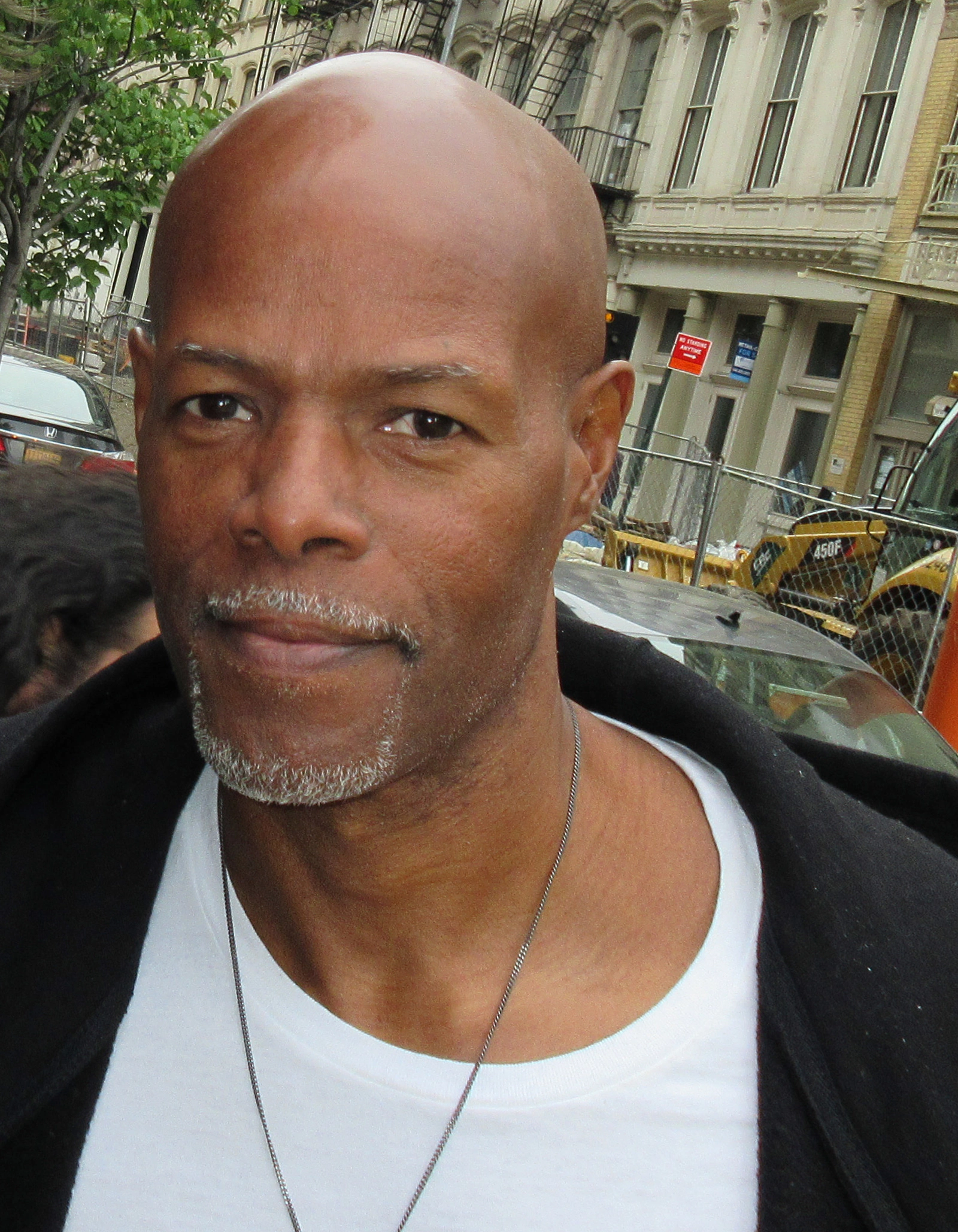
Attr: Greg2600, CC BY-SA 2.0
| 30 Quotes | |
| Born as | Keenen Ivory Desuma Wayans |
|---|---|
| Occup. | Comedian |
| From | USA |
| Spouse | Daphne Polk (2001–2005) |
| Born | June 8, 1958 New York City, New York, USA |
| Age | 68 years |
| Cite | |
Citation Formats
APA Style (7th ed.)
Keenen ivory wayans biography, facts and quotes. (2026, August 13). FixQuotes. https://fixquotes.com/authors/keenen-ivory-wayans/
Chicago Style
"Keenen Ivory Wayans biography, facts and quotes." FixQuotes. August 13, 2026. https://fixquotes.com/authors/keenen-ivory-wayans/.
MLA Style (9th ed.)
"Keenen Ivory Wayans biography, facts and quotes." FixQuotes, 13 Aug. 2026, https://fixquotes.com/authors/keenen-ivory-wayans/. Accessed 11 Nov. 2026.
Early Life and Background
Keenen Ivory Desuma Wayans was born on June 8, 1958, in New York City and raised in the Fulton Houses in Manhattan, the eldest son in a large, close, and ambitious family that would become one of the most influential dynasties in American comedy. His parents, Howell Wayans, a supermarket manager, and Elvira Wayans, a homemaker and social worker, were Jehovah's Witnesses, and the household combined strict religious discipline with constant performance, teasing, and storytelling. In a family of ten children, wit was not decoration but social currency. Keenen's eventual role as organizer, tone-setter, and pathfinder began there, in the pressure cooker of a crowded apartment where personality had to be sharpened to survive.
He came of age during a period when Black performers were still negotiating access to mainstream television and film through narrow stereotypes or isolated breakthroughs. The post-civil rights era offered visibility but not parity; Richard Pryor, Melvin Van Peebles, and later Eddie Murphy proved that Black comic sensibility could command a mass audience, yet institutions remained gatekept. Wayans absorbed this contradiction early. He was serious, observant, and more strategic than flamboyant, with a temperament that contrasted with the chaos he could orchestrate onscreen. That duality - internal control paired with external irreverence - became central to his career and to the Wayans family model he later built.
Education and Formative Influences
Wayans attended Tuskegee University on an engineering scholarship, a practical path that reflected both ability and family expectations, but comedy drew him away before graduation. Moving decisively toward performance, he entered the stand-up circuit in New York and Los Angeles at a time when comedy clubs were becoming laboratories for new Black voices. He worked The Improv and other rooms, learning timing, audience psychology, and the brutal economy of attention. Pryor's fearlessness, television sketch traditions, the elasticity of parody, and the independent energy of blaxploitation all fed him, but so did the discipline of producing material fast and tailoring it to different crowds. His early break came through writing and performing, including work connected to "Hollywood Shuffle" and a stint as a comedian that brought him into the orbit of established industry figures. More than many stand-ups, he was thinking structurally - not just about jokes, but about platforms, ownership, and ensemble.
Career, Major Works, and Turning Points
Wayans's first major screen visibility came with a role in "Hollywood Shuffle" (1987), but his defining breakthrough was creating, writing, and hosting "In Living Color" for Fox in 1990. The show was a cultural detonation: faster, more streetwise, and more racially fearless than network sketch comedy had been willing to allow, it launched or transformed the careers of Jim Carrey, Jamie Foxx, Jennifer Lopez, David Alan Grier, Tommy Davidson, and several Wayans siblings, especially Damon, Kim, Shawn, and Marlon. As creator and chief architect, Keenen balanced satire, pop parody, dance, music-video pacing, and pointed racial commentary while negotiating censorship and network demands. After leaving the show, he expanded into directing and producing films that turned genre spoof into box-office power, most notably "Scary Movie" (2000), which he directed and co-wrote, followed by "Scary Movie 2" (2001). He also directed "A Low Down Dirty Shame" (1994), a sign of his desire to fuse action, sexuality, and Black cool with comedy. Across decades, his career has moved between performer, writer, producer, and director, but the deeper turning point was institutional: he proved that a Black-led comic enterprise could generate not only stars but an ecosystem.
Philosophy, Style, and Themes
Wayans's comedy is built on collision: high and low culture, mainstream form and outsider perspective, family intimacy and public mockery. He has always understood parody not as disposable silliness but as a technical art requiring exact calibration. “We've seen so many films now that you have to be on par with the best films that have preceded you. You just can't make any movie and it will be good”. That statement reveals a craftsman's anxiety beneath the clowning. His spoofs work when they are precise enough to honor the source while exposing its vanity, cliches, and racial blind spots. Equally revealing is his appetite for accumulation and mash-up: “I throw it all in there, Kung Fu, blaxploitation, horror”. This is not random excess; it is the sensibility of someone formed by television, grindhouse cinema, Black popular culture, and the democratizing speed of sketch comedy, all filtered through an editor's instinct for pace.
Psychologically, Wayans often appears less interested in self-display than in command - of tone, of ensemble, of pressure. “You do what it takes. It was on me to deliver”. That line captures the burden he accepted as eldest sibling and as family trailblazer. Even his broadest work carries the signature of a builder who thinks in systems: who gets hired, who gets seen, how a joke lands across racial lines, how vulgarity can mask critique. His films and shows often use sex jokes, gross-out humor, and caricature as bait, but beneath that surface lies a recurring theme of access - who is allowed to define beauty, coolness, heroism, and Americanness. The prankishness was real; so was the discipline.
Legacy and Influence
Keenen Ivory Wayans changed American comedy by expanding who could own the means of comic production. "In Living Color" helped reshape television's visual rhythm and talent pipeline, giving sketch comedy a new Black, urban, music-driven grammar that influenced everything from later Fox programming to "Chappelle's Show" and internet-era ensemble comedy. His genre spoofs, especially "Scary Movie", revived and industrialized parody for a new generation, while his career made the Wayans surname itself a cultural institution. Just as important, he modeled a form of collective ascent rare in Hollywood: one artist opening the door and then holding it open for siblings, collaborators, and younger comics. His legacy is therefore not only a catalog of jokes and films but a method - disciplined irreverence, family as infrastructure, and comedy as both entertainment and leverage.
Last updated August 2026 · Editorial standards
Our collection contains 30 quotes written by Keenen, under the main topics: Witty One-Liners - Motivational - Funny - Movie - Deep.
Other people related to Keenen: Shawn Wayans (Actor)
Source / external links