
Larry David Biography Quotes 42 Report mistakes
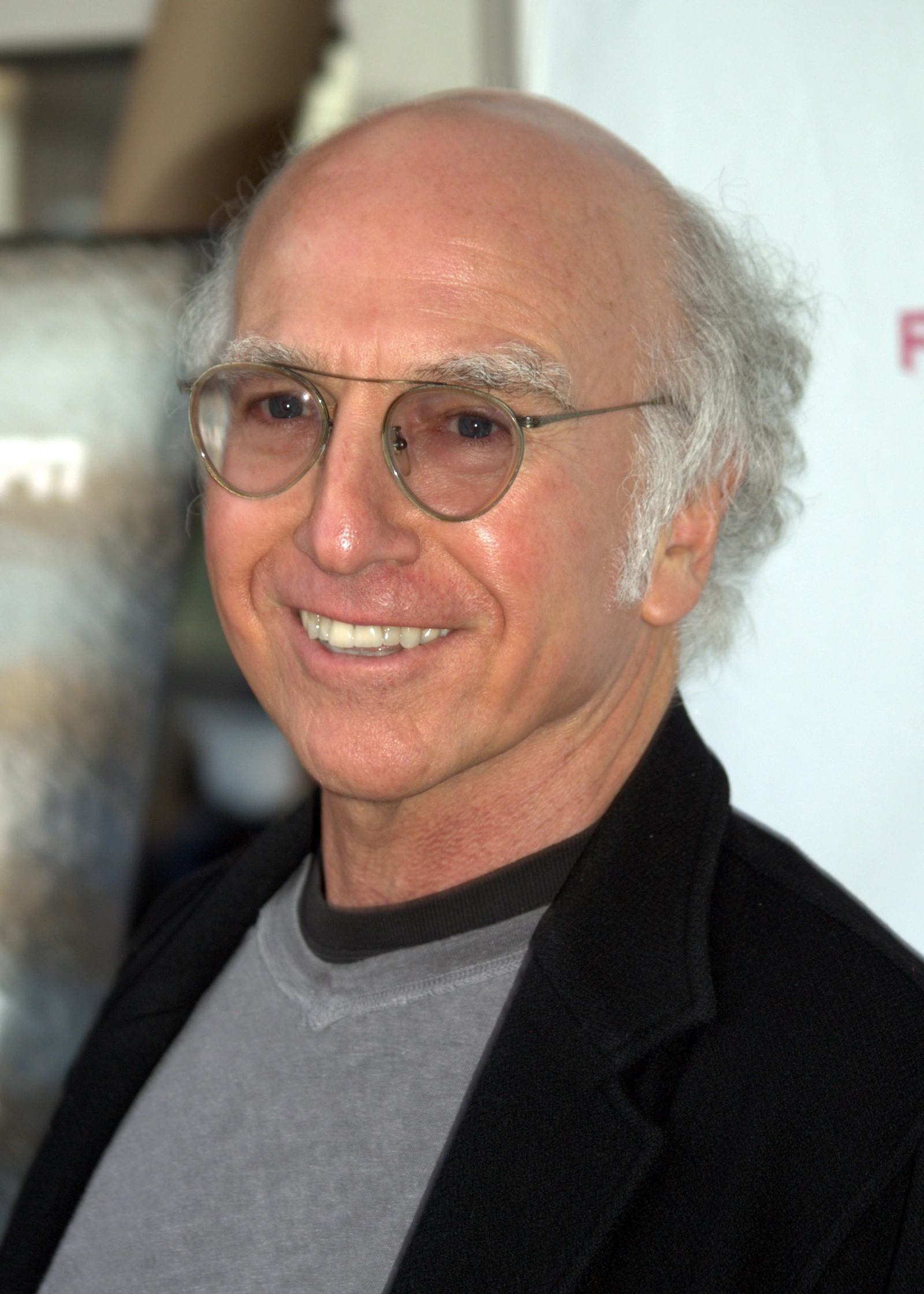
| 42 Quotes | |
| Occup. | Actor |
| From | USA |
| Born | July 2, 1947 |
| Age | 78 years |
| Cite | |
Citation Formats
APA Style (7th ed.)
Larry david biography, facts and quotes. (2026, March 31). FixQuotes. https://fixquotes.com/actors/larry-david/
Chicago Style
"Larry David biography, facts and quotes." FixQuotes. March 31, 2026. https://fixquotes.com/actors/larry-david/.
MLA Style (9th ed.)
"Larry David biography, facts and quotes." FixQuotes, 31 Mar. 2026, https://fixquotes.com/actors/larry-david/. Accessed 5 Apr. 2026.
Early Life and Background
Larry David was born Lawrence Gene David on July 2, 1947, in Brooklyn, New York, and grew up in the Sheepshead Bay section of south Brooklyn, a postwar world of apartment houses, neighborhood codes, Jewish family wit, and blunt social observation. His parents, Rose and Mortimer Julius David, belonged to the upward-striving outer-borough middle class shaped by the Depression and World War II. That environment mattered. David's comedy would later seem hyper-specific, but its roots were communal: the small humiliations of city life, the suspicion that every social exchange concealed a petty injustice, and the habit of arguing as both defense and entertainment. He absorbed the rhythms of New York Jewish speech - skepticism, self-mockery, forensic indignation - long before he turned them into an artistic system.
He was not an obvious future celebrity. By many accounts he was shy, intense, observant, and already attuned to absurdity. He had an older brother, Ken, and the family world offered both security and friction, the mixture that often produces comic intelligence. Brooklyn in David's youth was also a training ground in rules - public and unwritten. Street life, school hierarchies, and family expectation all sharpened his fixation on etiquette, fairness, and minor breaches of conduct. The persona he later perfected - the man unable to let a small offense go - was not a fabrication so much as a ruthless refinement of habits formed early, in a city where inconvenience was constant and complaint was an art.
Education and Formative Influences
David attended Sheepshead Bay High School and then the University of Maryland, College Park, where he studied history and began performing comedy. History gave him distance from the present, but stand-up offered something more urgent: a way to convert private irritation into public form. After college he served in the U.S. Army Reserve, worked a string of jobs - including as a limousine driver, store clerk, and television repairman - and developed his act in New York clubs during the 1970s. Those years were crucial less for success than for resistance. He admired comedians who sounded personal rather than polished, and he came of age in a stand-up culture increasingly shaped by marketable rhythms and obvious punch construction. David's instincts pushed the other way, toward conversational tension, aborted thoughts, and the exposure of social discomfort. Even before fame, he was discovering that his comic gift lay not in charm but in refusal: refusal to flatter audiences, refuse neat sentiment, refuse the idea that likability was a prerequisite for truth.
Career, Major Works, and Turning Points
After difficult years in stand-up, David entered television writing, most notably on ABC's Fridays and briefly on Saturday Night Live, where his now-famous tendency to quit in frustration and reappear the next day became part of his legend. The decisive turning point came when he met Jerry Seinfeld on the New York comedy circuit. Together they created Seinfeld in 1989, with David serving as co-creator, executive producer, and the principal architect of its moral mechanics. The series transformed American sitcom form by making trivial grievance structurally central and by refusing sentimental closure. Episodes such as "The Contest" and "The Chinese Restaurant" bore David's stamp: compression, escalation, social rules under stress. He left Seinfeld after its seventh season, then reemerged with HBO's Curb Your Enthusiasm, first in a 1999 special and then as a series from 2000. There he converted his own reputation into a comic laboratory, playing "Larry David" as a wealthy, exasperated, socially impossible version of himself. He also acted in films, appeared on Broadway in Fish in the Dark, and remained a potent television presence through recurring reinventions, including his widely praised impersonation of Bernie Sanders on Saturday Night Live. Across these projects, David moved from hidden writer to visible anti-hero without surrendering his authorial identity.
Philosophy, Style, and Themes
David's comedy begins with a severe, almost moral attention to the tiny contract governing everyday life. He treats small interactions - who thanks whom, who waits, who apologizes, who oversteps - as if they reveal character more truthfully than grand declarations. This is why his work feels both trivial and profound. He once said, “I wanted to make a living, but I really was not interested in money at all. I was interested in being a great comedian”. That ambition helps explain the austerity of his method. He stripped away ornamental joke-writing in favor of behavior, cadence, repetition, and escalation. On Curb, especially, embarrassment is not accidental seasoning but the dramatic engine: a person says what social order requires him to suppress, and the world retaliates. David's deepest subject is not rudeness but the cost of maintaining civility when many rules are arbitrary, contradictory, or hypocritical.
His remarks about form reveal the same psychology. “There's a sense of spontaneity, and no emphasis on jokes in this show. People generally talk the way they talk in life if you were in this particular situation”. That preference for lived speech over polished setup reflects his distrust of artificiality and his attraction to improvisation as a truth serum. He also observed, “Most of the time I'm thinking, I'm glad that scene was improvised”. Improvisation, for David, is not looseness but exposure: it lets vanity, impatience, and pettiness surface before taste can censor them. The result is a body of work obsessed with the humiliations most people edit out of their self-image. His famous irritability is therefore inseparable from vulnerability. He plays the accuser, but he is also the accused, forever revealing how a mind devoted to principle can become trapped in ego, compulsion, and the impossible wish for a perfectly fair world.
Legacy and Influence
Larry David altered the grammar of American screen comedy. Seinfeld helped normalize stories built from social minutiae and ethical ambiguity, while Curb Your Enthusiasm expanded what television could do with improvisation, self-fictionalization, and sustained discomfort. Entire generations of comedians, writers, and showrunners borrowed from his structures: the escalation of a minor slight into catastrophe, the anti-sentimental ending, the protagonist whose honesty is both clarifying and destructive. Yet his influence is larger than technique. David made neurosis culturally legible as criticism - a way of exposing the absurdity hidden inside ordinary etiquette, institutions, and self-congratulation. He remains one of the rare comic creators whose on-screen character became an adjective while his behind-the-scenes craftsmanship remained equally revered. In turning complaint into art, he gave modern comedy one of its most durable voices.
Our collection contains 42 quotes written by Larry, under the main topics: Witty One-Liners - Motivational - Funny - Art - Dark Humor.
Other people related to Larry: Jerry Seinfeld (Comedian), Jason Alexander (Actor), Shelley Berman (Comedian), Rita Wilson (Actress), Bobby Farrelly (Director), Bill Buckner (Athlete), Wanda Sykes (Comedian), Richard Lewis (Comedian), Patrick Warburton (Actor)
Source / external links