
Ryan Giggs Biography Quotes 5 Report mistakes
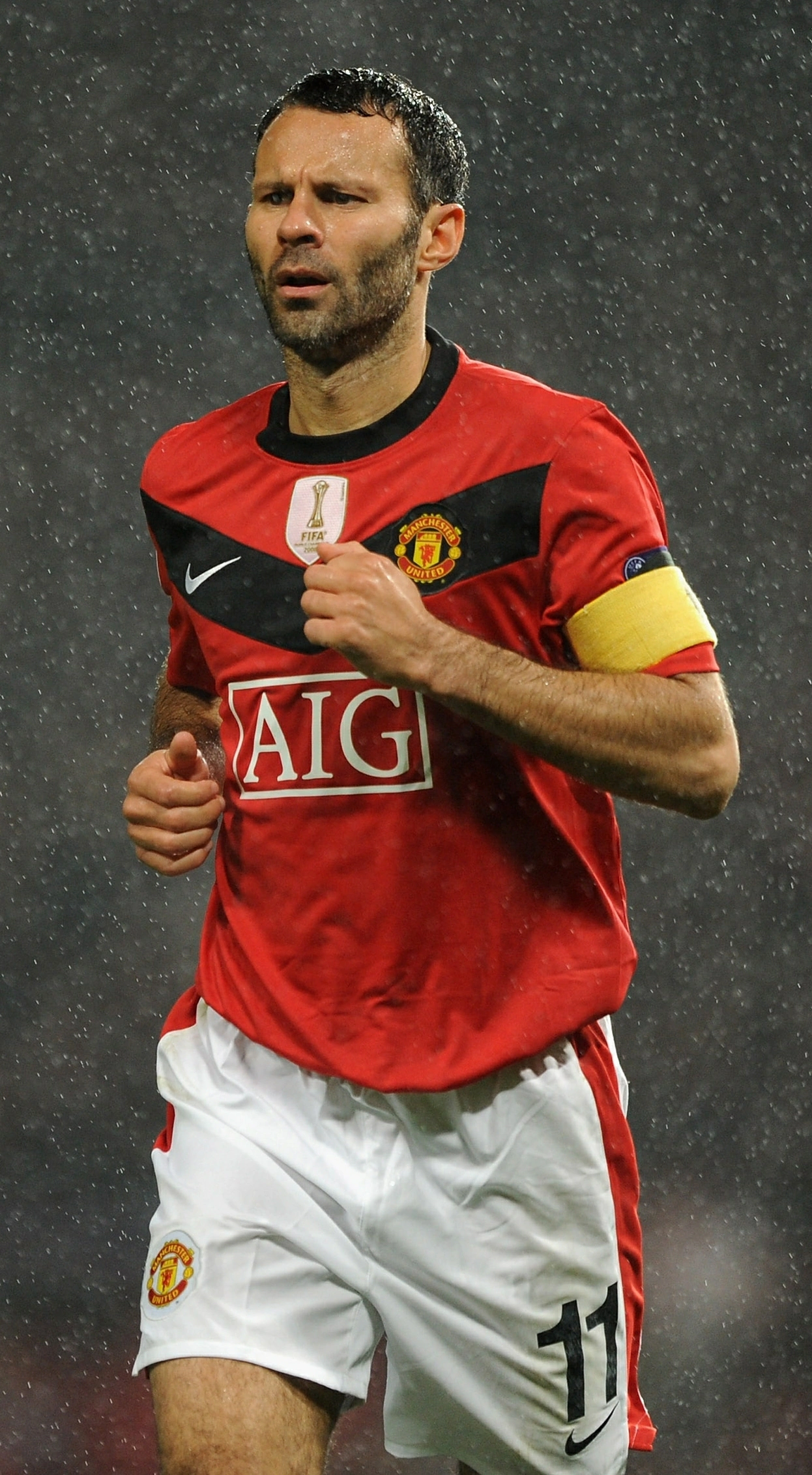
| 5 Quotes | |
| Born as | Ryan Joseph Wilson |
|---|---|
| Known as | Ryan Joseph Giggs |
| Occup. | Athlete |
| From | Welsh |
| Born | November 29, 1973 Cardiff, Wales |
| Age | 52 years |
| Cite | |
Citation Formats
APA Style (7th ed.)
Ryan giggs biography, facts and quotes. (2026, August 13). FixQuotes. https://fixquotes.com/authors/ryan-giggs/
Chicago Style
"Ryan Giggs biography, facts and quotes." FixQuotes. August 13, 2026. https://fixquotes.com/authors/ryan-giggs/.
MLA Style (9th ed.)
"Ryan Giggs biography, facts and quotes." FixQuotes, 13 Aug. 2026, https://fixquotes.com/authors/ryan-giggs/. Accessed 10 Oct. 2026.
Early Life and Background
Ryan Giggs was born Ryan Joseph Wilson on November 29, 1973, in Cardiff, Wales, into a household shaped by sport, movement, and fracture. His father, Danny Wilson, was a rugby league player of Sierra Leonean descent, and his mother, Lynne Giggs, was Welsh. The family later moved to Swinton, near Manchester, placing the boy who would become one of British football's defining figures inside the industrial, football-saturated culture of northwest England. He grew up in a divided inheritance - Welsh by birth and feeling, Mancunian by upbringing, black and white in a society not always comfortable with either complexity or mixture. That doubleness mattered. It gave him both an outsider's alertness and a performer's hunger for mastery.
The surname by which the world knows him came later, after his parents separated and his mother remarried. Adopting "Giggs" was more than an administrative change; it marked a reassembled identity after domestic instability. In childhood he played constantly - on streets, school fields, anywhere the ball could move - and his speed quickly distinguished him. He admired attacking football and showed the natural one-on-one daring that would define his public image: shoulders low, touch tight, body balanced to accelerate past defenders. Yet the polished star of later decades began as a shy, observant child whose gifts developed amid family tension, racial awareness, and the ordinary competitiveness of Greater Manchester schoolboy sport.
Education and Formative Influences
Giggs attended local schools in the Manchester area and developed at a time when elite English football was only beginning to modernize its coaching, nutrition, and youth structures. He played for school teams and local sides, including Deans FC, attracting the attention of Manchester City scouts before Manchester United intervened. Alex Ferguson, already rebuilding United around discipline and youth, famously visited the family home on Giggs's 14th birthday to secure him. That courtship mattered because Ferguson offered not just a club but a moral framework: self-control, repetition, and seriousness beneath flair. Giggs also came through alongside the generation later mythologized as the "Class of '92" - David Beckham, Paul Scholes, Nicky Butt, Gary Neville, Phil Neville - though he was slightly ahead of them in emergence. The wider era also formed him: the decline of the old First Division, the birth of the Premier League in 1992, and the transformation of football into a global media industry. He learned to survive in all three worlds - old-school dressing room, modern tactical system, and celebrity marketplace.
Career, Major Works, and Turning Points
Giggs made his senior debut for Manchester United in 1991 and soon became the most thrilling young winger in England. Slender, left-footed, and explosive, he gave United width and imagination during Ferguson's ascent from embattled manager to dynasty-builder. He won the first two PFA Young Player of the Year awards, then became central to a team that captured 13 Premier League titles, 4 FA Cups, 3 League Cups, and 2 UEFA Champions League crowns. His role evolved with age: from touchline dribbler to interior creator, from pure acceleration to rhythm, angles, and retention. He scored in every Premier League season from its inception until retirement, a statistic that captures both longevity and tactical adaptation. The iconic goal against Arsenal in the 1999 FA Cup semifinal - slaloming through defenders before blasting into the roof of the net - became the distilled image of Giggs: velocity fused to nerve at the edge of chaos. He passed Sir Bobby Charlton's appearance record for United, finished with more than 900 club appearances, and retired in 2014 after an interim spell following David Moyes's dismissal. His international career with Wales, though less decorated, was central to his identity; he won 64 caps in an era when Wales lacked tournament qualification. Coaching followed - first at United, then as Wales manager - but his post-playing life became entangled with personal scandal and legal controversy, complicating the public memory of his achievements.
Philosophy, Style, and Themes
Giggs's football philosophy was pragmatic beneath its romance. Early on, he played as if freedom were instinctive: receive wide, isolate the full-back, threaten the outside, then cut or cross before support arrived. But what made him historically rare was not only talent - it was self-editing. Hamstring injuries in his twenties forced a reinvention. He reduced the wasteful sprint, improved body care, studied timing, and learned that elite longevity depends on subtraction as much as expression. In this sense his career belongs to the transition from genius as eruption to genius as maintenance. He remained dangerous because he accepted mortality before most stars do, turning adaptation into artistry. The public saw glamour and trophies; the deeper story is a man relentlessly negotiating with time, body, and expectation.
That same negotiation marked his inner life and public language about identity. “I do not wish to hide my origins, nor do I seek to make it a subject of conversation. I am what I am”. The sentence is characteristically compressed: proud, defensive, and wary of spectacle. He also acknowledged the racialized pressure around his childhood - “He was a professional rugby player in the area that I played as a youngster. So a lot of people who I went to school with knew who he was and knew that he was black. So I would get racist taunts in school”. That experience helps explain his reserve. Giggs was never a confessional celebrity; he preferred performance to self-exposure. Yet beneath the restraint was unmistakable affirmation: “I am proud of my black roots and of the black blood that runs in my veins”. The three statements together reveal a psychology built on control - refusing both erasure and exhibition, asserting identity while resisting being reduced to it. On the field, this became his style: economy without passivity, emotion translated into exact movement rather than rhetoric.
Legacy and Influence
Giggs remains one of the defining figures of the Premier League era and one of Manchester United's foundational modern legends. He linked the last years of English football's old order to the hyper-commercial global game, proving that a winger famed for raw speed could become a master of durability, positional intelligence, and technical economy. For Welsh sport, he embodied excellence achieved away from the nation's institutional center yet never entirely detached from it. For players who followed, his example was twofold: youthful brilliance is not enough, and reinvention is itself a talent. His legacy, however, is no longer simple. The beauty of his football - especially its balance of daring and discipline - endures in highlight reels and statistical records, while the contradictions of his personal life shadow the heroic narrative once built around him. That tension is now part of the biography. Giggs's story is not merely of trophies won, but of how modern stardom can preserve athletic greatness while exposing the instability of the man behind it.
Last updated August 2026 · Editorial standards
Our collection contains 5 quotes written by Ryan, under the main topics: Honesty & Integrity - Equality - Father - War - Pride.
Source / external links