
Sarah Hughes Biography Quotes 5 Report mistakes
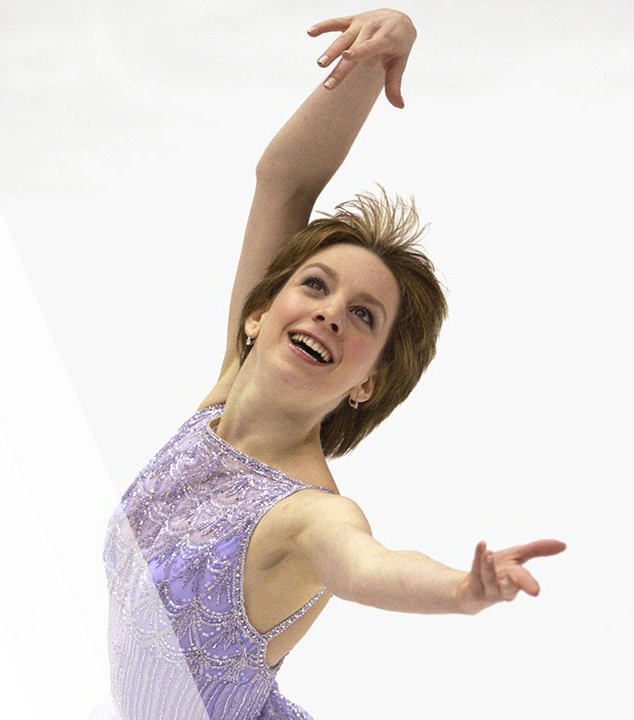
| 5 Quotes | |
| Born as | Sarah Elizabeth Hughes |
|---|---|
| Occup. | Athlete |
| From | USA |
| Born | May 2, 1985 Great Neck, New York, USA |
| Age | 41 years |
| Cite | |
Citation Formats
APA Style (7th ed.)
Sarah hughes biography, facts and quotes. (2026, August 13). FixQuotes. https://fixquotes.com/authors/sarah-hughes/
Chicago Style
"Sarah Hughes biography, facts and quotes." FixQuotes. August 13, 2026. https://fixquotes.com/authors/sarah-hughes/.
MLA Style (9th ed.)
"Sarah Hughes biography, facts and quotes." FixQuotes, 13 Aug. 2026, https://fixquotes.com/authors/sarah-hughes/. Accessed 16 Oct. 2026.
Early Life and Background
Sarah Elizabeth Hughes was born on May 2, 1985, in Great Neck, New York, into a family that combined immigrant ambition, academic rigor, and athletic restlessness. Her father, John Hughes, was a dermatologist; her mother, Amy, had emigrated from the Philippines and worked in medicine as well. In the Hughes household, achievement was normal rather than theatrical. Sarah grew up with siblings who were themselves exceptional competitors and students - most notably her older sister Emily Hughes, also an Olympian figure skater, and her brother Matt, a nationally ranked tennis player. That family atmosphere mattered: excellence was not presented as celebrity, but as discipline repeated until it looked effortless.
She came of age in the affluent, high-pressure culture of suburban Long Island during the 1990s, when American figure skating occupied a peculiar place in public life - half sport, half morality play, and unusually visible on network television. Hughes entered skating as a child with natural athletic gifts, but she was not initially framed as a prodigy destined to dominate from the start. What set her apart was composure. Coaches and observers saw a skater whose competitive temperament sharpened under pressure rather than frayed. That quality, still forming in childhood rinks and regional competitions, would later define one of the most dramatic Olympic victories in the sport's history.
Education and Formative Influences
Hughes trained seriously while attending school in New York, balancing elite sport with a strong academic track that reflected her family's priorities. She worked with coach Robin Wagner, whose technical clarity and competitive steadiness helped transform Hughes from a promising junior into a complete senior skater capable of delivering under the harsh arithmetic of international judging. Like many American girls of her generation, Hughes also grew up under the symbolic shadow of earlier champions, especially Peggy Fleming and Kristi Yamaguchi, skaters who made elegance seem inseparable from national identity. Her own development joined that lineage to a more modern athleticism: she was a powerful jumper with a grounded, unshowy stage presence, less flamboyant than some rivals but unusually centered. The education that mattered most was not only formal schooling but the internal training of an athlete learning to tolerate repetition, deferred reward, and the public solitude of individual sport.
Career, Major Works, and Turning Points
Hughes rose through U.S. skating in the late 1990s and early 2000s, winning the World Junior title in 2000 and establishing herself as one of the country's leading women soon after. She took silver at the 2001 U.S. Championships and bronze at the 2001 World Championships, confirming that she belonged among the elite. The turning point came at the 2002 Winter Olympics in Salt Lake City. Entering the free skate in fourth place after the short program, and overshadowed by the favored Michelle Kwan and the Russian frontrunner Irina Slutskaya, Hughes produced the performance of her life: a technically ambitious, emotionally expansive free skate that included seven clean triples and uncommon attack. She vaulted from fourth to first and became Olympic champion at sixteen, the first American woman in nearly a decade to win the title and, at that time, the first skater ever to win Olympic gold after placing fourth in the short program. She later attended Yale University, a choice that reinforced her identity as more than a single Olympic night, though she never again matched that singular competitive summit and eventually retired from elite skating.
Philosophy, Style, and Themes
Hughes's skating style fused athletic nerve with emotional restraint. She was not a skater who depended on overt theatricality; instead, her greatest performances created drama through accumulation - speed, clean takeoffs, calm landings, and the sense that she was growing larger as the stakes rose. Her own words reveal a psychology centered less on conquest than on immersion in the task. “It's really ironic that I won, because that's not the goal that I had in mind when I went out to skate”. That statement is not false modesty. It captures the mentality of an athlete who performs best by narrowing attention to execution rather than outcome. Even her famous recollection of the Olympic free skate is structured around time and altered consciousness: “When I started my program... there was a big clock in the corner and I looked and it said nine o'clock exactly. And it was funny, because when I was standing on the podium, it said exactly 10 p.m., and this whole hour had changed my life”. The image suggests a young competitor dimly aware that history can arrive in increments measured by concentration.
There was also in Hughes a revealing blend of professionalism and girlhood ritual. “I wear my Peggy Fleming T-shirt when I go to sleep every night before I compete, and for the past four years, it's brought me incredible good luck”. Beneath the superstition lies an important truth: she was formed by admiration, by the inheritance of American skating myth, and by a need to convert that myth into personal steadiness. Her comments after Salt Lake City also show a generosity unusual in a sport built on ranking. She understood her gold medal not only as individual vindication but as part of a national and generational narrative, one in which rivalry did not erase shared meaning. That broadmindedness, combined with her cerebral demeanor, made her Olympic triumph feel less like the coronation of a star than the brief perfection of preparation meeting opportunity.
Legacy and Influence
Sarah Hughes endures as one of the most memorable upset champions in Olympic history, but her significance is larger than a surprise result. She represented a model of the American athlete as both scholar and competitor, grounded rather than manufactured, capable of inhabiting intense public spectacle without seeming consumed by it. For U.S. figure skating, her 2002 victory preserved a lineage of Olympic success during a transitional era and demonstrated that composure could be as decisive as reputation. For later skaters, especially those balancing elite sport with academic ambition, Hughes offered a durable example of multidimensional excellence. Her career was comparatively brief at the highest level, yet the image remains vivid: a sixteen-year-old delivering the definitive performance of her life exactly when history opened, then carrying that moment with intelligence and perspective rather than nostalgia alone.
Last updated August 2026 · Editorial standards
Our collection contains 5 quotes written by Sarah, under the main topics: Training & Practice - Sports - Victory.
Source / external links