
Scott Ian Biography Quotes 5 Report mistakes
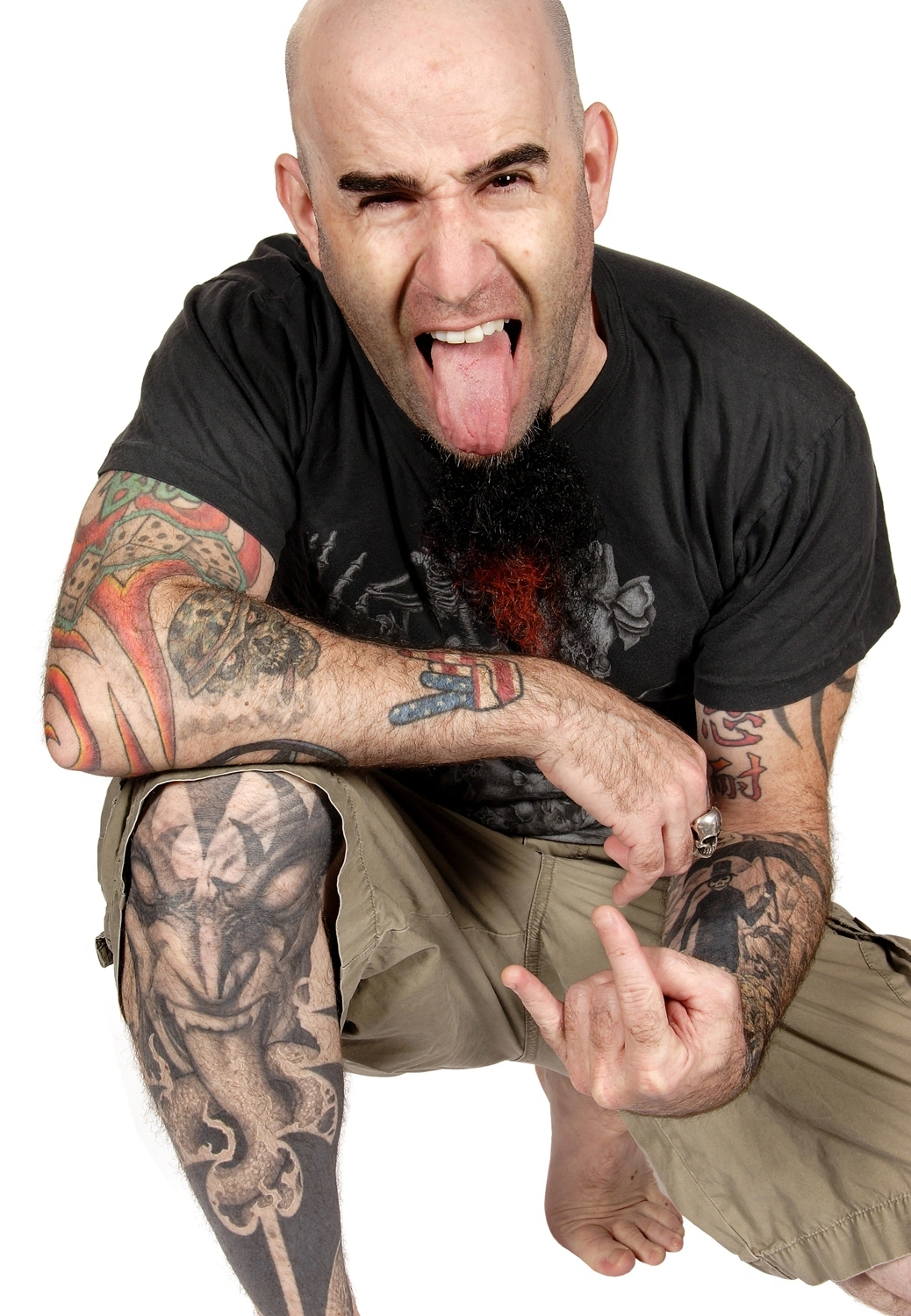
| 5 Quotes | |
| Born as | Scott Ian Rosenfeld |
| Occup. | Musician |
| From | USA |
| Born | December 31, 1963 Queens, New York, United States |
| Age | 62 years |
| Cite | |
Citation Formats
APA Style (7th ed.)
Scott ian biography, facts and quotes. (2026, February 11). FixQuotes. https://fixquotes.com/artists/scott-ian/
Chicago Style
"Scott Ian biography, facts and quotes." FixQuotes. February 11, 2026. https://fixquotes.com/artists/scott-ian/.
MLA Style (9th ed.)
"Scott Ian biography, facts and quotes." FixQuotes, 11 Feb. 2026, https://fixquotes.com/artists/scott-ian/. Accessed 13 Feb. 2026.
Early Life and Background
Scott Ian Rosenfeld was born on December 31, 1963, in Queens, New York, into a Jewish family shaped by the pragmatics of working-city America and the looming afterimage of the 1970s: urban grit, recession anxiety, and a pop culture pipeline that ran from radio rock to late-night TV. He grew up amid the borough rhythms that made intensity feel normal - noise, speed, and survival - and his personality formed early around a defensively sharp humor that later became as recognizable as his right-hand picking.As a teenager he gravitated toward the hard edge of rock and the emerging language of metal, sensing in it an outlet for pressure rather than a costume. That internal logic mattered: Ian was not chasing decadence so much as control. The young Rosenfeld watched the city harden and culture polarize, and he learned how a loud band could become both armor and identity - a place where anger could be organized into something repeatable, even communal.
Education and Formative Influences
Ian attended school in New York City and, like many musicians of his generation, was educated as much by records and live shows as by classrooms: the British heavy-metal wave, punk's efficiency, and the technical daring of players who treated "extreme" as a discipline. Frank Zappa's iconoclasm and compositional audacity became a touchstone, as did the broader downtown sensibility that treated genre as something to be raided rather than obeyed; Ian absorbed that lesson and later translated it into thrash's precise aggression.Career, Major Works, and Turning Points
In 1981, Ian co-founded Anthrax with bassist Dan Lilker in New York, helping build thrash metal's "Big Four" alongside Metallica, Slayer, and Megadeth. After early lineup turbulence, Anthrax broke out with Spreading the Disease (1985) and Among the Living (1987), records that fused punk velocity with tight riff architecture and a streetwise sense of humor; later milestones included State of Euphoria (1988), Persistence of Time (1990), and the rap-metal crossover "Bring the Noise" with Public Enemy, which widened metal's cultural aperture. Vocalist changes - Joey Belladonna to John Bush in the 1990s and Belladonna's eventual return - tested the band's identity while demonstrating Ian's stabilizing role as rhythm guitarist, chief riff-wrangler, and public spokesman. Beyond Anthrax he formed S.O.D. (Stormtroopers of Death) with Billy Milano, played in The Damned Things, did extensive session and guest work, and became a durable media presence through TV hosting and memoir writing, projecting an affable intensity that kept the thrash era legible to newer audiences.Philosophy, Style, and Themes
Ian's style is built on physical certainty: percussive downstrokes, palm-muted grooves, and riffs designed less to float than to hit. Yet his musical psychology is not only aggression; it is curation. He treats heaviness as a craft with lineage, admiring composers and contrarians who made complexity feel like mischief. "Frank Zappa... was Beethoven for insane rock guys". That line reveals Ian's central instinct - to justify extremity as intelligence, to frame loudness as thinking rather than mere transgression.Lyrically, Ian has often steered away from rock's erotic default and toward conflict, dread, satire, and the ethics of power, a choice that mirrors his temperament: suspicious of posturing, interested in consequences. "I don't think any of our lyrics have ever been erotic in a sexual term, because I haven't really written, touched on, that subject too often. But, uh... I mean, I suppose they could point the finger at us for violence maybe in certain songs". The admission is telling - he is aware of how art is policed, yet he refuses to pretend that intensity is the same as endorsement. In later reflections he emphasizes emotional timekeeping, the idea that songs document the self as it changes rather than the self as it wants to be seen: "Music and songs are written at different periods of time, at different times in your life. They reflect the feelings you have and to be honest, I quite like having positive emotions". Under the riffs sits a drive toward steadiness - a musician learning, publicly, to make room for joy without surrendering the cathartic function that made thrash necessary in the first place.
Legacy and Influence
Scott Ian endures as one of thrash metal's defining architects: a rhythm guitarist whose right hand became a template, a bandleader who kept Anthrax viable across changing markets, and a cultural translator who helped metal converse with punk, hip-hop, and mainstream media without diluting its core. His influence is audible in generations of groove-forward, precision-minded heavy bands, and his broader legacy lies in showing that extreme music can be witty, literate, and emotionally elastic - a lifelong argument that intensity, when shaped with intent, can become both community and craft.Our collection contains 5 quotes written by Scott, under the main topics: Music - Equality.
Other people related to Scott: Trevor Dunn (Musician), Dave Lombardo (Musician), Meat Loaf (Musician)
Source / external links