
Tabitha Soren Biography Quotes 20 Report mistakes
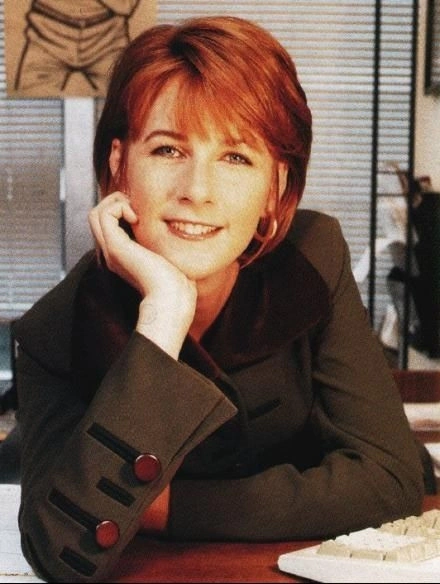
| 20 Quotes | |
| Occup. | Celebrity |
|---|---|
| From | USA |
| Born | August 19, 1967 |
| Age | 59 years |
| Cite | |
Citation Formats
APA Style (7th ed.)
Tabitha soren biography, facts and quotes. (2026, August 13). FixQuotes. https://fixquotes.com/authors/tabitha-soren/
Chicago Style
"Tabitha Soren biography, facts and quotes." FixQuotes. August 13, 2026. https://fixquotes.com/authors/tabitha-soren/.
MLA Style (9th ed.)
"Tabitha Soren biography, facts and quotes." FixQuotes, 13 Aug. 2026, https://fixquotes.com/authors/tabitha-soren/. Accessed 6 Oct. 2026.
Early Life and Background
Tabitha Soren was born on August 19, 1967, in the United States and came of age at the hinge between late-Cold War media culture and the accelerated, image-saturated America of the 1990s. She would become publicly recognizable as a television journalist and MTV News correspondent, yet that fame obscures the more revealing arc of her life: a movement from performance and visibility toward authorship, observation, and visual art. Her career unfolded in institutions that reward speed, charisma, and simplification, but her enduring work has often resisted all three, dwelling instead on duration, ambiguity, and the emotional residue left by public events and private transitions.
The biographical outline matters because Soren's adult identity has been shaped by contrast. She was never only a "celebrity" in the tabloid sense; she was a media worker inside celebrity culture, then a photographer investigating the afterlives of ambition, family, sport, and American myth. Her marriage to author Michael Lewis further located her within a high-achieving intellectual milieu, but she has consistently pursued an independent practice rather than becoming an accessory to someone else's narrative. The through line in her life is a disciplined curiosity about how people perform themselves under pressure - journalists, athletes, children, political actors, and families - and how images both reveal and distort what they touch.
Education and Formative Influences
Soren studied at Stanford University, an experience she has identified as a serious corrective to the speed and constriction of broadcast work. Stanford gave her time to read, reflect, and sharpen her sense that media frames are never neutral. She moved into journalism as American television news was fragmenting into niche audiences and branded voices, and that historical shift became one of her key formative lessons. Working first in mainstream television environments and then at MTV, she learned that the same event could be narrated with entirely different emphases depending on the presumed viewer. That realization - part practical training, part intellectual awakening - later fed her photographic method, which favors seriality, context, and the slow accumulation of meaning over the one-shot certainty of conventional news imagery.
Career, Major Works, and Turning Points
Soren's best-known public role was as an MTV News correspondent in the 1990s, when the network was a major civic and cultural translator for younger Americans. At MTV she covered politics, elections, and major breaking stories for an audience often underestimated by establishment media. Her on-air presence combined intelligence with accessibility, making her part of a generation that helped prove youth media could treat public affairs seriously without adopting the solemnity of traditional network news. She also worked at NBC, and the comparison between the two institutions sharpened her understanding of audience, tone, and editorial framing. Over time, however, she pivoted away from television toward photography, a transition that marked the decisive turning point of her career. As an artist she produced sustained bodies of work rather than disposable segments, including projects centered on her children, on athletes at vulnerable moments, and on the psychic weather of contemporary American life. Exhibited internationally and gathered in books, her photographs established her not as a former TV personality dabbling in art, but as a serious visual chronicler with a patient, psychologically alert eye.
Philosophy, Style, and Themes
Soren's outlook has been shaped by a distrust of generic mass address. “At MTV, although the audience is smaller, I found it more interesting to deliver news to a specific group of people, because my story then did not have to try to be all things to all people”. That sentence captures more than a programming strategy; it reveals a temperament drawn to precision, intimacy, and the ethics of speaking to real, bounded communities rather than an abstract national audience. Likewise, when she reflected that “I worked at NBC and MTV for two years, and it was very interesting to see the comparisons of audiences and the way that I would have to present a story to the two different places”. she was describing the mechanics of television, but also confessing an artist's sensitivity to framing itself - who is looking, what they expect, and how form alters truth.
That same psychology helps explain her later photographic work, which often lingers where performance breaks down. “The constant variety is the most interesting part of my job”. sounds at first like a reporter's appetite for movement, yet in the larger arc of her career it suggests a deeper resistance to confinement. Soren has repeatedly chosen forms that let contingency enter the work: the unscripted event, the athlete between exertions, the child becoming a self, the family archive turning strange with time. Her style is observational but not cold; she is drawn to moments of suspension, when people are no longer fully armored by role. Thematically, she returns to youth, competition, domesticity, aspiration, and disappointment - not as slogans about America, but as lived states that sit uneasily between public image and private feeling.
Legacy and Influence
Tabitha Soren's legacy rests on her unusual success in two difficult fields and on the continuity between them. In television, she helped define a mode of youth-facing journalism that took its audience seriously and widened the imagined boundaries of who political news was for. In photography, she has built a body of work that speaks to contemporary concerns - identity, spectatorship, childhood, class ambition, and the burden of visibility - with unusual patience and psychological tact. Her influence is therefore less about celebrity than about example: she demonstrated that a person formed in the speed of broadcast media could turn toward slower art without losing rigor, and that public recognition need not be the endpoint of a creative life.
Last updated August 2026 · Editorial standards
Our collection contains 20 quotes written by Tabitha, under the main topics: Witty One-Liners - Ethics & Morality - Wisdom - Music - Justice.
Source / external links