|
A Brief History of Time (1988) by Stephen Hawking |
|
A Devil's Chaplain (2003) by Richard Dawkins |
|
A History of British Starfishes and other animals of the class Echinodermata (1841) by Edward Forbes |
|
A Manual of the Anatomy of Invertebrated Animals (1877) by Thomas Huxley |
|
A Natural History of the Senses (1990) by Diane Ackerman |
|
A Treatise of the Scurvy (1753) by James Lind |
|
Adventures of a Biologist (1940) by John B. S. Haldane |
|
Agnes Grey (1847) by Anne Bronte |
|
Amelia (1751) by Henry Fielding |
|
An Alchemy of Mind: The Marvel and Mystery of the Brain (2004) by Diane Ackerman |
|
An Elementary Atlas of Comparative Osteology (1849) by Thomas Huxley |
|
Anansi Boys (2005) by Neil Gaiman |
|
Another Country (1962) by James A. Baldwin |
|
Ballistite (1887) by Alfred Nobel |
|
Belief in God in an Age of Science (1998) by John Polkinghorne |
|
Beneath the Wheel (1906) by Hermann Hesse |
|
Billions and Billions: Thoughts on Life and Death at the Brink of the Millennium (1997) by Carl Sagan |
|
Black Holes and Baby Universes and Other Essays (1993) by Stephen Hawking |
|
Bodies That Matter: On the Discursive Limits of Sex (1993) by Judith Butler |
|
Brief Candle in the Dark (2015) by Richard Dawkins |
|
Brief on the circulation of the blood in small vessels (1688) by Antonie van Leeuwenhoek |
|
Bringing It Home: Favorite Recipes from a Life of Adventurous Eating (2017) by Gail Simmons |
|
Broca's Brain: Reflections on the Romance of Science (1979) by Carl Sagan |
|
Bully for Brontosaurus (1991) by Stephen Jay Gould |
|
Celestial Mechanics (1799) by Pierre Laplace |
|
Charlie and the Chocolate Factory (1964) by Roald Dahl |
|
Climbing Mount Improbable (1996) by Richard Dawkins |
|
Commemoration Ode (Harvard) (1865) by James Russell Lowell |
|
Commentariolus (1514) by Nicolaus Copernicus |
|
Consilience: The Unity of Knowledge (1998) by E. O. Wilson |
|
Cosmic Connection: An Extraterrestrial Perspective (1973) by Carl Sagan |
|
Cosmologische Briefe über die Einrichtung des Weltbaues (1761) by Johann Heinrich Lambert |
|
Cosmos (1980) by Carl Sagan |
|
Crowded Hours (1913) by Alice Roosevelt Longworth |
|
Daedalus or Science and the Future (1923) by John B. S. Haldane |
|
Darwinism (1889) by Alfred Russel Wallace |
|
De l'Esprit géométrique (1657) by Blaise Pascal |
|
De revolutionibus orbium coelestium (1543) by Nicolaus Copernicus |
|
Dead Souls (1842) by Nikolai Gogol |
|
Deep Play (1999) by Diane Ackerman |
|
Dialectics of Nature (1883) by Friedrich Engels |
|
Dialogue Concerning the Two Chief World Systems (1632) by Galileo Galilei |
|
Discourses and Mathematical Demonstrations Relating to Two New Sciences (1638) by Galileo Galilei |
|
Duration and Simultaneity (1922) by Henri Bergson |
|
Einstein: His Life and Universe (2007) by Walter Isaacson |
|
Einstein's Essays in Science (1934) by Albert Einstein |
|
Elementary Seismology (1958) by Charles Francis Richter |
|
Engines of Creation: The Coming Era of Nanotechnology (1986) by K. Eric Drexler |
|
Epithalamion (1595) by Edmund Spenser |
|
Esio Trot (1990) by Roald Dahl |
|
Essays in Science and Philosophy (1947) by Alfred North Whitehead |
|
Everything Has a History (1951) by John B. S. Haldane |
|
Evidence as to Man's Place in Nature (1863) by Thomas Huxley |
|
Evolution, Old and New (1879) by Samuel Butler |
|
Excitable Speech: A Politics of the Performative (1997) by Judith Butler |
|
Existence of Electromagnetic-Hydrodynamic Waves (1942) by Hannes Alfven |
|
Exposition of the System of the World (1796) by Pierre Laplace |
|
Faith, Science and Understanding (2000) by John Polkinghorne |
|
Fantastic Mr Fox (1970) by Roald Dahl |
|
Fervor de Buenos Aires (1923) by Jorge Luis Borges |
|
First Principles (1862) by Herbert Spencer |
|
Fortunately, the Milk (2013) by Neil Gaiman |
|
Foundations of the Origin of Species (1909) by Francis Darwin |
|
Frames of War: When Is Life Grievable? (2009) by Judith Butler |
|
From Naked Ape to Superspecies: Humanity and the Global Eco-Crisis (1999) by David Suzuki |
|
Full House: The Spread of Excellence from Plato to Darwin (1996) by Stephen Jay Gould |
|
Gaia: A New Look at Life on Earth (1979) by James Lovelock |
|
Gender Trouble: Feminism and the Subversion of Identity (1990) by Judith Butler |
|
Genethics: The Clash Between the New Genetics and Human Values (1989) by David Suzuki |
|
George's Marvellous Medicine (1981) by Roald Dahl |
|
Giving an Account of Oneself (2005) by Judith Butler |
|
Go Tell It on the Mountain (1953) by James A. Baldwin |
|
God Created the Integers: The Mathematical Breakthroughs That Changed History (2005) by Stephen Hawking |
|
Going to Meet the Man (1965) by James A. Baldwin |
|
Heart: A Social Novel (1854) by Martin Farquhar Tupper |
|
History and Demonstration Concerning Sunspots (1613) by Galileo Galilei |
|
How Plants Are Trained to Work for Man (1907) by Luther Burbank |
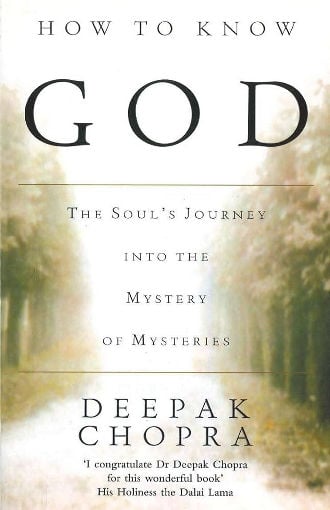 |
How to Know God (2000) by Deepak Chopra |
|
If Beale Street Could Talk (1974) by James A. Baldwin |
|
Illustrations of the Logic of Science (1877) by Charles Sanders Peirce |
|
Impressions of Soviet Russia and the Revolutionary World (1929) by John Dewey |
|
Insectivorous Plants (1875) by Francis Darwin |
|
Inventing the Future: Reflections on Science, Technology, and Nature (1989) by David Suzuki |
|
Island Life (1880) by Alfred Russel Wallace |
|
Jude the Obscure (1895) by Thomas Hardy |
|
Keep the Aspidistra Flying (1936) by George Orwell |
|
Laughable Loves (1968) by Milan Kundera |
|
Lectures on the Elements of Comparative Anatomy (1864) by Thomas Huxley |
|
Leonardo da Vinci (2017) by Walter Isaacson |
|
Les Misérables (1862) by Victor Hugo |
|
Letter on the protozoa (1677) by Antonie van Leeuwenhoek |
|
Letter to Benedetto Castelli (1613) by Galileo Galilei |
|
Letter to the Grand Duchess Christina (1615) by Galileo Galilei |
|
Letters to a Young Scientist (2013) by E. O. Wilson |
|
Life and Habit (1877) by Samuel Butler |
|
Linda McCartney's Home Cooking (1989) by Linda McCartney |
|
Linda McCartney's World of Vegetarian Cooking (1998) by Linda McCartney |
|
Linda's Kitchen: Simple and Inspiring Vegetarian Recipes for Every Occasion (1995) by Linda McCartney |
|
L'Isotopie Et Les Éléments Isotopes (1925) by Marie Curie |
|
Literature and Dogma (1873) by Matthew Arnold |
|
Looking at Birds (1986) by David Suzuki |
|
Looking at Insects (1986) by David Suzuki |
|
Looking at Mammals (1986) by David Suzuki |
|
Looking at Plants (1986) by David Suzuki |
|
Looking at the Body (1986) by David Suzuki |
|
Luna silvestre (1933) by Octavio Paz |
|
Luther Burbank: His Methods and Discoveries and Their Practical Application (1914) by Luther Burbank |
|
Man Unfolding (1972) by Jonas Salk |
|
Man's Place in Nature (1863) by Thomas Huxley |
|
Mathematical Principles of Natural Philosophy (1687) by Isaac Newton |
|
Matilda (1988) by Roald Dahl |
|
Medical Inquiries and Observations (1789) by Benjamin Rush |
|
Modern Arms and Free Men: A Discussion of the Role of Science in Preserving Democracy (1949) by Vannevar Bush |
|
Morphological Astronomy (1957) by Fritz Zwicky |
|
Mumu (1854) by Ivan Turgenev |
|
Nanosystems: Molecular Machinery, Manufacturing, and Computation (1992) by K. Eric Drexler |
|
Native Son (1940) by Richard Wright |
|
Natural History (77) by Pliny the Elder |
|
New Creations in Plant Life (1908) by Luther Burbank |
|
New Paths in Genetics (1941) by John B. S. Haldane |
|
Nobel Lecture (Hannes Alfvén, 1970) (1970) by Hannes Alfven |
|
Notes Toward a Performative Theory of Assembly (2015) by Judith Butler |
|
Novacene: The Coming Age of Hyperintelligence (2019) by James Lovelock |
|
Observations on the Diseases of the Army in Camp and Garrison (1810) by Benjamin Rush |
|
Of Grammatology (1967) by Jacques Derrida |
|
On the Constitution of Atoms and Molecules (1913) by Niels Bohr |
|
On the Earths in the Universe (On the Earths in Our Solar System) (1743) by Emanuel Swedenborg |
|
On the Origin of Species (1859) by Charles Darwin |
|
On the Redshift of Spectral Lines through Interstellar Space (1929) by Fritz Zwicky |
|
On the Relations of Man to the Lower Animals (1863) by Thomas Huxley |
|
On the Shoulders of Giants (2002) by Stephen Hawking |
|
On the Tendency of Varieties to Depart Indefinitely from the Original Type (1858) by Alfred Russel Wallace |
|
Opera Philosophica et Mineralia (1734) by Emanuel Swedenborg |
|
Opticks: Or, A Treatise of the Reflections, Refractions, Inflections, and Colours of Light (1704) by Isaac Newton |
|
Out of My Later Years (1950) by Albert Einstein |
|
Pale Blue Dot: A Vision of the Human Future in Space (1994) by Carl Sagan |
|
Parting Ways: Jewishness and the Critique of Zionism (2012) by Judith Butler |
|
Persian Letters (1721) by Charles de Secondat |
|
Personal Knowledge (1958) by Michael Polanyi |
|
Photometria (1760) by Johann Heinrich Lambert |
|
Popular Astronomy (1878) by Simon Newcomb |
|
Precarious Life: The Powers of Mourning and Violence (2004) by Judith Butler |
|
Prothalamion (1596) by Edmund Spenser |
|
Pyrometrie (1779) by Johann Heinrich Lambert |
|
QED: The Strange Theory of Light and Matter (1985) by Richard P. Feynman |
|
Quantum Physics and Theology: An Unexpected Kinship (2005) by John Polkinghorne |
|
Radical Abundance: How a Revolution in Nanotechnology Will Change Civilization (2013) by K. Eric Drexler |
|
Raptor Red (1995) by Robert T. Bakker |
|
Recherches Sur Les Substances Radioactives (1903) by Marie Curie |
|
Reflections on the Decline of Science in England, and on Some of Its Causes (1830) by Charles Babbage |
|
Reginald (1904) by Hector Hugh Munro |
|
Report on the Mollusca and Radiata of the Aegean Sea (1843) by Edward Forbes |
|
River Out of Eden (1995) by Richard Dawkins |
|
Rules for the Direction of the Mind (1701) by Rene Descartes |
|
Science Advances (1947) by John B. S. Haldane |
|
Science and Creation: The Search for Understanding (2006) by John Polkinghorne |
|
Science and Survival (1966) by Barry Commoner |
|
Science and the Common Understanding (1954) by J. Robert Oppenheimer |
|
Science in the Soul (2017) by Richard Dawkins |
|
Science, Faith and Society (1946) by Michael Polanyi |
|
Science, The Endless Frontier (1945) by Vannevar Bush |
|
Scientific Autobiography and Other Papers (1949) by Max Planck |
|
Seismicity of the Earth and Associated Phenomena (2nd edition) (1954) by Charles Francis Richter |
|
Senses of the Subject (2015) by Judith Butler |
|
Sidereus Nuncius (The Starry Messenger) (1610) by Galileo Galilei |
|
Sixteen Introductory Lectures (1811) by Benjamin Rush |
|
Solution of a Problem in Concurrent Programming Control (1965) by Edsger Dijkstra |
|
St. Paul and Protestantism (1870) by Matthew Arnold |
|
Subjects of Desire: Hegelian Reflections in Twentieth-Century France (1987) by Judith Butler |
|
Tell Me How Long the Train's Been Gone (1968) by James A. Baldwin |
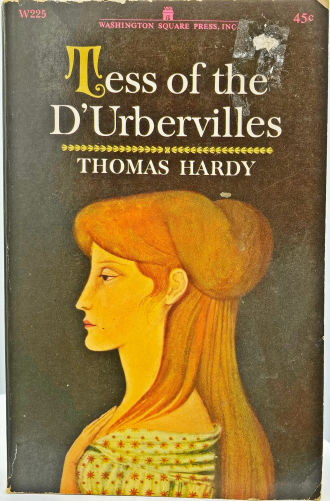 |
Tess of the d'Urbervilles (1891) by Thomas Hardy |
|
The Ages of Gaia: A Biography of Our Living Earth (1988) by James Lovelock |
|
The Annotated and Illustrated Double Helix (2012) by James D. Watson |
|
The Anthropic Cosmological Principle (1986) by Frank Tipler |
|
The Ascent of Man (1973) by Jacob Bronowski |
|
The Assayer (1623) by Galileo Galilei |
|
The Big Picture: Reflections on Science, Humanity, and a Quickly Changing Planet (2009) by David Suzuki |
|
The Blind Watchmaker (1986) by Richard Dawkins |
|
The Blue Planet (2001) by David Attenborough |
|
The Causes of Evolution (1932) by John B. S. Haldane |
|
The Character of Physical Law (1965) by Richard P. Feynman |
|
The Cool School: Feasting on Ice and Climate Change (2007) by David Suzuki |
|
The Cousteau Odyssey (1977) by Jacques Yves Cousteau |
|
The Culture of Organs (1938) by Alexis Carrel |
|
The Demon-Haunted World: Science as a Candle in the Dark (1995) by Carl Sagan |
|
The Descent of Man (1871) by Charles Darwin |
|
The Dinosaur Heresies (1986) by Robert T. Bakker |
|
The Dolly Dialogues (1894) by Anthony Hope |
|
The Dragons of Eden: Speculations on the Evolution of Human Intelligence (1977) by Carl Sagan |
|
The Elegant Universe: Superstrings, Hidden Dimensions, and the Quest for the Ultimate Theory (1999) by Brian Greene |
|
The Expression of the Emotions in Man and Animals (1872) by Charles Darwin |
|
The Expressman and the Detective (1874) by Allan Pinkerton |
