|
Ain't Nobody's Business If You Do (1993) by Peter McWilliams |
|
An Essay on the History of Civil Society (1767) by Adam Ferguson |
|
Common Values (1995) by Sissela Bok |
|
Eroticism (1957) by Georges Bataille |
|
Folkways (1906) by William Graham Sumner |
|
Following the Color Line (1908) by Ray Stannard Baker |
|
Future Shock (1970) by Alvin Toffler |
|
Illiterate America (1985) by Jonathan Kozol |
|
Man's Most Dangerous Myth: The Fallacy of Race (1942) by Ashley Montagu |
|
Megatrends: Ten New Directions Transforming Our Lives (1982) by John Naisbitt |
|
Peddlers and Princes: Social Development and Economic Change in Two Indonesian Towns (1963) by Clifford Geertz |
|
Physics and Politics (1872) by Walter Bagehot |
|
Post-Capitalist Society (1993) by Peter Drucker |
|
Rachel and Her Children: Homeless Families in America (1988) by Jonathan Kozol |
|
Rules and Meanings: The Anthropology of Everyday Knowledge (1973) by Mary Douglas |
|
The Case for Marriage: Why Married People Are Happier, Healthier, and Better Off Financially (2000) by Maggie Gallagher |
|
The Coming of Age (1970) by Simone de Beauvoir |
|
The Covent-Garden Tragedy (1732) by Henry Fielding |
|
The Human Zoo (1969) by Desmond Morris |
|
The Myth of Male Power (1993) by Warren Farrell |
|
The Natural Superiority of Women (1953) by Ashley Montagu |
|
The Philadelphia Negro: A Social Study (1899) by W. E. B. Du Bois |
 |
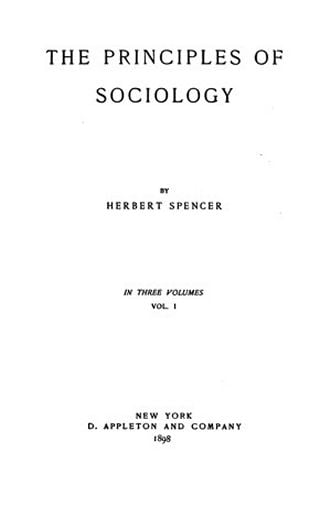
The Principles of Sociology (1876) by Herbert Spencer |
|
The Revolt of the Masses (1930) by Jose Ortega Y Gasset |
|
The Road to Wigan Pier (1937) by George Orwell |
|
The Second Sex (1949) by Simone de Beauvoir |
|
The Third Wave (1980) by Alvin Toffler |
|
The Tragedy of Tragedies; or, The Life and Death of Tom Thumb the Great (1731) by Henry Fielding |
|
The What d'Ye Call It? (1715) by John Gay |
|
Thy Neighbor's Wife (1980) by Gay Talese |