
Jackie Chan Biography Quotes 21 Report mistakes
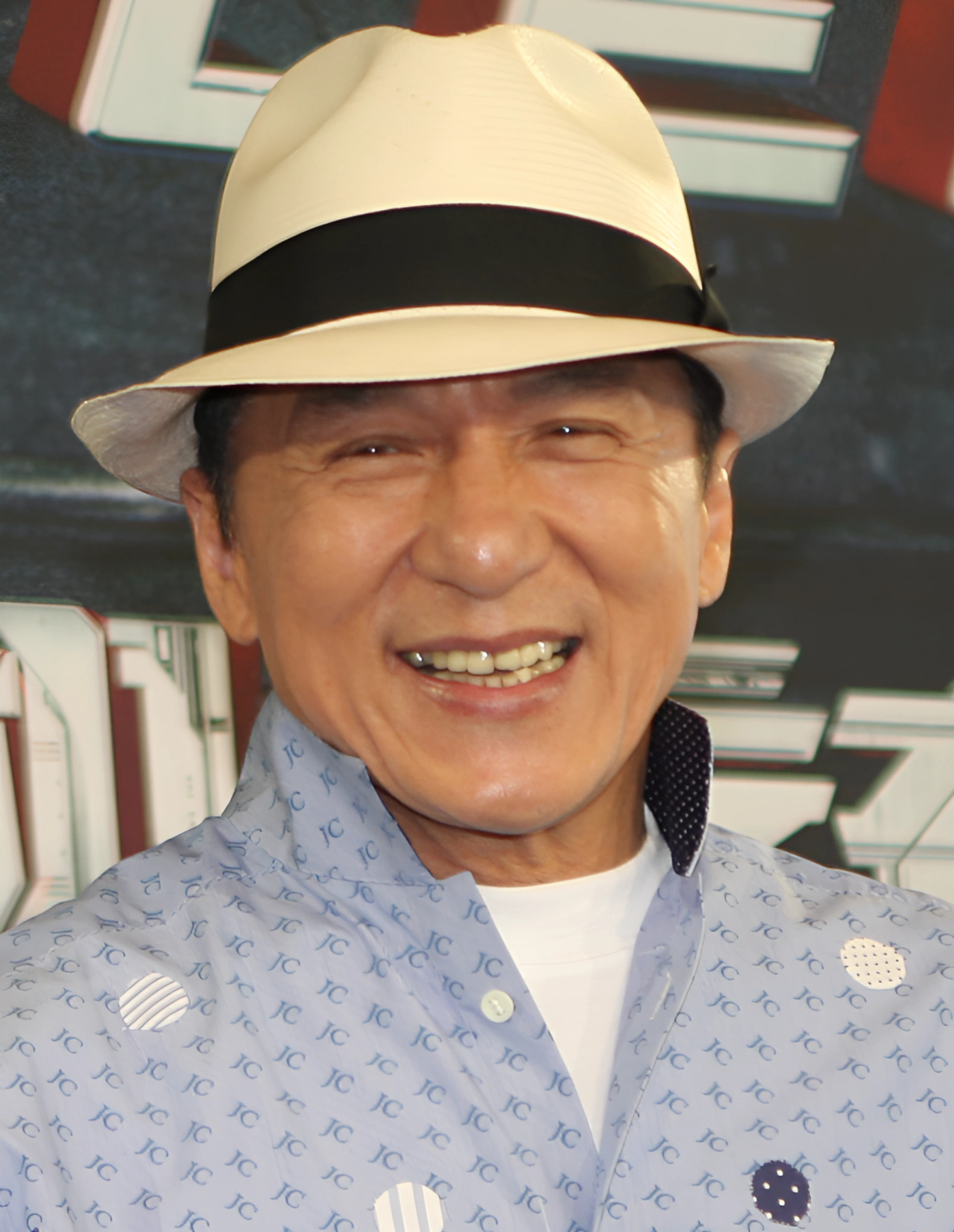
Attr: Eva Rinaldi, CC BY-SA 2.0
| 21 Quotes | |
| Born as | Chan Kong-sang |
| Occup. | Actor |
| From | China |
| Born | April 7, 1954 Victoria Peak, Hong Kong |
| Age | 71 years |
| Cite | |
Citation Formats
APA Style (7th ed.)
Jackie chan biography, facts and quotes. (2026, February 11). FixQuotes. https://fixquotes.com/actors/jackie-chan/
Chicago Style
"Jackie Chan biography, facts and quotes." FixQuotes. February 11, 2026. https://fixquotes.com/actors/jackie-chan/.
MLA Style (9th ed.)
"Jackie Chan biography, facts and quotes." FixQuotes, 11 Feb. 2026, https://fixquotes.com/actors/jackie-chan/. Accessed 5 Mar. 2026.
Early Life and Background
Jackie Chan was born Chan Kong-sang on April 7, 1954, in Hong Kong, then a British colony shaped by postwar migration and Cold War border politics. His parents, Charles and Lee-Lee Chan, had fled the upheavals of mainland China and joined the large community of refugees building new lives in cramped districts where Cantonese opera, street markets, and Hollywood matinees mixed into a distinctive urban rhythm. The city offered little stability but endless spectacle - a place where a boy could absorb both discipline and improvisation as survival skills.A hyperactive child with a taste for risk, he found early that physicality could communicate what words could not. When the family later followed his father to Australia for domestic work at the U.S. consulate in Canberra, the move underscored a lifelong pattern: between languages, between cultures, between social classes. That in-betweenness would become his on-screen identity - the underdog who keeps moving, turning vulnerability into velocity.
Education and Formative Influences
At seven, Chan was enrolled at the China Drama Academy in Hong Kong, a rigorous Peking Opera school led by Yu Jim-yuen that drilled students in acrobatics, martial arts, music, and acting through punishing daily routines. There he became part of the "Seven Little Fortunes", learning timing, falls, and the precise mechanics of pain that later made his stunts legible as comedy rather than brutality. He also watched the older generation - Bruce Lee, but also silent-era physical storytellers like Buster Keaton - and absorbed a crucial lesson: craft is built on repetition, but persona is built on difference.Career, Major Works, and Turning Points
Chan entered film as a child extra and stunt performer, then as an adult worked in the Hong Kong action industry of the 1970s, including stunt work connected to Bruce Lee productions. Early starring vehicles tried to market him as a Lee-like fighter, but his breakthrough came when he fused opera-trained slapstick with kung fu rhythms: Snake in the Eagle's Shadow (1978) and Drunken Master (1978) established a new kind of action hero - battered, funny, and resourceful. He consolidated that identity through Police Story (1985), which he directed and starred in, raising the bar for location-based stunt design and editing clarity; later peaks included Project A (1983), Armour of God (1986), Drunken Master II (1994), Rumble in the Bronx (1995), and Hollywood mainstream success with Rush Hour (1998). Across decades he expanded into directing, producing, singing, and philanthropy, while also weathering public controversies and the physical costs of repeated injuries that made longevity itself a narrative arc.Philosophy, Style, and Themes
Chan's inner life, as it appears through his work, is a continuous argument against imitation and fatalism. He is explicit about refusing the destiny the industry tried to assign him: "I never wanted to be the next Bruce Lee. I just wanted to be the first Jackie Chan" . That line is less bravado than self-defense - a statement from someone who understood how quickly Hong Kong studios could consume a body and discard a brand. His comic action style is therefore psychological strategy: the fight becomes a problem to solve, not a swagger to display, and the audience is invited to admire ingenuity rather than dominance.His films repeatedly stage a moral discomfort with force, even while selling violence as spectacle. The recurring gag of the reluctant brawler - the cop who gets hurt doing the right thing, the bystander forced into heroism, the fighter who apologizes while winning - mirrors his own stated ambivalence: “I hate violence, yes I do. It's kind of a dilemma, huh?” The dilemma is the engine: he converts danger into choreography, and choreography into reassurance that skill can tame chaos. Under the comedy sits a practical ethic of agency suited to a city of hustlers and migrants: “Do not let circumstances control you. You change your circumstances”. Even his perfectionism reads as biography - a man trained in an opera school's absolute standards, then determined to remake global action cinema without surrendering to cruelty.
Legacy and Influence
Chan's enduring influence is not only that he internationalized Hong Kong action, but that he redefined what action could mean: a fusion of stunt realism, spatially clear camera work, prop-driven inventiveness, and a humane, self-mocking hero who bleeds. His teams and methods shaped generations of stunt performers and filmmakers from Asia to Hollywood, while his films provided a bridge between silent comedy grammar and modern fight choreography. In the long view, his most lasting contribution may be the persona that made risk feel communal - the star who shows the outtakes, admits fear, and turns survival into art - leaving behind a template for action cinema where character is proven not by invincibility, but by persistence.Our collection contains 21 quotes written by Jackie, under the main topics: Witty One-Liners - Motivational - Parenting - Work Ethic - Overcoming Obstacles.
Other people related to Jackie: Amber Valletta (Model), Ziyi Zhang (Actress), Jack Black (Actor), Renny Harlin (Director), Chris Tucker (Actor)
Source / external links