
Michelle Yeoh Biography Quotes 12 Report mistakes
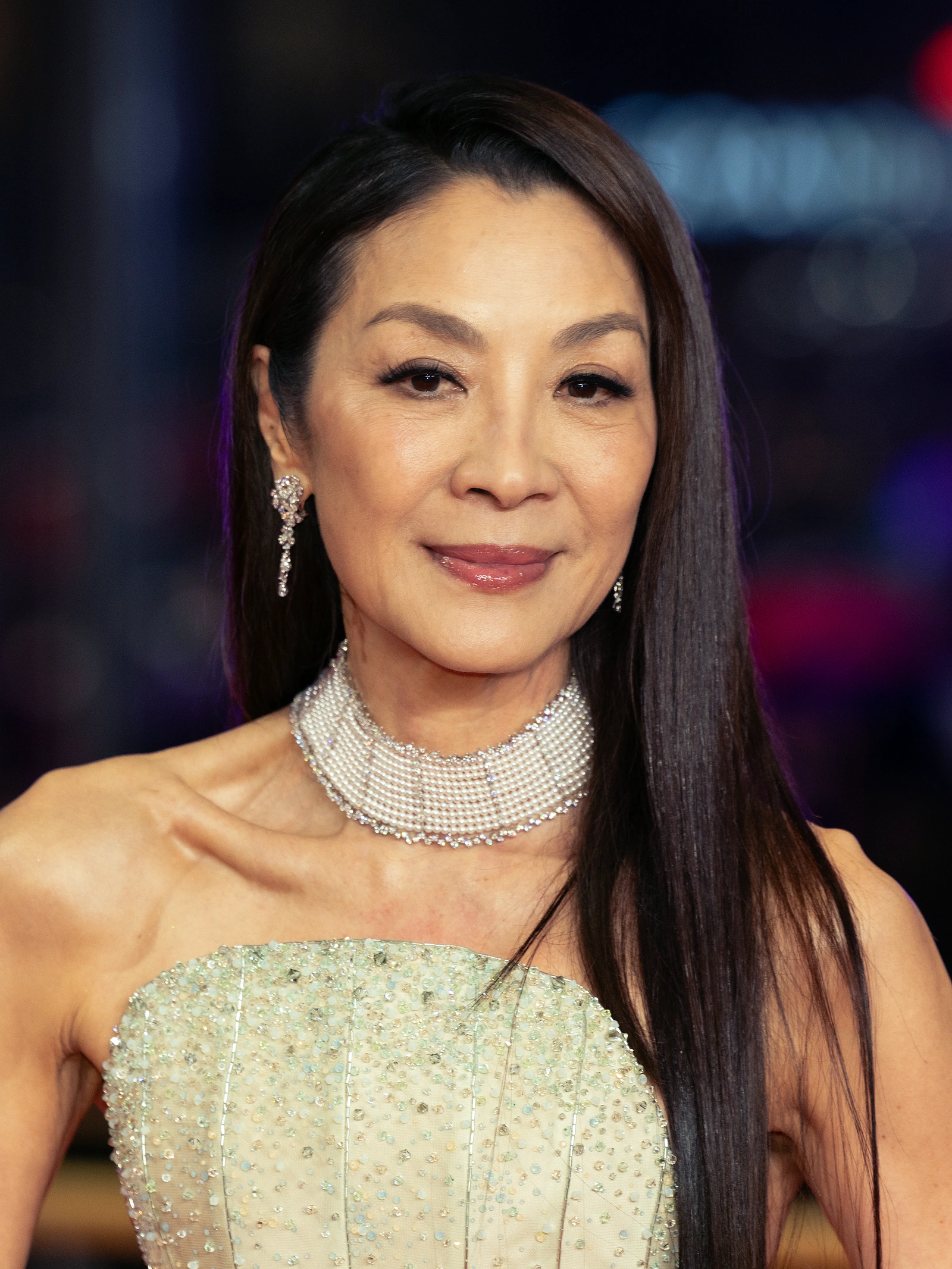
| 12 Quotes | |
| Born as | Yeoh Choo Kheng |
| Known as | Yang Ziqiong |
| Native name | 楊紫瓊 |
| Occup. | Actress |
| From | Malaysia |
| Spouses | Dickson Poon Jean Todt |
| Born | August 6, 1962 Ipoh, Perak, Malaysia |
| Age | 63 years |
| Cite | |
Citation Formats
APA Style (7th ed.)
Michelle yeoh biography, facts and quotes. (2026, February 14). FixQuotes. https://fixquotes.com/actors/michelle-yeoh/
Chicago Style
"Michelle Yeoh biography, facts and quotes." FixQuotes. February 14, 2026. https://fixquotes.com/actors/michelle-yeoh/.
MLA Style (9th ed.)
"Michelle Yeoh biography, facts and quotes." FixQuotes, 14 Feb. 2026, https://fixquotes.com/actors/michelle-yeoh/. Accessed 8 Mar. 2026.
Early Life and Background
Michelle Yeoh Choo Kheng was born in Ipoh, Perak, Malaysia, in 1962 into an ethnic Chinese family whose social world mixed provincial rootedness with outward-looking ambition. Ipoh, a tin-mining city long shaped by migration and commerce, offered a practical lesson in plurality: languages and customs overlapped, and success depended on poise, discipline, and the ability to move between worlds - qualities that later defined her screen persona.Her early confidence was tempered by physical rigor. She trained as a dancer from childhood, drawn to the exactness of movement and the emotional clarity of performance. The body, for Yeoh, was never merely decorative; it was an instrument that could communicate resolve, humor, fear, and control. That grounding in controlled risk - rehearsed leaps, practiced falls - became a private template for the public risks she would take in a film industry that rarely built its center around women, much less Southeast Asian women.
Education and Formative Influences
As a teenager she moved to the United Kingdom, studying at a boarding school and then at the Royal Academy of Dance in London. A back injury derailed her path toward professional ballet and forced a reinvention: she shifted to choreography and, more consequentially, learned how to translate discipline into adaptability. In the early 1980s, as Asian pop culture and advertising began circulating more aggressively across borders, her ease on camera led to pageantry and commercials, including a high-profile Hong Kong spot opposite Jackie Chan that signaled how athletic grace could read as charisma on film.Career, Major Works, and Turning Points
Yeoh entered Hong Kong cinema at a moment when action filmmaking was both a local art and a global export. After early work and a brief retreat from acting, she returned with a fierce new identity in films like Yes, Madam! (1985) and later Police Story 3: Super Cop (1992), performing stunts with a dancer's precision and a daredevil's calm. International attention followed: Tomorrow Never Dies (1997) positioned her as a Bond-era equal rather than an accessory; Crouching Tiger, Hidden Dragon (2000) turned restrained longing and moral authority into kinetic drama; Memoirs of a Geisha (2005), Sunshine (2007), The Mummy: Tomb of the Dragon Emperor (2008), and Crazy Rich Asians (2018) kept her visible as Hollywood's appetite for Asian stories slowly expanded. In Everything Everywhere All at Once (2022), she fused comedy, grief, and multiverse delirium into a career-crowning performance that won the Academy Award for Best Actress (2023), a turning point not only for her but for the industry's sense of who could be a global lead.Philosophy, Style, and Themes
Yeoh's style is built on authority earned through effort. Even when scripts cast her as royalty, commanders, or matriarchs, she plays status as something carried in the spine - the consequence of choices, not entitlement. Her action work is never just spectacle: the impact of a kick, the hesitation before a leap, the split-second calculation in a fight all reveal character. That physical honesty makes her uniquely credible in roles where competence is moral - women who protect others not because they are invincible, but because they refuse to surrender.Her public philosophy, sharpened by decades of typecasting and gatekeeping, insists on agency and representation as lived practice rather than slogan. “When I started, there weren’t roles for people who looked like me, so you learn to keep going, to keep working, and to create opportunities where you can”. The psychology underneath is pragmatic perseverance: she treats rejection as information, not identity, and turns scarcity into strategy. Yet she pairs that grit with an ethic of visibility and responsibility - success as a signal flare for those behind her. “For all the little boys and girls who look like me watching tonight, this is a beacon of hope and possibilities”. And she frames change as collective labor, not personal triumph: “We can’t just wait for change; we have to be part of it, and we have to push for it”. Across interviews and roles, the through-line is clear: survival is not enough; the goal is to widen the room.
Legacy and Influence
Yeoh's legacy is the rare combination of craft, courage, and consequence. She helped redefine the female action lead in Hong Kong, proved in Hollywood that elegance and ferocity could coexist without apology, and became a generational marker for Asian and Asian-diasporic visibility in global cinema. Her influence can be traced in stunt-forward performances by actresses who now expect physical credibility to be part of their toolbox, and in producers who more readily imagine Asian women as narrative engines rather than ornaments. Most enduring is the inner example: an artist who converted a career-threatening injury into a new vocabulary of movement, then used that vocabulary to insist - onscreen and off - that opportunity can be made, not merely granted.Our collection contains 12 quotes written by Michelle, under the main topics: Motivational - Never Give Up - Writing - Hope - Live in the Moment.
Other people related to Michelle: Jason Isaacs (Actor), Roger Spottiswoode (Director), Ziyi Zhang (Actress), Rob Cohen (American), Gong Li (Actress), Kenneth Branagh (Actor)
Source / external links