
Willem Dafoe Biography Quotes 8 Report mistakes
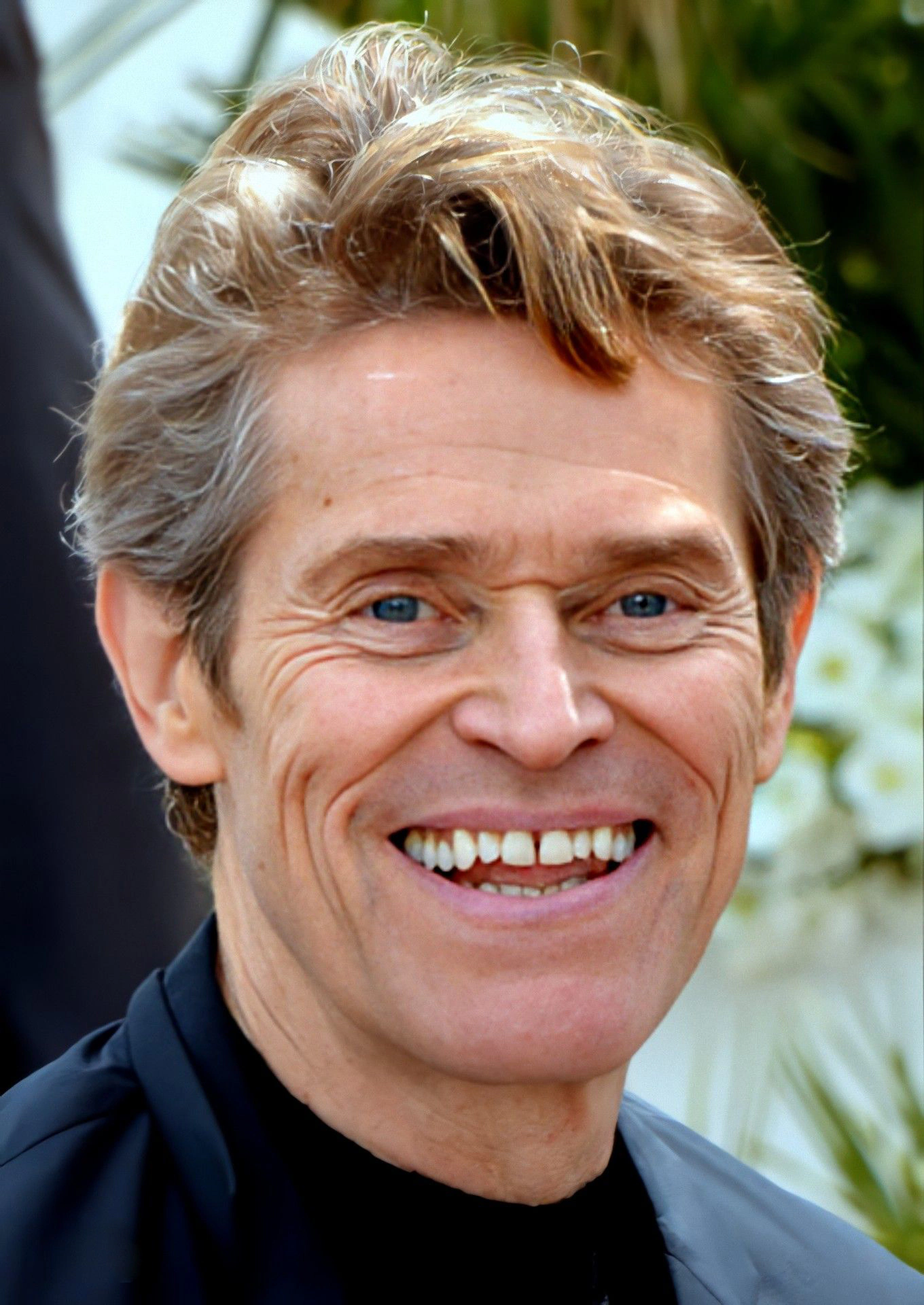
Attr: Georges Biard, CC BY-SA 3.0
| 8 Quotes | |
| Occup. | Actor |
| From | USA |
| Born | July 22, 1955 Appleton, Wisconsin, USA |
| Age | 70 years |
| Cite | |
Citation Formats
APA Style (7th ed.)
Willem dafoe biography, facts and quotes. (2026, February 11). FixQuotes. https://fixquotes.com/actors/willem-dafoe/
Chicago Style
"Willem Dafoe biography, facts and quotes." FixQuotes. February 11, 2026. https://fixquotes.com/actors/willem-dafoe/.
MLA Style (9th ed.)
"Willem Dafoe biography, facts and quotes." FixQuotes, 11 Feb. 2026, https://fixquotes.com/actors/willem-dafoe/. Accessed 26 Mar. 2026.
Early Life and Background
Willem Dafoe was born William J. Dafoe on July 22, 1955, in Appleton, Wisconsin, the seventh of eight children in a large Midwestern Catholic family. His father, a surgeon, and his mother, a nurse, embodied a disciplined, service-oriented household; Dafoe later described his early self as less an eccentric prodigy than a boy shaped by routine, church culture, and the close quarters of sibling life. The intensity that would later read onscreen as danger or strangeness formed first as attention - a need to be seen and to make contact in a crowded home.Appleton in the 1960s was steady, modest, and far from the downtown art scenes that would become his natural habitat. That distance mattered: it gave him both a feeling for ordinary American life and a hunger for the "elsewhere" promised by performance. The era's churn - Vietnam, assassinations, counterculture - reached him through television and community talk, while his local world remained bounded by school, faith, and a strong work ethic. The friction between provincial stability and national upheaval became one of his lasting sources of energy: a calm surface with a current running underneath.
Education and Formative Influences
Dafoe attended the University of Wisconsin-Milwaukee, initially studying drama, but left before graduating when he was pulled toward the living laboratory of experimental theatre. In the late 1970s he joined the avant-garde company Theatre X and soon after relocated into the orbit of New York's downtown performance scene, where work was raw, physical, and collaborative. Those years trained him in rigor more than polish - voice, body, timing, and the courage to look strange in public - and they gave him a durable allegiance to rehearsal rooms and ensembles rather than celebrity culture.Career, Major Works, and Turning Points
In 1979 Dafoe became a core member of The Wooster Group, one of the period's most influential experimental theatre collectives, and his stage discipline carried directly into film. He broke through in cinema with a ferocious presence in Walter Hill's Streets of Fire (1984) and, more decisively, as Sgt. Elias in Oliver Stone's Platoon (1986), earning an Academy Award nomination and fixing his image as both spiritual and volatile. He followed with daring choices: the tormented title figure in The Last Temptation of Christ (1988), the van Gogh portrait At Eternity's Gate (2018) that won him Best Actor at Venice, and a long run of vivid supporting turns - from Shadow of the Vampire (2000) and The Florida Project (2017) to mainstream visibility as Norman Osborn/Green Goblin in Sam Raimi's Spider-Man films and later in the Marvel multiverse. Parallel to screen work, he repeatedly returned to theatre and performance art, sustaining a two-track career where mass culture and formal experimentation kept challenging each other.Philosophy, Style, and Themes
Dafoe's acting is often described as "intense", but the better word is exposed: he allows the audience to watch thought happen, even when a character is lying. That exposure is rooted in an almost moral candor about his own impulses and limits. He resists the myth that he is fueled by cultivated oddity, insisting instead, “Weirdness is not my game. I'm just a square boy from Wisconsin”. The line reads like self-defense and confession at once - a reminder that his extremity is a technique, not an identity, and that his characters' transgressions are built on a bedrock of Midwestern plainness.He is drawn to roles where risk is unavoidable: saints and traitors, martyrs and grifters, men pulled by appetite toward self-destruction. The internal motor is curiosity about other lives, articulated with unusual simplicity: “One of the pleasures of being an actor is quite simply taking a walk in someone else's shoes. And when I look at the roles I've played, I'm kind of amazed at all the wonderful adventures I've had and the different things I've learned”. That generosity toward characters - even villains - is paired with a demanding work ethic and intolerance for complacency in collaborators: “The worst thing is to get involved with people who aren't passionate about what they're doing”. Together these ideas explain his filmography: he moves between auteurs and franchises not for status, but for the chance to stay awake, to keep the work from becoming ornamental.
Legacy and Influence
Dafoe's enduring influence lies in how he expanded the idea of a "character actor" into a leading-man instrument without sanding down his edges. He helped normalize a cinema in which spiritual longing, erotic danger, and comic grotesquerie can coexist in the same face, and he modeled a modern performer's life that refuses the false choice between art-house rigor and popular entertainment. For younger actors he is a template: train the body, respect the ensemble, choose difficulty, and let the camera catch the seams - because the seams are where the humanity is.Our collection contains 8 quotes written by Willem, under the main topics: Witty One-Liners - Art - Honesty & Integrity - Work Ethic - Movie.
Other people related to Willem: Robert Pattinson (Actor), Jan de Bont (Director), Noomi Rapace (Actress), Kenneth Branagh (Actor), Paul Bettany (Actor), John Lurie (Actor), Abel Ferrara (Director), Nick Nolte (Actor), Catherine McCormack (Actress)
Source / external links